<?xml version="1.0" encoding="utf-8"?><?xml-stylesheet type="text/xsl" href="atom.xsl"?>
<feed xmlns="http://www.w3.org/2005/Atom">
    <id>https://kairoseye.com/blog/</id>
    <title>KairosEye Blog</title>
    <updated>2026-03-21T00:00:00.000Z</updated>
    <generator>https://github.com/jpmonette/feed</generator>
    <link rel="alternate" href="https://kairoseye.com/blog/"/>
    <subtitle>KairosEye Blog</subtitle>
    <icon>https://kairoseye.com/img/favicon.ico</icon>
    <entry>
        <title type="html"><![CDATA[Thirty-One Satellites and a Greek Islander: How GPS Actually Works]]></title>
        <id>https://kairoseye.com/blog/how-gps-actually-works/</id>
        <link href="https://kairoseye.com/blog/how-gps-actually-works/"/>
        <updated>2026-03-21T00:00:00.000Z</updated>
        <summary type="html"><![CDATA[How 31 atomic-clock satellites, Einstein's relativity, and Cold War engineering tell your hiking watch where you stand, to within three metres.]]></summary>
        <content type="html"><![CDATA[<p>There are, at this very moment, thirty-one satellites circling the Earth at an altitude of 20,200 kilometres. They do nothing but broadcast the time. This is, by any reasonable standard, an extravagant use of orbital real estate, and yet I must concede (while relighting my pipe, which tends to go out during moments of intellectual generosity) that without them, your hiking watch would be little more than an expensive bracelet with aspirations.</p>
<section class="calculator_Dn0d" id="gps-converter"><h2>GPS Coordinate Converter</h2><div class="modeToggle_u1rQ"><button class="modeBtn_B3fd modeBtnActive_Wb9r">Decimal → DMS</button><button class="modeBtn_B3fd">DMS → Decimal</button></div><div class="geoRow_SDt0"><button class="geoBtn_fU4i">📍 Use my location</button></div><div class="inputs_gmW0"><div class="field_YqGN"><label for="gps-lat">Latitude</label><input id="gps-lat" type="number" step="0.000001" min="-90" max="90" placeholder="48.856614" value=""></div><div class="field_YqGN"><label for="gps-lng">Longitude</label><input id="gps-lng" type="number" step="0.000001" min="-180" max="180" placeholder="2.352222" value=""></div></div><p class="hint_qmjX">Enter coordinates, use geolocation, or switch to DMS mode.</p><div class="faq_LEoT"><details><summary>What is the difference between Decimal and DMS?</summary><p><strong>Decimal degrees</strong> (e.g. 48.8566, 2.3522) use a single number with decimals. <strong>DMS</strong> (Degrees, Minutes, Seconds — e.g. 48° 51′ 23.76″ N) splits each coordinate into three parts. Both represent the same location; decimal is used by most apps and APIs, DMS by traditional maps and aviation.</p></details><details><summary>What is UTM?</summary><p><strong>Universal Transverse Mercator</strong> divides the Earth into 60 zones and expresses positions in metres (easting and northing). It is widely used in military mapping, hiking, and surveying because distances can be measured directly in metres without spherical trigonometry.</p></details></div></section>
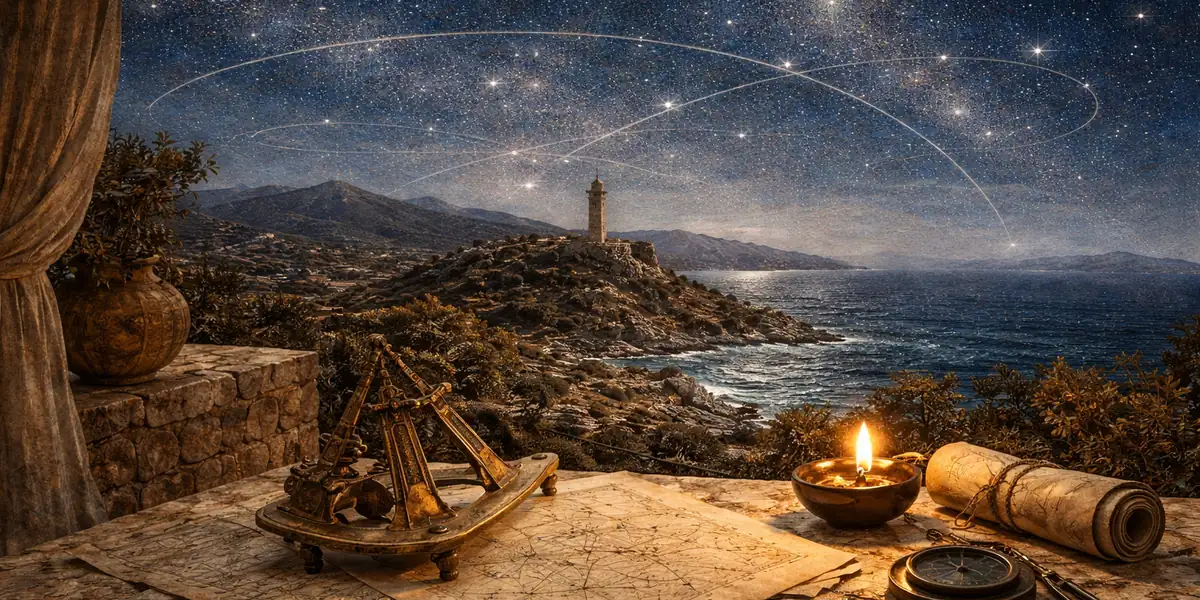
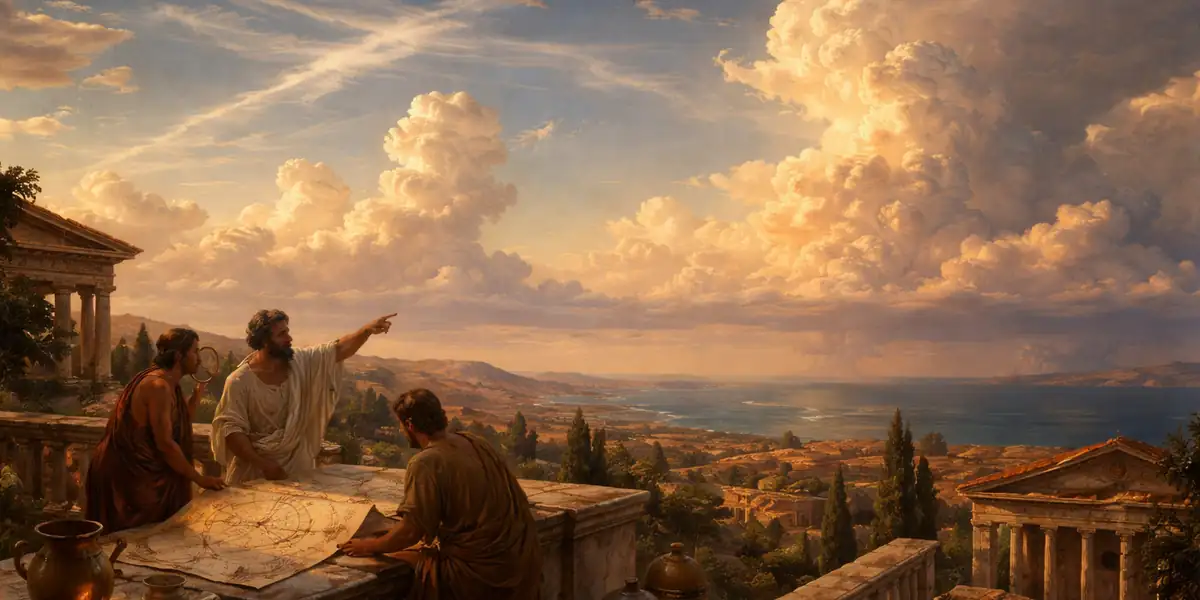
<p><img decoding="async" loading="lazy" alt="Thirty-One Satellites and a Greek Islander: How GPS Actually Works" src="https://kairoseye.com/assets/images/2026-03-21-476c749cf8c16c823a553fa45e9ee4d9.webp" width="1200" height="600" class="img_ev3q"></p>
<p>I have never needed the Global Positioning System. My island is small enough that getting lost on it would require a deliberate and sustained effort, something I associate more with Nikolas Faros attempting to locate his own studio than with anyone possessing a functioning sense of direction. But the system itself, the engineering behind it, deserves a reluctant nod of respect. Possibly even two nods.</p>
<p>So let us talk about GPS. Not the simplified version Nikolas recites when his producer asks him to "explain the weather tech" during sweeps week, but the actual thing: atomic clocks in orbit, corrections for the curvature of spacetime, and a mathematical trick called trilateration that your wrist computer solves several times per second without once asking for your permission.</p>
<p>As Heraclitus once noted, though in a context that had absolutely nothing to do with satellite navigation, "The way up and the way down are one and the same." I find this oddly appropriate. The signals go down. The math goes up. And somewhere in between, a small device on your arm decides where you are.</p>
<h2 class="anchor anchorTargetStickyNavbar_Vzrq" id="a-constellation-of-clocks">A Constellation of Clocks<a href="https://kairoseye.com/blog/how-gps-actually-works/#a-constellation-of-clocks" class="hash-link" aria-label="Direct link to A Constellation of Clocks" title="Direct link to A Constellation of Clocks" translate="no">​</a></h2>
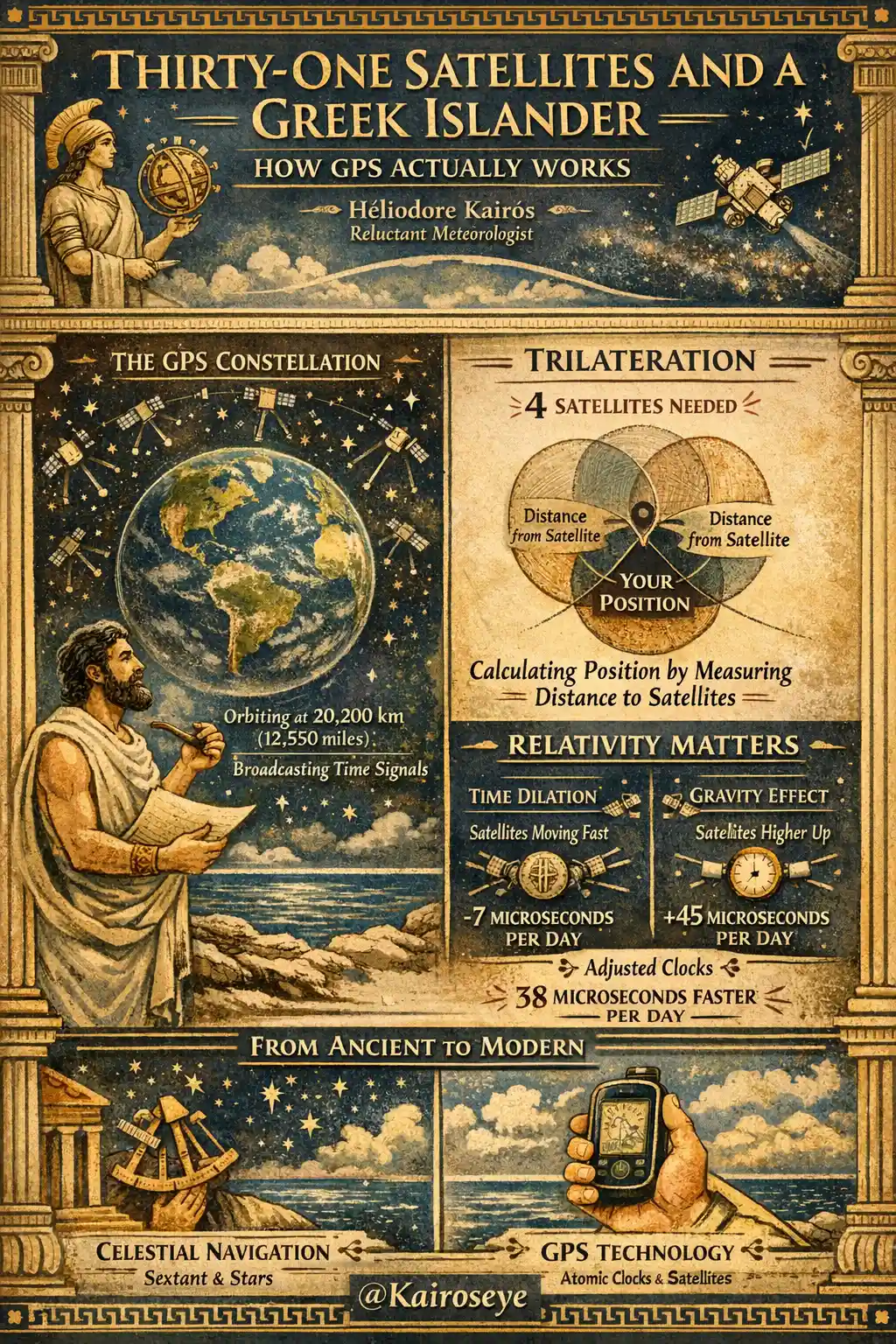
<p>The GPS constellation is maintained by the United States Space Force (a name I still cannot say without a slight twitch of the eyebrow). It consists of thirty-one operational satellites distributed across six orbital planes, each inclined at 55 degrees to the equator. Every satellite completes one orbit in approximately 11 hours and 58 minutes, which means each one circles the Earth exactly twice per sidereal day. This is not a coincidence. It is orbital choreography, arranged so that at any given moment, from any point on Earth's surface, at least four satellites are visible above the horizon.</p>
<p>Four. Remember that number. It will matter shortly.</p>
<p>Each satellite weighs between 1,100 and 2,200 kilograms, depending on which generation (or "block," as the engineers insist on calling it) we are discussing. They orbit at 20,200 kilometres, comfortably above the weather, above the International Space Station, above everything your airline pilot has ever worried about. At that altitude, they are in what is called medium Earth orbit, a region of space that is neither close enough to be convenient nor far enough to be romantic. It is the suburban commuter belt of orbital mechanics.</p>
<p>And what do these thirty-one suburban commuters do all day? They broadcast. Continuously. Each satellite transmits a signal containing two pieces of information: who it is, and what time it is. That is all. No weather data, no maps, no opinions about your route choices. Just an identification code and a timestamp, transmitted on multiple frequencies (L1 at 1575.42 MHz, L5 at 1176.45 MHz, among others) at the speed of light.</p>
<p>The signal itself travels at 299,792 kilometres per second. By the time it reaches your wrist, approximately 67 milliseconds have passed. The satellite has moved. The Earth has rotated. You have, in all likelihood, taken half a step. And your watch, that small vulgar device you insist on wearing, has already begun calculating.</p>
<h2 class="anchor anchorTargetStickyNavbar_Vzrq" id="the-most-expensive-clocks-ever-built">The Most Expensive Clocks Ever Built<a href="https://kairoseye.com/blog/how-gps-actually-works/#the-most-expensive-clocks-ever-built" class="hash-link" aria-label="Direct link to The Most Expensive Clocks Ever Built" title="Direct link to The Most Expensive Clocks Ever Built" translate="no">​</a></h2>
<p>The entire GPS system rests on one premise: that we can measure time with absurd precision. Each satellite carries multiple atomic clocks, both cesium and rubidium, accurate to within one nanosecond per day. One nanosecond. That is one billionth of a second. In the time it took you to read that last sentence, approximately 800 million nanoseconds elapsed. They passed without ceremony.</p>
<p>Why does this precision matter? Because GPS is, at its core, a time-measuring system masquerading as a position-measuring system. Your receiver does not know where you are. It knows how long each satellite's signal took to arrive, and since those signals travel at the speed of light (a known and unwavering velocity), it can calculate the distance to each satellite. A one-microsecond error in timing translates to a 300-metre error in position. A one-nanosecond error translates to 30 centimetres. The difference between "you are on the trail" and "you are in the ravine" comes down to the quality of the clock.</p>
<p>According to The Weathered Pages, entry dated some Thursday in November 2019, I recorded that "the fishermen know the time by the angle of the sun, and they have not yet fallen into a ravine." This remains technically true. But I will admit, under protest, that their method does not scale well to mountain rescue operations.</p>
<p>The ground segment, consisting of five major control stations and sixteen monitoring stations scattered across the globe, continuously checks and corrects these clocks. When a satellite's clock drifts by as little as a few nanoseconds, correction data is uploaded. The system is obsessive about time in a way I find both admirable and slightly neurotic.</p>
<h2 class="anchor anchorTargetStickyNavbar_Vzrq" id="trilateration-or-the-art-of-finding-yourself-without-asking-for-directions">Trilateration, or the Art of Finding Yourself Without Asking for Directions<a href="https://kairoseye.com/blog/how-gps-actually-works/#trilateration-or-the-art-of-finding-yourself-without-asking-for-directions" class="hash-link" aria-label="Direct link to Trilateration, or the Art of Finding Yourself Without Asking for Directions" title="Direct link to Trilateration, or the Art of Finding Yourself Without Asking for Directions" translate="no">​</a></h2>
<p>Here is where the geometry becomes beautiful, though I would never use that word in front of Nikolas Faros, who would somehow turn it into a segment about beach weather.</p>
<p>Your GPS receiver picks up signals from multiple satellites simultaneously. From each signal, it calculates a distance: signal travel time multiplied by the speed of light. One satellite gives you a sphere of possible positions. You are somewhere on the surface of a sphere with that satellite at the centre, its radius equal to the calculated distance. Two satellites narrow this to a circle where two spheres intersect. Three satellites reduce the possibilities to two points, one of which is usually somewhere absurd (deep inside the Earth, or far out in space), and the receiver discards it. Three satellites, then, should be enough.</p>
<p>But they are not. This is where the fourth satellite earns its place.</p>
<p>Your watch does not carry a cesium atomic clock. If it did, it would cost approximately $50,000 and weigh considerably more than your wrist would tolerate. Its internal clock is a cheap quartz oscillator, good enough for telling you it is 14:37, but not nearly good enough for measuring nanosecond-precision signal delays. The fourth satellite signal allows your receiver to solve for its own clock error as an additional unknown. Four satellites, four unknowns: latitude, longitude, altitude, and time correction.</p>
<p>The equations are solved through a process that would have given Pythagoras a headache and Euclid a quiet satisfaction. Your watch performs this computation several times per second. It does so silently, without complaint, and without any appreciation for the elegance of what it has just accomplished. I find this mildly offensive.</p>
<p>In practice, modern receivers often track eight to twelve satellites simultaneously, using the redundant signals to improve accuracy through a least-squares adjustment. The result: a position fix accurate to within three to five metres under open sky. In dense forest or urban canyons, somewhat worse. On my terrace, overlooking the Aegean, excellent.</p>
<h2 class="anchor anchorTargetStickyNavbar_Vzrq" id="einstein-was-right-unfortunately">Einstein Was Right (Unfortunately)<a href="https://kairoseye.com/blog/how-gps-actually-works/#einstein-was-right-unfortunately" class="hash-link" aria-label="Direct link to Einstein Was Right (Unfortunately)" title="Direct link to Einstein Was Right (Unfortunately)" translate="no">​</a></h2>
<p>This is the part of the story that I find most deeply satisfying, because it proves that pure theoretical physics (the kind done with chalk and thought experiments rather than satellite uplinks) is not merely decorative.</p>
<p>The atomic clocks on GPS satellites do not tick at the same rate as identical clocks on Earth's surface. There are two competing effects, both predicted by Einstein's theories of relativity, and both measurable enough to ruin your position fix if ignored.</p>
<p>First, special relativity. The satellites move at approximately 3.9 kilometres per second relative to observers on the ground. At this velocity, time dilation causes the onboard clocks to run slower by about 7 microseconds per day. This is the famous "moving clocks run slow" effect. It is small, but it is real, and if you think 7 microseconds is negligible, recall that one microsecond of timing error equals 300 metres of position error.</p>
<p>Second, general relativity. The satellites orbit at 20,200 kilometres, where Earth's gravitational field is weaker than at the surface. Clocks in weaker gravity run faster. This effect adds approximately 45 microseconds per day.</p>
<p>The two effects work in opposite directions. The net result: satellite clocks run faster than ground clocks by roughly 38 microseconds per day. Left uncorrected, this would introduce a positional error of approximately 11 kilometres per day. By the end of a week, your hiking watch would place you in a different country. By the end of a month, a different continent.</p>
<p>The engineers solved this with characteristic elegance. Before launch, the atomic clocks are deliberately set to tick slightly slower than their nominal frequency: 10.22999999543 MHz instead of 10.23 MHz. This pre-correction accounts for the relativistic offset. Additional fine-tuning is applied in real time by the ground control segment.</p>
<p>Heraclitus, I suspect, would have appreciated this. Everything flows, yes, but with a carefully calibrated offset. Even time, that most fundamental of rivers, runs at different speeds depending on where you stand and how fast you are moving. Nikolas Faros announced something about "satellite accuracy" last autumn with his usual confidence. He did not mention Einstein. He never does.</p>
<h2 class="anchor anchorTargetStickyNavbar_Vzrq" id="from-military-secret-to-hiking-companion">From Military Secret to Hiking Companion<a href="https://kairoseye.com/blog/how-gps-actually-works/#from-military-secret-to-hiking-companion" class="hash-link" aria-label="Direct link to From Military Secret to Hiking Companion" title="Direct link to From Military Secret to Hiking Companion" translate="no">​</a></h2>
<p>GPS began, as so many useful things do, as a military project. The first experimental satellite, Navstar 1, launched in February 1978. The system achieved full operational capability in 1995, with a constellation of 24 satellites. It was designed for the United States Department of Defense, and for its first decade of civilian availability, the military deliberately degraded the signal through a policy called Selective Availability, introducing intentional errors of up to 100 metres.</p>
<p>On May 1, 2000, President Clinton ordered Selective Availability turned off. Overnight, civilian GPS accuracy improved from approximately 100 metres to roughly 10 metres. Today, with modern dual-frequency receivers and augmentation systems such as WAAS and EGNOS, accuracy for consumer devices sits comfortably at three to five metres.</p>
<p>Other nations, noting the strategic advantage of controlling a global navigation system, built their own. Russia operates GLONASS with 24 satellites. The European Union built Galileo with 28 satellites. China deployed BeiDou with over 40 satellites. Your modern hiking watch, if it is anything worth wearing (a phrase I use loosely), receives signals from multiple constellations simultaneously, solving its position using perhaps forty or fifty satellites at once. This is redundancy on a scale that would make any ancient Greek engineer weep with admiration.</p>
<h2 class="anchor anchorTargetStickyNavbar_Vzrq" id="celestial-navigation-the-original-gps">Celestial Navigation, the Original GPS<a href="https://kairoseye.com/blog/how-gps-actually-works/#celestial-navigation-the-original-gps" class="hash-link" aria-label="Direct link to Celestial Navigation, the Original GPS" title="Direct link to Celestial Navigation, the Original GPS" translate="no">​</a></h2>
<p>Before there were thirty-one satellites, there were the stars. Polynesian navigators crossed the Pacific using wave patterns, star positions, and the flight paths of birds. The Greeks used Polaris and the constellations to orient themselves across the Mediterranean. Hipparchus of Nicaea, working in the second century BCE, catalogued the positions of some 850 stars and essentially invented the coordinate system that celestial navigation depends upon.</p>
<p>The principle is not so different from GPS, if you squint. A navigator measures the angle between a celestial body and the horizon. From this angle and the known position of the star (published in an ephemeris, or in my case, scrawled in The Weathered Pages), the navigator calculates a line of position. Two stars give two lines. Where they cross: that is where you are. Three stars give you confidence. It is trilateration's older, slower, more dignified ancestor.</p>
<p>The difference, of course, is speed. A skilled celestial navigator needs perhaps twenty minutes with a sextant and reduction tables to produce a fix accurate to within a nautical mile. Your watch needs 67 milliseconds and produces a fix accurate to within three metres. I am not saying one is better than the other. I am saying one requires knowledge, and the other requires a charged battery. These are different things, and I will thank you not to confuse them.</p>
<h2 class="anchor anchorTargetStickyNavbar_Vzrq" id="a-reluctant-admission">A Reluctant Admission<a href="https://kairoseye.com/blog/how-gps-actually-works/#a-reluctant-admission" class="hash-link" aria-label="Direct link to A Reluctant Admission" title="Direct link to A Reluctant Admission" translate="no">​</a></h2>
<p>I have spent the better part of this article explaining a system I did not ask for, do not need, and find philosophically suspicious. Thirty-one satellites, each carrying clocks more precise than anything Hipparchus could have imagined, orbiting at 20,200 kilometres, corrected for effects predicted by Einstein, broadcasting timestamps that your wrist computer transforms into a position fix several times per second.</p>
<p>It is, I will admit this once and once only, rather good engineering.</p>
<p>The fact that a modern hiking watch can display your latitude, longitude, altitude, bearing, and estimated time of arrival, all derived from signals that have travelled 20,200 kilometres at the speed of light and been corrected for the curvature of spacetime, is not nothing. It is, if I am being honest (and the pipe smoke tends to encourage honesty in the late afternoon), one of the more remarkable achievements of the species.</p>
<p>I still prefer The Weathered Pages. I still believe that knowing your landscape is superior to knowing your coordinates. But when the fog rolls in over the ridge and the trail markers vanish, when Nikolas Faros is safe in his air-conditioned studio and you are decidedly not, there is something to be said for a small device that knows, to within three metres, exactly where you stand.</p>
<p>Even if it is, undeniably, a watch.</p>
<p><img decoding="async" loading="lazy" alt="Thirty-One Satellites and a Greek Islander: How GPS Actually Works" src="https://kairoseye.com/assets/images/2026-03-21-b86b91eb90f1e3be1abef14ad4c02155.webp" width="1024" height="1536" class="img_ev3q"></p>]]></content>
        <author>
            <name>Héliodore Kairós</name>
            <uri>/heliodore</uri>
        </author>
        <category label="GPS" term="GPS"/>
        <category label="Satellite Navigation" term="Satellite Navigation"/>
        <category label="Atomic Clocks" term="Atomic Clocks"/>
        <category label="Relativity" term="Relativity"/>
        <category label="Technology" term="Technology"/>
    </entry>
    <entry>
        <title type="html"><![CDATA[What to Look for in a Garmin Calendar Watch Face]]></title>
        <id>https://kairoseye.com/blog/best-garmin-calendar-watch-face/</id>
        <link href="https://kairoseye.com/blog/best-garmin-calendar-watch-face/"/>
        <updated>2026-03-07T00:00:00.000Z</updated>
        <summary type="html"><![CDATA[Most Garmin watch faces claim calendar support — but few actually deliver automatic Google Calendar sync. Here's what to check before you install.]]></summary>
        <content type="html"><![CDATA[<p>You bought a Garmin for its precision. So why is your wrist still blank when your next meeting starts in 10 minutes? Most Garmin watch faces that claim "calendar support" are showing you static data from a manually exported file — not your actual Google Calendar.</p>
<p>Here's what separates a genuine calendar watch face from a marketing claim.</p>
<h2 class="anchor anchorTargetStickyNavbar_Vzrq" id="1-oauth-sync-vs-ical-export--the-difference-that-matters">1. OAuth sync vs. iCal export — the difference that matters<a href="https://kairoseye.com/blog/best-garmin-calendar-watch-face/#1-oauth-sync-vs-ical-export--the-difference-that-matters" class="hash-link" aria-label="Direct link to 1. OAuth sync vs. iCal export — the difference that matters" title="Direct link to 1. OAuth sync vs. iCal export — the difference that matters" translate="no">​</a></h2>
<p>Proper Google Calendar integration means the watch face connects to your account via OAuth 2.0 — the same secure protocol your browser uses. Events refresh automatically on a configurable schedule — every 10 minutes up to every 6 hours, depending on your battery preferences. Add a meeting in Google Calendar, and it appears on your wrist at the next sync cycle.</p>
<p>iCal export is different. You manually generate a static link, paste it into settings, and hope it refreshes. Many watch faces stop updating after a few days. Rescheduled meetings don't reflect. Deleted events linger.</p>
<p>If a watch face doesn't mention OAuth or the Google Calendar API, it's almost certainly relying on iCal.</p>
<h2 class="anchor anchorTargetStickyNavbar_Vzrq" id="2-on-the-dial-vs-in-a-companion-app">2. On the dial vs. in a companion app<a href="https://kairoseye.com/blog/best-garmin-calendar-watch-face/#2-on-the-dial-vs-in-a-companion-app" class="hash-link" aria-label="Direct link to 2. On the dial vs. in a companion app" title="Direct link to 2. On the dial vs. in a companion app" translate="no">​</a></h2>
<p>Some watch faces push calendar data into a companion app — you still have to reach for your phone to see what's next. What you want is events displayed directly on the watch face, visible at a glance without any interaction.</p>
<p>Look for: the next event title and time on the main dial, plus a short timeline of upcoming events across the next few hours.</p>
<h2 class="anchor anchorTargetStickyNavbar_Vzrq" id="3-weather--because-context-matters">3. Weather — because context matters<a href="https://kairoseye.com/blog/best-garmin-calendar-watch-face/#3-weather--because-context-matters" class="hash-link" aria-label="Direct link to 3. Weather — because context matters" title="Direct link to 3. Weather — because context matters" translate="no">​</a></h2>
<p>A 2pm meeting means something different when it's outdoors and rain is forecast. The best calendar watch faces pair your schedule with an hourly weather forecast — temperature, precipitation probability, UV index — so you can plan your day from your wrist without opening a single app.</p>
<p>A 48-hour forecast is the practical minimum. Anything shorter and you're missing tomorrow entirely.</p>
<h2 class="anchor anchorTargetStickyNavbar_Vzrq" id="4-how-many-calendars">4. How many calendars?<a href="https://kairoseye.com/blog/best-garmin-calendar-watch-face/#4-how-many-calendars" class="hash-link" aria-label="Direct link to 4. How many calendars?" title="Direct link to 4. How many calendars?" translate="no">​</a></h2>
<p>Most people juggle at least two: personal and work. A watch face that syncs only one forces you to choose. Look for support of at least 2–3 calendars simultaneously, with the ability to select which ones to display.</p>
<h2 class="anchor anchorTargetStickyNavbar_Vzrq" id="5-does-it-work-on-your-model">5. Does it work on your model?<a href="https://kairoseye.com/blog/best-garmin-calendar-watch-face/#5-does-it-work-on-your-model" class="hash-link" aria-label="Direct link to 5. Does it work on your model?" title="Direct link to 5. Does it work on your model?" translate="no">​</a></h2>
<p>Connect IQ apps don't run on every Garmin. Before installing anything, check the supported devices list on the store page. Fenix, Forerunner, Venu, Instinct, and Epix all have different screen shapes and resolutions — a watch face built for one may look broken or be unavailable on another.</p>
<h2 class="anchor anchorTargetStickyNavbar_Vzrq" id="kairoseye-checks-every-box">KairosEye checks every box<a href="https://kairoseye.com/blog/best-garmin-calendar-watch-face/#kairoseye-checks-every-box" class="hash-link" aria-label="Direct link to KairosEye checks every box" title="Direct link to KairosEye checks every box" translate="no">​</a></h2>
<p>KairosEye was built specifically to solve these problems: automatic Google Calendar sync via OAuth (on a schedule you control), events displayed directly on the dial, a 48h hour-by-hour weather forecast, up to 3 simultaneous calendars, and broad support for the current Garmin catalog.</p>
<p>The free version gives you one calendar and basic weather — no time limit, no trial. The Supporter version unlocks 3 calendars, 48h forecasts, and full layout customization for a one-time fee.</p>
<p><a href="https://apps.garmin.com/apps/5dc2257b-6010-4f21-a294-194cc7a94ecd" target="_blank" rel="noopener noreferrer" class="">Install KairosEye on Garmin Connect IQ →</a></p>
<p>Already installed? Follow the <a class="" href="https://kairoseye.com/docs/start/">Quick Start guide</a> to connect your Google Calendar in under 2 minutes.</p>]]></content>
        <author>
            <name>David Marmont</name>
            <uri>https://marmont.fr</uri>
        </author>
        <category label="Garmin" term="Garmin"/>
        <category label="Calendar" term="Calendar"/>
        <category label="Guide" term="Guide"/>
    </entry>
    <entry>
        <title type="html"><![CDATA[KairosEye v2: Everything You Need to Know]]></title>
        <id>https://kairoseye.com/blog/kairoseye-v2-launch/</id>
        <link href="https://kairoseye.com/blog/kairoseye-v2-launch/"/>
        <updated>2026-03-03T00:00:00.000Z</updated>
        <summary type="html"><![CDATA[KairosEye v2 launches with Google OAuth 2.0, 3 configurable calendars, major performance improvements, and a redesigned interface built from the most constrained hardware up.]]></summary>
        <content type="html"><![CDATA[<p>KairosEye v2 is a complete rebuild — new calendar system, new interface, new architecture. Here's what changed and why.</p>
<hr>
<h2 class="anchor anchorTargetStickyNavbar_Vzrq" id="google-oauth-20-no-more-ics-files">Google OAuth 2.0: No More ICS Files<a href="https://kairoseye.com/blog/kairoseye-v2-launch/#google-oauth-20-no-more-ics-files" class="hash-link" aria-label="Direct link to Google OAuth 2.0: No More ICS Files" title="Direct link to Google OAuth 2.0: No More ICS Files" translate="no">​</a></h2>
<p>The biggest change in v2: calendar configuration is now powered by <strong>Google OAuth 2.0</strong>.
<strong>Previously</strong>, the app relied on ICS/Webcal file imports — you had to make calendar files publicly accessible, manually configure URLs, and deal with unreliable synchronization.
<strong>Now</strong>, you sign in with Google at <a href="https://kairoseye.com/login/" target="_blank" rel="noopener noreferrer" class="">kairoseye.com/login/</a>, select up to <strong>3 calendars</strong>, and you're done. No URLs, no public files, no manual refresh.
Why this matters:</p>
<ul>
<li class=""><strong>More secure</strong> — your calendars remain private, accessible only via OAuth tokens</li>
<li class=""><strong>More reliable</strong> — direct Google API connection instead of URL-dependent sync</li>
<li class=""><strong>More flexible</strong> — switch calendars in a few clicks, no reconfiguration needed</li>
<li class=""><strong>Full control</strong> — grant or revoke access anytime from your <a href="https://myaccount.google.com/permissions" target="_blank" rel="noopener noreferrer" class="">Google Account Settings</a>
We only request <strong>read-only</strong> access. You can delete all your data from the Settings page at any time. Full details in our <a href="https://kairoseye.com/privacy/" target="_blank" rel="noopener noreferrer" class="">Privacy Policy</a>.</li>
</ul>
<hr>
<h2 class="anchor anchorTargetStickyNavbar_Vzrq" id="3-configurable-calendars">3 Configurable Calendars<a href="https://kairoseye.com/blog/kairoseye-v2-launch/#3-configurable-calendars" class="hash-link" aria-label="Direct link to 3 Configurable Calendars" title="Direct link to 3 Configurable Calendars" translate="no">​</a></h2>
<p>Connect up to 3 Google Calendar sources — work, personal, family, or any combination. Turn each calendar on or off independently. Events sync every 2 hours by default, or every 10 minutes on demand. Recurring events, reminders, and all-day events are all supported.</p>
<hr>
<h2 class="anchor anchorTargetStickyNavbar_Vzrq" id="built-from-the-most-constrained-hardware-up">Built from the Most Constrained Hardware Up<a href="https://kairoseye.com/blog/kairoseye-v2-launch/#built-from-the-most-constrained-hardware-up" class="hash-link" aria-label="Direct link to Built from the Most Constrained Hardware Up" title="Direct link to Built from the Most Constrained Hardware Up" translate="no">​</a></h2>
<p>Instead of adapting a feature-rich design downward, we started from the <strong>toughest hardware</strong> — the Garmin Instinct 2 (280x280, monochrome) and Instinct Crossover — and built up from there.
This approach gives v2 a rock-solid, universal foundation that scales to every Garmin device as we expand support.
<strong>v2 launch models:</strong></p>
<ul>
<li class="">Instinct 2 (280x280, monochrome)</li>
<li class="">Instinct Crossover (compact hybrid)
More Garmin models coming soon — we're targeting the majority of the catalog within 6 months.</li>
</ul>
<hr>
<h2 class="anchor anchorTargetStickyNavbar_Vzrq" id="performance-improvements">Performance Improvements<a href="https://kairoseye.com/blog/kairoseye-v2-launch/#performance-improvements" class="hash-link" aria-label="Direct link to Performance Improvements" title="Direct link to Performance Improvements" translate="no">​</a></h2>
<h3 class="anchor anchorTargetStickyNavbar_Vzrq" id="50-reduction-in-network-usage">50% Reduction in Network Usage<a href="https://kairoseye.com/blog/kairoseye-v2-launch/#50-reduction-in-network-usage" class="hash-link" aria-label="Direct link to 50% Reduction in Network Usage" title="Direct link to 50% Reduction in Network Usage" translate="no">​</a></h3>
<p>Optimized data fetching and sync cut network consumption in half — less battery drain, faster sync, better performance on slower connections.</p>
<h3 class="anchor anchorTargetStickyNavbar_Vzrq" id="lower-memory-footprint">Lower Memory Footprint<a href="https://kairoseye.com/blog/kairoseye-v2-launch/#lower-memory-footprint" class="hash-link" aria-label="Direct link to Lower Memory Footprint" title="Direct link to Lower Memory Footprint" translate="no">​</a></h3>
<p>Significantly reduced memory consumption for smooth operation on low-memory Garmin models. If you previously experienced crashes or slowdowns, this should resolve them.</p>
<h3 class="anchor anchorTargetStickyNavbar_Vzrq" id="dynamic-temperature-graph">Dynamic Temperature Graph<a href="https://kairoseye.com/blog/kairoseye-v2-launch/#dynamic-temperature-graph" class="hash-link" aria-label="Direct link to Dynamic Temperature Graph" title="Direct link to Dynamic Temperature Graph" translate="no">​</a></h3>
<p>The temperature display is now adaptive — it automatically adjusts its size based on the number of calendar events, ensuring optimal use of screen space.</p>
<hr>
<h2 class="anchor anchorTargetStickyNavbar_Vzrq" id="v1-vs-v2">v1 vs v2<a href="https://kairoseye.com/blog/kairoseye-v2-launch/#v1-vs-v2" class="hash-link" aria-label="Direct link to v1 vs v2" title="Direct link to v1 vs v2" translate="no">​</a></h2>


<table><thead><tr><th>Feature</th><th>v1</th><th>v2</th></tr></thead><tbody><tr><td><strong>Calendar Sources</strong></td><td>Webcal/iCal URLs</td><td>Google Calendar OAuth</td></tr><tr><td><strong>Max Calendars</strong></td><td>4</td><td>3</td></tr><tr><td><strong>Devices</strong></td><td>Most Garmin models</td><td>Instinct 2, Crossover (expanding)</td></tr><tr><td><strong>Event Display</strong></td><td>Single-calendar view</td><td>Multi-calendar optimized</td></tr><tr><td><strong>Sync Reliability</strong></td><td>URL-dependent</td><td>Google's infrastructure</td></tr><tr><td><strong>Color Customization</strong></td><td>Yes</td><td>No (optimized for battery)</td></tr><tr><td><strong>Network Usage</strong></td><td>Standard</td><td>50% reduction</td></tr></tbody></table>
<hr>
<h2 class="anchor anchorTargetStickyNavbar_Vzrq" id="getting-started">Getting Started<a href="https://kairoseye.com/blog/kairoseye-v2-launch/#getting-started" class="hash-link" aria-label="Direct link to Getting Started" title="Direct link to Getting Started" translate="no">​</a></h2>
<ol>
<li class=""><strong>Update KairosEye</strong> to v2 from the Garmin Connect IQ store</li>
<li class="">Visit <a href="https://kairoseye.com/login/" target="_blank" rel="noopener noreferrer" class="">kairoseye.com/login/</a> and sign in with Google</li>
<li class="">Select up to 3 calendars</li>
<li class="">On your watch, go to <strong>Settings</strong> &gt; <strong>Link Account</strong></li>
<li class="">Enter the displayed 8-character code (format: <code>XXXX-XXXX</code>)
Your calendars will start syncing automatically.</li>
</ol>
<hr>
<h2 class="anchor anchorTargetStickyNavbar_Vzrq" id="for-users-still-on-v1">For Users Still on v1<a href="https://kairoseye.com/blog/kairoseye-v2-launch/#for-users-still-on-v1" class="hash-link" aria-label="Direct link to For Users Still on v1" title="Direct link to For Users Still on v1" translate="no">​</a></h2>
<p>You can keep using v1 with iCal/Webcal URLs. Both versions coexist, but v2 brings better reliability, multi-calendar support, and faster sync.</p>
<hr>
<p>Have feedback or want support for your Garmin model? <strong><a class="" href="https://kairoseye.com/docs/faq/">Reach out on our FAQ page</a></strong> or email <strong><a href="mailto:apps@kairoseye.com" target="_blank" rel="noopener noreferrer" class="">apps@kairoseye.com</a></strong>.</p>]]></content>
        <author>
            <name>David Marmont</name>
            <uri>https://marmont.fr</uri>
        </author>
        <category label="Release" term="Release"/>
        <category label="Milestone" term="Milestone"/>
        <category label="Calendar" term="Calendar"/>
        <category label="Security" term="Security"/>
        <category label="Performance" term="Performance"/>
    </entry>
    <entry>
        <title type="html"><![CDATA[The Google Calendar Setup Nobody Taught You]]></title>
        <id>https://kairoseye.com/blog/google-calendar-setup-nobody-taught-you/</id>
        <link href="https://kairoseye.com/blog/google-calendar-setup-nobody-taught-you/"/>
        <updated>2026-01-01T00:00:00.000Z</updated>
        <summary type="html"><![CDATA[Most people use Google Calendar like a notepad. Here's the complete setup I build for every client, from multi-calendar architecture to weekly audits.]]></summary>
        <content type="html"><![CDATA[<p>I studied architecture. Not buildings. Structures. The logic of how constraints become decisions, how decisions become spaces, and how spaces shape the lives of the people inside them.</p>
<p><img decoding="async" loading="lazy" alt="The Google Calendar Setup Nobody Taught You" src="https://kairoseye.com/assets/images/2026-7b9fd45c55244c8b098eab979d051466.webp" width="1200" height="600" class="img_ev3q"></p>
<p>The first thing they teach you in architecture school is that the tool doesn't design the building. You design the building, then you pick up the tool. Most people do the exact opposite with their calendar. They open Google Calendar, start dumping events into it, and three years later they're staring at a screen full of colored blocks wondering why every week feels the same kind of exhausting.</p>
<p>Google Calendar is not a notepad. It's an operating system for your time. And like any operating system, it needs to be configured before it's useful. Out of the box, the defaults are wrong, the structure is missing, and the features that would actually help you are buried three menus deep.</p>
<p>This is the setup I build for every client. It takes about an hour. It changes how the rest of their year works.</p>
<h2 class="anchor anchorTargetStickyNavbar_Vzrq" id="build-the-structure-first">Build the structure first<a href="https://kairoseye.com/blog/google-calendar-setup-nobody-taught-you/#build-the-structure-first" class="hash-link" aria-label="Direct link to Build the structure first" title="Direct link to Build the structure first" translate="no">​</a></h2>
<p>Before you touch a single event, you need architecture.</p>
<p>Most people have one calendar. Maybe two if they've separated "Work" and "Personal." This is like designing a house with one room. Technically functional. Practically unlivable.</p>
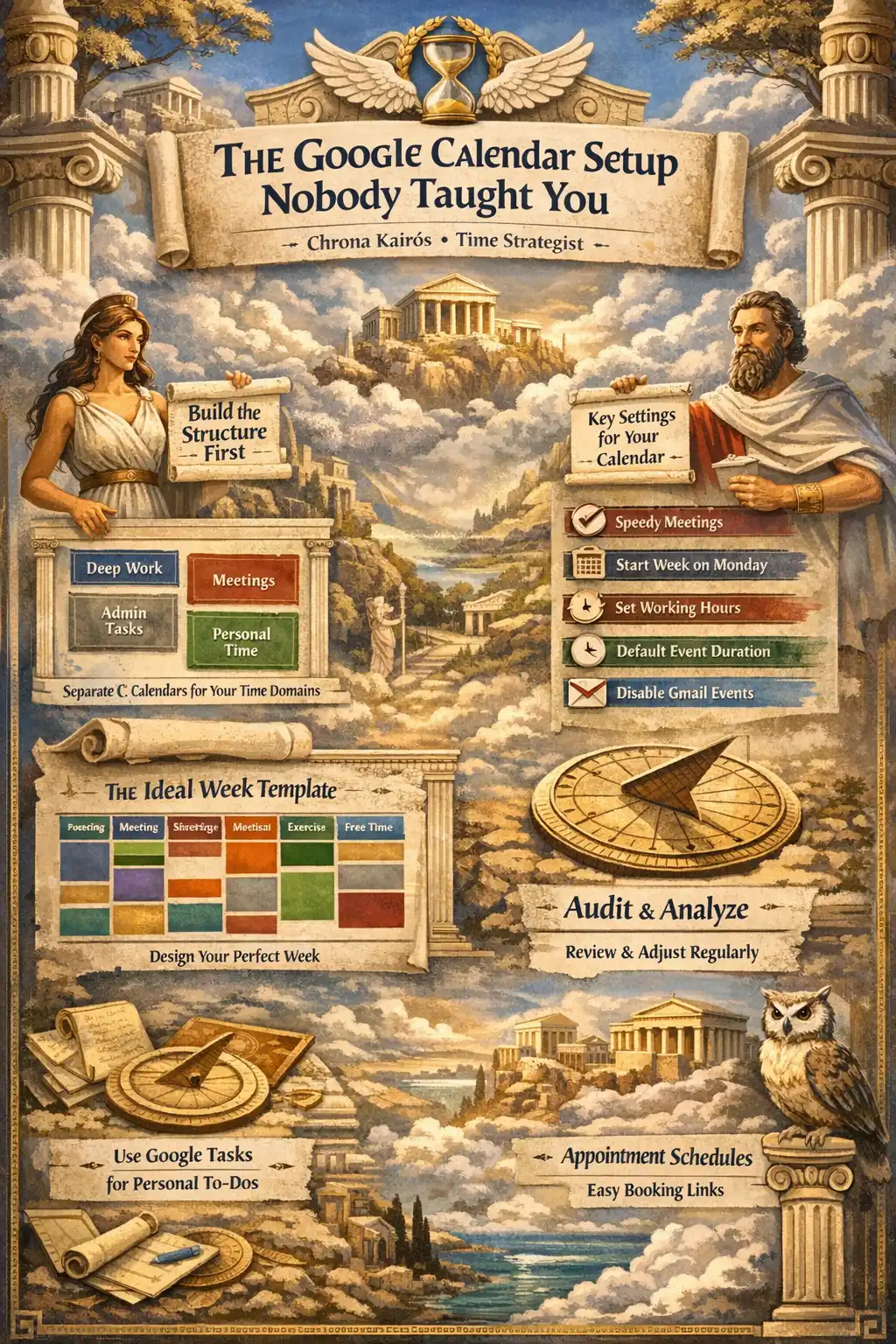
<p>Create separate calendars for each major domain of your time. Not twenty. Five to seven. Here's what I typically build for clients:</p>
<ul>
<li class=""><strong>Deep Work</strong> (blue, or whatever color reads as "focus" to you)</li>
<li class=""><strong>Meetings</strong> (a visible, slightly aggressive color. Red or orange. You want meetings to stand out because they should feel like they're taking something.)</li>
<li class=""><strong>Admin/Shallow Work</strong> (grey or muted. Emails, invoices, errands. Necessary but low-energy.)</li>
<li class=""><strong>Personal</strong> (green. Health, family, friends, the things that exist outside work.)</li>
<li class=""><strong>Blocked/Do Not Book</strong> (dark. The slots where nothing goes, by design.)</li>
</ul>
<p>Each calendar gets its own color. The point is not decoration. The point is the <strong>glance test</strong>: can you look at your week and, in two seconds, see what kind of week it is? If it's all red (meetings), you have a problem. If there's no blue (deep work), you have a different problem. Color turns your calendar into a dashboard.</p>
<p>One important detail: color-code by energy type, not by project. "Project Alpha" in green and "Project Beta" in yellow tells you nothing about how your week <em>feels</em>. But "deep work" in blue and "meetings" in red tells you immediately whether your week has room to think.</p>
<p>Michael Hyatt calls this treating your calendar like a budget. You have a finite number of hours. Every block you allocate to one thing is a block you can't spend on something else. When you see it in color, the tradeoffs become visceral.</p>
<p>To create new calendars: left sidebar, the "+" next to "Other calendars," then "Create new calendar." Takes thirty seconds per calendar. You'll never go back.</p>
<h2 class="anchor anchorTargetStickyNavbar_Vzrq" id="five-settings-that-change-everything">Five settings that change everything<a href="https://kairoseye.com/blog/google-calendar-setup-nobody-taught-you/#five-settings-that-change-everything" class="hash-link" aria-label="Direct link to Five settings that change everything" title="Direct link to Five settings that change everything" translate="no">​</a></h2>
<p>There are settings in Google Calendar that most people never touch. Five of them are genuinely transformative.</p>
<p><strong>1. Speedy meetings.</strong></p>
<p>Settings (gear icon), Event Settings, check "Speedy meetings." This automatically shortens every meeting you create. Thirty-minute meetings become twenty-five. Sixty-minute meetings become fifty. The rule: meetings under forty-five minutes lose five minutes; longer meetings lose ten.</p>
<p>This is, by a wide margin, the single most impactful setting in Google Calendar. Those five minutes between back-to-back meetings are the difference between arriving at the next call frazzled and arriving human. Over a day with six meetings, you reclaim thirty to sixty minutes. Over a year, it's weeks.</p>
<p>I enable this for every single client. Most of them text me within a week to say it changed their day.</p>
<p><strong>2. Start of week: Monday.</strong></p>
<p>Settings, General, "Start of week," change from Sunday to Monday. The default is Sunday because Google is American. Your brain plans in Monday-to-Friday weeks. Make your calendar match how you actually think.</p>
<p><strong>3. Working Hours.</strong></p>
<p>Settings, General, "Working hours &amp; location." Define when you're available, per day. Anyone trying to schedule outside those hours sees a warning. If you enable auto-decline, meetings outside your working hours get rejected automatically.</p>
<p>This is how you draw a boundary without having the awkward conversation. Your calendar says no for you. Set it once, and every scheduling request respects it (or at least acknowledges that it doesn't).</p>
<p>If you work hybrid, the "Working location" feature lets you set where you are each day (office, home, custom). Your team can see who's where without asking.</p>
<p><strong>4. Default event duration.</strong></p>
<p>Settings, Event Settings, "Default duration." Change it from thirty minutes to twenty-five (or fifteen, depending on your work). The default of thirty is why most meetings are thirty minutes. It's not because thirty is the right length. It's because Google picked that number and nobody changed it. Your meetings should be as long as they need to be, not as long as the default says.</p>
<p><strong>5. Events from Gmail: restrict or disable.</strong></p>
<p>Settings, "Events from Gmail." By default, Google automatically creates calendar events from emails (flight confirmations, hotel bookings, restaurant reservations). Useful, but also the main vector for calendar spam. Scammers send emails with event data that auto-appear on your calendar. Change this to "Only show events from senders in my contacts" or disable it entirely and add events manually. Three seconds of prevention saves you from phishing events you didn't ask for.</p>
<h2 class="anchor anchorTargetStickyNavbar_Vzrq" id="the-ideal-week-template">The ideal week template<a href="https://kairoseye.com/blog/google-calendar-setup-nobody-taught-you/#the-ideal-week-template" class="hash-link" aria-label="Direct link to The ideal week template" title="Direct link to The ideal week template" translate="no">​</a></h2>
<p>This is the part where architecture meets planning.</p>
<p>Create a sixth calendar called "Template" (or "Ideal Week," whatever you prefer). Make it a pale, semi-transparent color. Then fill it with your ideal week: what your time looks like when you control 100% of it.</p>
<p>Recurring deep work blocks every morning, 9 to 11. A meeting window from 2 to 4 in the afternoon. Admin batch on Friday morning. Lunch that actually lasts an hour. Exercise three times a week. An empty slot on Wednesday afternoon for thinking, reading, or nothing at all.</p>
<p>This template is not your schedule. It's your baseline. Your blueprint. It sits underneath your real calendar, and the gap between the two tells you exactly where your time is leaking.</p>
<p>When someone tries to book over your deep work block, the answer is: "I have a conflict." Not "let me move my thing." Not "I was just going to do some work, it can wait." You have a conflict. The block is real. Treat it like a meeting with someone you respect, because the someone is you.</p>
<p>Laura Vanderkam, who studies how people spend time, recommends reviewing your ideal week against your actual week every quarter. The drift is always revealing. Deep work blocks that got eaten by "quick syncs." Exercise sessions that became optional. Lunch that shrank to fifteen minutes at the desk. The template makes the erosion visible.</p>
<h2 class="anchor anchorTargetStickyNavbar_Vzrq" id="focus-time-and-meeting-hygiene">Focus Time and meeting hygiene<a href="https://kairoseye.com/blog/google-calendar-setup-nobody-taught-you/#focus-time-and-meeting-hygiene" class="hash-link" aria-label="Direct link to Focus Time and meeting hygiene" title="Direct link to Focus Time and meeting hygiene" translate="no">​</a></h2>
<p>Google Calendar has a feature called <strong>Focus Time</strong> (available on Workspace accounts). It creates a special block on your calendar that does three things: it's visually distinct, it automatically declines conflicting meeting invitations, and it mutes your Google Chat notifications.</p>
<p>That middle feature is the one that matters. You're not just blocking time. You're telling everyone else's scheduling system that you're not available. The meeting invite bounces back with a message. You don't have to explain, justify, or apologize. The calendar handles it.</p>
<p>Make Focus Time recurring. Every weekday morning, 9 to 11. Or whatever your peak focus window is. Lock it in and let the system defend it.</p>
<p>For meetings that do make it onto your calendar, three filters:</p>
<p><strong>Is a decision being made?</strong> If no decision will happen, this isn't a meeting. It's a broadcast. Write a memo.</p>
<p><strong>Are you essential to that decision?</strong> If you're there "for visibility" or "to stay in the loop," you're a spectator. Read the notes after.</p>
<p><strong>Could this be resolved in five minutes asynchronously?</strong> Most "quick questions" don't need a thirty-minute block. Send a message.</p>
<p>These three questions, applied honestly, eliminate roughly half of most people's meetings. The ones that survive are shorter, sharper, and actually worth showing up for.</p>
<p>One more thing: <strong>audit your recurring meetings quarterly.</strong> Every standing meeting should justify its continued existence. List them all. Rate each one from 1 to 5 on value delivered. Anything below a 3, kill it. One practitioner reported a 27% decrease in meetings after a single audit. The meetings didn't protest.</p>
<h2 class="anchor anchorTargetStickyNavbar_Vzrq" id="google-tasks-the-missing-half">Google Tasks: the missing half<a href="https://kairoseye.com/blog/google-calendar-setup-nobody-taught-you/#google-tasks-the-missing-half" class="hash-link" aria-label="Direct link to Google Tasks: the missing half" title="Direct link to Google Tasks: the missing half" translate="no">​</a></h2>
<p>Here's a feature sitting in plain sight that most people ignore: Google Tasks, integrated directly into Calendar.</p>
<p>Click the Tasks icon in the right sidebar. Create a task with a due date and time. It appears on your calendar alongside your events. Not as a vague reminder floating somewhere in your phone, but as a concrete block on the same timeline where you plan everything else.</p>
<p>This solves a real problem. Events are commitments to others (meetings, calls, appointments). Tasks are commitments to yourself (write the report, review the contract, send the invoice). Most people track the first kind religiously and the second kind on sticky notes that migrate around their desk until they disintegrate. Putting both on the same calendar means both get treated as real.</p>
<p>The killer feature: <strong>Gmail to Task conversion.</strong> Open an email that requires action. Click "Add to Tasks" (or drag it into the Tasks sidebar). Google creates a task with a link back to the original email. Set a due date. It shows up on your calendar. When you get to that time block, the task is there, linked to the email, ready to go. No copying, no context-switching, no "where was that thing I needed to do?"</p>
<p>If you've been using Google Reminders, note that Google is migrating everything to Tasks. Reminders are being deprecated. Move now, before the migration does it for you.</p>
<p>The synthesis I recommend: hard commitments (meetings, deadlines) live as calendar events. Tasks live on your task list, organized by project or context. During your morning planning session (ten minutes, max), pull the day's tasks into your deep work blocks. This gives you Cal Newport's time-blocking structure with David Allen's flexible task management. The best of both systems, inside one tool.</p>
<h2 class="anchor anchorTargetStickyNavbar_Vzrq" id="the-weekly-audit">The weekly audit<a href="https://kairoseye.com/blog/google-calendar-setup-nobody-taught-you/#the-weekly-audit" class="hash-link" aria-label="Direct link to The weekly audit" title="Direct link to The weekly audit" translate="no">​</a></h2>
<p>Every Friday, fifteen minutes. That's all it takes.</p>
<p>Google Calendar has a built-in analytics feature called <strong>Time Insights</strong> (left sidebar on desktop, Workspace accounts). It shows you: total meeting hours this week, daily average, busiest meeting day, recurring vs. one-off meetings breakdown, and the people you spent the most time with.</p>
<p>Most people have never opened this panel. Open it. The numbers are usually sobering.</p>
<p>What to look for:</p>
<p><strong>Meeting load as a percentage of work hours.</strong> If more than 40% of your work hours are meetings, you don't have time to do what the meetings decide. You're all discussion and no execution.</p>
<p><strong>Deep work ratio.</strong> Can you find at least one contiguous block of two or more hours on each day? If not, your calendar is too fragmented for anything that requires real thinking.</p>
<p><strong>Recurring meeting dominance.</strong> If most of your meeting hours are recurring (standing meetings, weeklies, syncs), that's inertia, not strategy. Each one was created for a reason. Ask whether that reason still exists.</p>
<p><strong>Buffer time.</strong> Are there transitions between meetings, or is everything back-to-back? Without buffer, you arrive at each meeting carrying the cognitive residue of the last one.</p>
<p>Check these numbers against your ideal week template. The gap is your calendar debt, the accumulated cost of saying yes to things that should have been a no. Like financial debt, it compounds. And like financial debt, the first step to paying it off is knowing the number.</p>
<h2 class="anchor anchorTargetStickyNavbar_Vzrq" id="appointment-schedules-the-free-calendly">Appointment Schedules: the free Calendly<a href="https://kairoseye.com/blog/google-calendar-setup-nobody-taught-you/#appointment-schedules-the-free-calendly" class="hash-link" aria-label="Direct link to Appointment Schedules: the free Calendly" title="Direct link to Appointment Schedules: the free Calendly" translate="no">​</a></h2>
<p>One last feature that saves an absurd amount of time: <strong>Appointment Schedules.</strong> This is Google's built-in version of Calendly, and it's free for all Google accounts.</p>
<p>Create, click "Appointment schedule." Set duration, available hours, buffer time between appointments, and maximum bookings per day. Google generates a shareable link. Send it to anyone who needs to book time with you. They see your available slots (without seeing your actual calendar), pick one, and the event appears on both calendars. Done.</p>
<p>No more "when are you free?" email chains. No more proposing three times and getting back "none of those work." No more paying for a third-party scheduling tool for something your calendar already does.</p>
<p>Put the link in your email signature. Share it with clients, collaborators, anyone who regularly needs time with you. The time you save on scheduling logistics alone pays for the five minutes it takes to set up.</p>
<h2 class="anchor anchorTargetStickyNavbar_Vzrq" id="on-the-wrist">On the wrist<a href="https://kairoseye.com/blog/google-calendar-setup-nobody-taught-you/#on-the-wrist" class="hash-link" aria-label="Direct link to On the wrist" title="Direct link to On the wrist" translate="no">​</a></h2>
<p>I'll keep this brief because this article is about the calendar, not the watch. But there's a reason I wear a Garmin with my Google Calendar synced to it.</p>
<p>Everything we just built (the structure, the color coding, the focus blocks, the tasks) collapses into a single line on your wrist: the next thing. Next meeting in 45 minutes. Deep work block until 11. Nothing until 2pm.</p>
<p>That's it. No phone to unlock, no notification tray, no inbox pulling you sideways. Just the next thing, and how long until it starts. The honest feedback loop.</p>
<p>KairosEye connects directly to Google Calendar with a one-click OAuth setup. Your next event is on the watch face, alongside time and weather. Three pieces of information. The three that matter.</p>
<p>My father thinks this is an absurd amount of engineering to accomplish what a wall clock and a window already provide. He's not entirely wrong. But he also doesn't have forty clients whose calendars need architecturing every quarter.</p>
<h2 class="anchor anchorTargetStickyNavbar_Vzrq" id="january-1st">January 1st<a href="https://kairoseye.com/blog/google-calendar-setup-nobody-taught-you/#january-1st" class="hash-link" aria-label="Direct link to January 1st" title="Direct link to January 1st" translate="no">​</a></h2>
<p>I write once a year. This year, for the first time, I wrote something practical instead of philosophical. Not because I've run out of things to say about time (ask anyone who's shared a café table with me) but because I've spent four years watching people nod along to "do less" and "protect your time" and then go back to the same broken calendar on Monday morning.</p>
<p>The ideas don't fail. The implementation does. And the implementation fails because nobody taught you how to set up the tool.</p>
<p>Your calendar is the most honest portrait of your priorities. Not what you say matters. What you <em>schedule</em> matters. And a calendar without architecture is a building without a blueprint: it stands, technically, but nobody wants to live in it.</p>
<p>Spend an hour. Build the structure. Change the settings. Create the template. Set up the audit.</p>
<p>Then watch what happens to the other 8,759 hours of your year.</p>
<p><img decoding="async" loading="lazy" alt="The Google Calendar Setup Nobody Taught You" src="https://kairoseye.com/assets/images/2026-9174440f4fda21c25830a3fc8903bcab.webp" width="1024" height="1536" class="img_ev3q"></p>]]></content>
        <author>
            <name>Chrona Kairós</name>
            <uri>/chrona</uri>
        </author>
        <category label="Productivity" term="Productivity"/>
        <category label="Calendar" term="Calendar"/>
        <category label="Google Calendar" term="Google Calendar"/>
        <category label="Guide" term="Guide"/>
    </entry>
    <entry>
        <title type="html"><![CDATA[Twelve Degrees of Wind: The Beaufort Scale and the Art of Reading Air]]></title>
        <id>https://kairoseye.com/blog/twelve-degrees-of-wind-beaufort-scale/</id>
        <link href="https://kairoseye.com/blog/twelve-degrees-of-wind-beaufort-scale/"/>
        <updated>2025-12-21T00:00:00.000Z</updated>
        <summary type="html"><![CDATA[How the Beaufort scale turned wind into a universal language, from flat calm to hurricane force, and why observation still beats any anemometer.]]></summary>
        <content type="html"><![CDATA[<p>There is a particular silence that precedes wind. Not the absence of sound, exactly, but a quality of waiting, as if the atmosphere itself is holding its breath before deciding what sort of day it intends to inflict upon you. I have spent forty years on this island cataloguing such silences, and I can tell you with absolute certainty that no barometric sensor, no algorithmic forecast, no grinning television personality has ever captured this phenomenon with any accuracy whatsoever.</p>
<p>I will not name names. Nikolas Faros.</p>
<section class="calculator_JWev" id="beaufort-calculator"><h2>Beaufort Scale Converter</h2><div class="inputs_L3OQ"><div class="field_k4xU"><label for="bf-speed">Wind speed</label><input id="bf-speed" type="number" min="0" step="1" placeholder="25" value=""></div><div class="field_k4xU"><label for="bf-unit">Unit</label><select id="bf-unit" class="select_WdKX"><option value="kmh" selected="">km/h</option><option value="mph">mph</option><option value="knots">knots</option><option value="ms">m/s</option></select></div></div><div class="scaleBar_PVJ5"><button class="forceBtn_VxQX" style="background:#a8d8ea" title="Force 0 — Calm" aria-label="Force 0">0</button><button class="forceBtn_VxQX" style="background:#87ceeb" title="Force 1 — Light Air" aria-label="Force 1">1</button><button class="forceBtn_VxQX" style="background:#6db6d6" title="Force 2 — Light Breeze" aria-label="Force 2">2</button><button class="forceBtn_VxQX" style="background:#4a9ec4" title="Force 3 — Gentle Breeze" aria-label="Force 3">3</button><button class="forceBtn_VxQX" style="background:#2e86ab" title="Force 4 — Moderate Breeze" aria-label="Force 4">4</button><button class="forceBtn_VxQX" style="background:#f0a535" title="Force 5 — Fresh Breeze" aria-label="Force 5">5</button><button class="forceBtn_VxQX" style="background:#e8943a" title="Force 6 — Strong Breeze" aria-label="Force 6">6</button><button class="forceBtn_VxQX" style="background:#d4782d" title="Force 7 — Near Gale" aria-label="Force 7">7</button><button class="forceBtn_VxQX" style="background:#c0562a" title="Force 8 — Gale" aria-label="Force 8">8</button><button class="forceBtn_VxQX" style="background:#a83232" title="Force 9 — Strong Gale" aria-label="Force 9">9</button><button class="forceBtn_VxQX" style="background:#8b1a1a" title="Force 10 — Storm" aria-label="Force 10">10</button><button class="forceBtn_VxQX" style="background:#6b0f0f" title="Force 11 — Violent Storm" aria-label="Force 11">11</button><button class="forceBtn_VxQX" style="background:#3d0000" title="Force 12 — Hurricane Force" aria-label="Force 12">12</button></div><p class="hint_HUYQ">Enter a wind speed or tap a force number to see details.</p><details class="fullTable_L92D"><summary>View full Beaufort scale</summary><table class="table_5FWo"><thead><tr><th>Force</th><th>Description</th><th>km/h</th><th>mph</th><th>Knots</th><th>m/s</th></tr></thead><tbody><tr class=""><td><span class="forceCell_lDD9" style="background:#a8d8ea">0</span></td><td>Calm</td><td>0–2</td><td>0–1</td><td>0–1</td><td>0–0.5</td></tr><tr class=""><td><span class="forceCell_lDD9" style="background:#87ceeb">1</span></td><td>Light Air</td><td>2–6</td><td>1–3</td><td>1–3</td><td>0.5–1.5</td></tr><tr class=""><td><span class="forceCell_lDD9" style="background:#6db6d6">2</span></td><td>Light Breeze</td><td>7–11</td><td>4–7</td><td>4–6</td><td>1.6–3.3</td></tr><tr class=""><td><span class="forceCell_lDD9" style="background:#4a9ec4">3</span></td><td>Gentle Breeze</td><td>12–19</td><td>8–12</td><td>7–10</td><td>3.4–5.5</td></tr><tr class=""><td><span class="forceCell_lDD9" style="background:#2e86ab">4</span></td><td>Moderate Breeze</td><td>20–29</td><td>13–18</td><td>11–16</td><td>5.5–8</td></tr><tr class=""><td><span class="forceCell_lDD9" style="background:#f0a535">5</span></td><td>Fresh Breeze</td><td>30–39</td><td>19–24</td><td>17–21</td><td>8–10.8</td></tr><tr class=""><td><span class="forceCell_lDD9" style="background:#e8943a">6</span></td><td>Strong Breeze</td><td>40–50</td><td>25–31</td><td>22–27</td><td>10.8–13.9</td></tr><tr class=""><td><span class="forceCell_lDD9" style="background:#d4782d">7</span></td><td>Near Gale</td><td>51–61</td><td>32–38</td><td>28–33</td><td>13.9–17.2</td></tr><tr class=""><td><span class="forceCell_lDD9" style="background:#c0562a">8</span></td><td>Gale</td><td>62–74</td><td>39–46</td><td>34–40</td><td>17.2–20.8</td></tr><tr class=""><td><span class="forceCell_lDD9" style="background:#a83232">9</span></td><td>Strong Gale</td><td>75–87</td><td>47–54</td><td>41–47</td><td>20.8–24.5</td></tr><tr class=""><td><span class="forceCell_lDD9" style="background:#8b1a1a">10</span></td><td>Storm</td><td>88–102</td><td>55–63</td><td>48–55</td><td>24.5–28.5</td></tr><tr class=""><td><span class="forceCell_lDD9" style="background:#6b0f0f">11</span></td><td>Violent Storm</td><td>103–117</td><td>64–73</td><td>56–63</td><td>28.5–32.7</td></tr><tr class=""><td><span class="forceCell_lDD9" style="background:#3d0000">12</span></td><td>Hurricane Force</td><td>≥118</td><td>≥74</td><td>≥64</td><td>≥32.7</td></tr></tbody></table></details><div class="faq_YgrG"><details><summary>What is the Beaufort scale?</summary><p>The Beaufort scale is a system for estimating wind force based on observed conditions at sea or on land. Created by Admiral Francis Beaufort in 1805, it ranges from 0 (calm) to 12 (hurricane force) and remains the international standard for surface wind reporting.</p></details><details><summary>How do I convert wind speed to Beaufort?</summary><p>Enter a wind speed above and select your unit (km/h, mph, knots, or m/s). The converter will show the corresponding Beaufort force number along with sea and land conditions.</p></details></div></section>
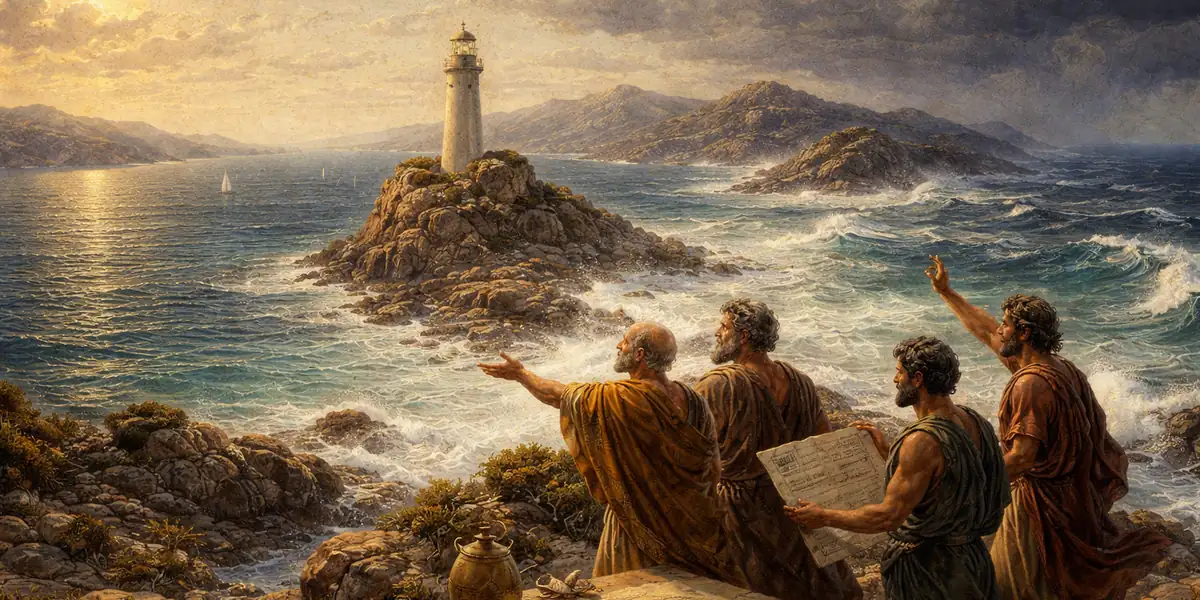
<p><img decoding="async" loading="lazy" alt="Twelve Degrees of Wind: The Beaufort Scale and the Art of Reading Air" src="https://kairoseye.com/assets/images/2025-12-21-3c6925fdd8d95ea1368abdc3906df5d0.webp" width="1200" height="600" class="img_ev3q"></p>
<p>Yet there exists one system of wind measurement that I grudgingly respect. Not because it involves satellites or lithium batteries, but because it was invented by a man who, like myself, simply looked at the sea and wrote down what he saw. His name was Francis Beaufort, and in 1805 he gave the world a vocabulary for something that had, until then, resisted all attempts at precise description.</p>
<h2 class="anchor anchorTargetStickyNavbar_Vzrq" id="a-scale-born-at-sea">A Scale Born at Sea<a href="https://kairoseye.com/blog/twelve-degrees-of-wind-beaufort-scale/#a-scale-born-at-sea" class="hash-link" aria-label="Direct link to A Scale Born at Sea" title="Direct link to A Scale Born at Sea" translate="no">​</a></h2>
<p>Francis Beaufort was an Irish-born Royal Navy officer with a wound from a pirate attack, a meticulous temperament, and an obsessive need to quantify things. In January 1806, he began using a numerical wind scale in his personal log aboard HMS Woolwich, anchored off the coast of South America. The entries were spare, almost telegraphic. Force 0: calm. Force 6: that which a well-conditioned man-of-war could just carry in chase, full and by. Force 12: that which no canvas could withstand.</p>
<p>Note the elegance of this. Beaufort did not measure wind speed. He had no instrument capable of doing so reliably at sea. Instead, he described the wind's effect on a known object: a fully rigged warship. The scale was empirical, observational, rooted in what a competent sailor could see with his own eyes. No electricity required. No subscription fee.</p>
<p>The original scale ran from 0 to 12, and despite various expansions over the centuries (the World Meteorological Organization added forces 13 through 17 in 1946, though these remain controversial and largely ignored outside of East Asian typhoon forecasting), the core twelve degrees remain the standard. Beaufort himself would have found the extensions unnecessary. Twelve was sufficient. After force 12, you were not measuring wind; you were surviving it.</p>
<h2 class="anchor anchorTargetStickyNavbar_Vzrq" id="the-thirteen-faces-of-moving-air">The Thirteen Faces of Moving Air<a href="https://kairoseye.com/blog/twelve-degrees-of-wind-beaufort-scale/#the-thirteen-faces-of-moving-air" class="hash-link" aria-label="Direct link to The Thirteen Faces of Moving Air" title="Direct link to The Thirteen Faces of Moving Air" translate="no">​</a></h2>
<p>Let me walk you through them, because each number on the Beaufort scale is a small portrait of the atmosphere's mood.</p>
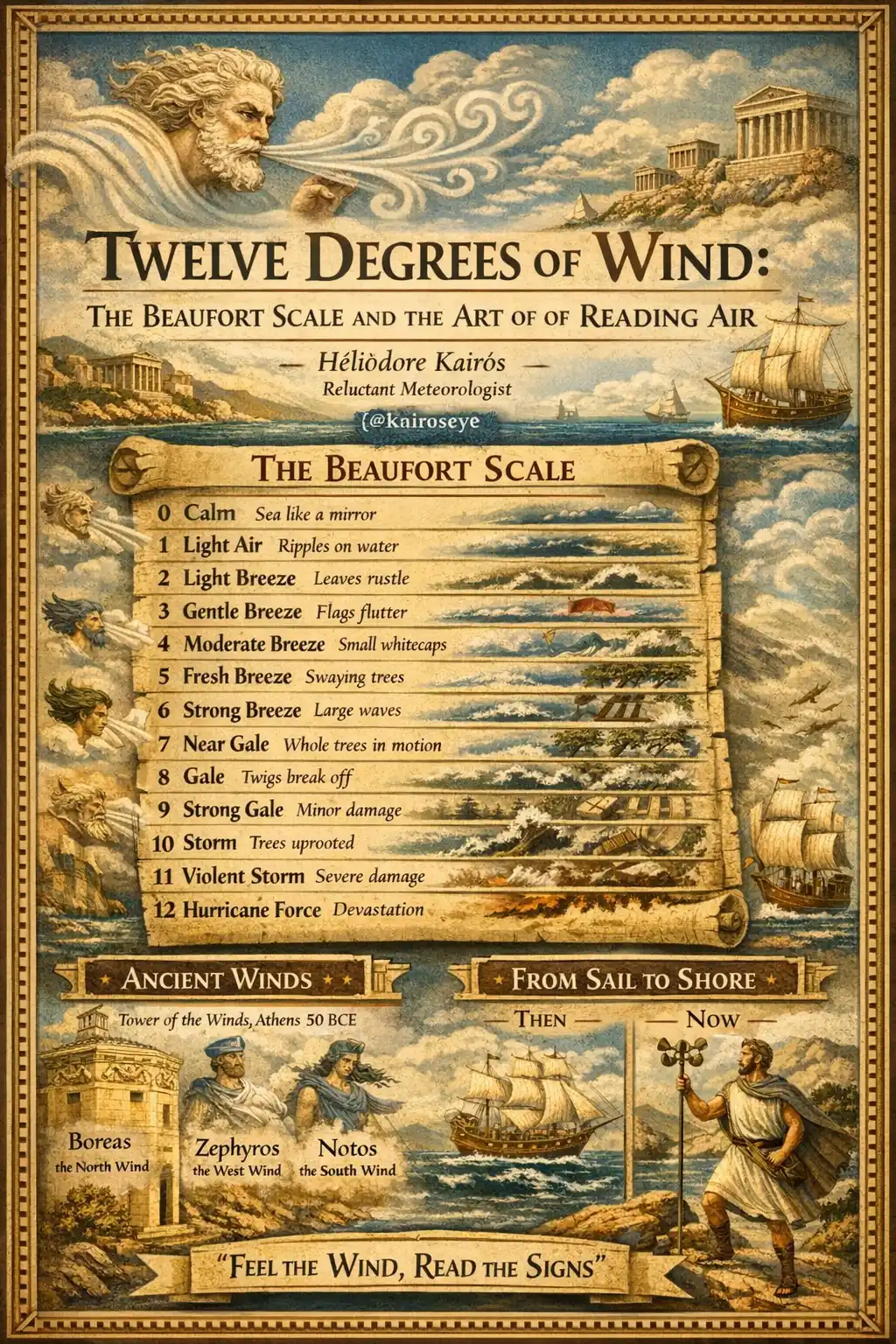
<p><strong>Force 0, Calm.</strong> Wind speed below 1 knot. The sea is a mirror. Smoke rises vertically. On my terrace, the olive branches hang motionless and the cats sleep without twitching. According to The Weathered Pages, entry dated some Thursday in August, "Force 0. Unbearable. Even the flies have stopped."</p>
<p><strong>Force 1, Light Air.</strong> 1 to 3 knots. Smoke drifts lazily, but a wind vane will not budge. Ripples appear on the water, tiny fish-scale patterns without crests. You can feel something on your face if you concentrate, though Nikolas Faros would not notice it in his air-conditioned studio.</p>
<p><strong>Force 2, Light Breeze.</strong> 4 to 6 knots. You feel wind on your skin. Small wavelets appear, short and glassy. Leaves rustle. A wind vane begins to move. This is the wind of pleasant afternoons and unconvincing excuses to stay outdoors.</p>
<p><strong>Force 3, Gentle Breeze.</strong> 7 to 10 knots. Leaves and small twigs in constant motion. Light flags extend. Large wavelets form on the sea, crests beginning to break. Beaufort's sailors would have noted this as the threshold of useful sailing wind.</p>
<p><strong>Force 4, Moderate Breeze.</strong> 11 to 16 knots. Dust and loose paper rise from the ground. Small branches move. The sea shows frequent white horses. This is where things become interesting. At force 4, you begin to understand that wind is not merely air in motion but a force with opinions.</p>
<p><strong>Force 5, Fresh Breeze.</strong> 17 to 21 knots. Small trees in leaf begin to sway. Moderate waves on the sea, many white horses. On my island, force 5 is the wind that steals laundry from the line and deposits it in the neighbour's lemon tree. I have lost three shirts this way. I suspect the wind keeps count.</p>
<p><strong>Force 6, Strong Breeze.</strong> 22 to 27 knots. Large branches in motion. Umbrellas used with difficulty. The sea forms large waves with extensive white foam crests. Spray begins. Walking into a force 6 wind requires commitment and a certain disregard for dignity.</p>
<p><strong>Force 7, Near Gale.</strong> 28 to 33 knots. Whole trees in motion. Inconvenience felt when walking against the wind. The sea heaps up, and white foam from breaking waves is blown in streaks along the direction of the wind. Beaufort's original description for this force referenced the amount of sail a warship would carry: double-reefed topsails and jib. If you do not know what that means, you were born too late, and I am sorry for you.</p>
<p><strong>Force 8, Gale.</strong> 34 to 40 knots. Twigs break from trees. Progress on foot is seriously impeded. Moderately high waves with crests breaking into spindrift. At force 8, the distinction between "weather" and "event" begins to collapse.</p>
<p><strong>Force 9, Strong Gale.</strong> 41 to 47 knots. Slight structural damage occurs: chimney pots and slates removed. High waves with dense foam streaks. The tumbling of the sea becomes heavy and shock-like. I have experienced force 9 exactly eleven times on this island, and each time I understood, briefly, why the ancient Greeks personified the winds as gods.</p>
<p><strong>Force 10, Storm.</strong> 48 to 55 knots. Trees uprooted. Considerable structural damage. Very high waves with overhanging crests. The surface of the sea takes on a white appearance. Visibility is affected by spray. At force 10, The Weathered Pages stay indoors, sealed in their oilcloth pouch.</p>
<p><strong>Force 11, Violent Storm.</strong> 56 to 63 knots. Widespread damage. Exceptionally high waves that may obscure small and medium-sized ships. The sea is completely covered with long white patches of foam. This is rare on land, mercifully. At sea, it is the prelude to something worse.</p>
<p><strong>Force 12, Hurricane Force.</strong> 64 knots and above. Devastation. The air is filled with foam and spray. The sea is completely white with driving spray. Visibility is very seriously affected. Beaufort's original description was simply: "That which no canvas could withstand." He saw no need to elaborate. Neither do I.</p>
<h2 class="anchor anchorTargetStickyNavbar_Vzrq" id="before-beaufort-wind-as-poetry">Before Beaufort: Wind as Poetry<a href="https://kairoseye.com/blog/twelve-degrees-of-wind-beaufort-scale/#before-beaufort-wind-as-poetry" class="hash-link" aria-label="Direct link to Before Beaufort: Wind as Poetry" title="Direct link to Before Beaufort: Wind as Poetry" translate="no">​</a></h2>
<p>The desire to classify wind predates Beaufort by millennia. The ancient Greeks erected the Tower of the Winds in Athens around 50 BCE (though some scholars argue for the second century BCE), an octagonal marble structure with sundials on each face and a bronze Triton weather vane on top. Each of the eight sides depicted a wind god: Boreas from the north, cold and fierce; Notos from the south, bringing rain; Zephyros from the west, gentle and flower-bearing; Apeliotes from the east, with fruits and grain.</p>
<p>The Romans adopted these classifications. Vitruvius, writing in the first century BCE, expanded the system to twelve winds arranged on a compass rose. Medieval sailors refined the system further into the thirty-two-point wind rose that eventually became the compass rose we know today.</p>
<p>But none of these systems quantified the wind's strength. They named its direction, its character, its mythological parentage. A northerly gale and a northerly breeze were both Boreas; the distinction was left to the sailor's judgment and, frequently, his vocabulary of profanity.</p>
<p>Daniel Defoe, after the Great Storm of 1703 that killed perhaps 8,000 people in England and sank thirteen Royal Navy ships, complained bitterly about this imprecision. "The words excessive, terrible, horrible are bandied about with such freedom," he wrote, "that they lose all meaning." He proposed a numerical index but never developed one. It took another century, and a man who had been shot by a pirate off the coast of Turkey, to finish the job.</p>
<h2 class="anchor anchorTargetStickyNavbar_Vzrq" id="from-sails-to-smoke-the-scale-adapts">From Sails to Smoke: The Scale Adapts<a href="https://kairoseye.com/blog/twelve-degrees-of-wind-beaufort-scale/#from-sails-to-smoke-the-scale-adapts" class="hash-link" aria-label="Direct link to From Sails to Smoke: The Scale Adapts" title="Direct link to From Sails to Smoke: The Scale Adapts" translate="no">​</a></h2>
<p>Beaufort's original 1806 scale was designed for naval officers aboard square-rigged warships. It described wind force in terms of the sail a frigate could carry. This was immensely practical in 1806 and perfectly useless by 1850, when steam power began replacing sail and the reference object (a fully rigged warship) was becoming extinct.</p>
<p>The scale survived because it adapted. In 1916, George Simpson, director of the British Meteorological Office, extended the Beaufort scale to include land-based observations. His criteria replaced sails with trees, chimney smoke, and the behaviour of pedestrians. Force 2 became "wind felt on face, leaves rustle." Force 9 became "chimney pots and slates removed." The sea state descriptions were formalized separately by the Petersen scale and later integrated.</p>
<p>The World Meteorological Organization officially adopted the Beaufort scale in 1949, assigning specific wind speed ranges to each force number. This was, in a sense, a betrayal of Beaufort's original vision. He had deliberately avoided wind speed because he could not measure it reliably. The genius of his scale was that it required no instruments at all, only a pair of functioning eyes and sufficient sobriety to use them. Attaching precise knot values turned an observational tool into a conversion table.</p>
<p>And yet, the WMO's version is what we use today. Force 7 is 28 to 33 knots, 50 to 61 kilometres per hour, 32 to 38 miles per hour, depending on which unit your particular nation has agreed to pretend is intuitive. The numbers give the illusion of precision. The observation gave the reality of understanding. As Heraclitus once noted, though in a slightly different context, "Eyes are more accurate witnesses than ears." He was talking about sensory knowledge. He might as well have been talking about anemometers.</p>
<h2 class="anchor anchorTargetStickyNavbar_Vzrq" id="why-the-scale-still-matters">Why the Scale Still Matters<a href="https://kairoseye.com/blog/twelve-degrees-of-wind-beaufort-scale/#why-the-scale-still-matters" class="hash-link" aria-label="Direct link to Why the Scale Still Matters" title="Direct link to Why the Scale Still Matters" translate="no">​</a></h2>
<p>There is something profoundly satisfying about the Beaufort scale's persistence. In an era of Doppler radar, satellite-derived wind fields, and computational fluid dynamics models running on supercomputers, a system invented by a man with a quill pen and a view of the ocean remains the international standard for surface wind reporting.</p>
<p>Weather stations worldwide report wind observations in Beaufort numbers. Marine forecasts use them. The Shipping Forecast, broadcast by the BBC since 1924 and beloved by insomniacs across the British Isles, speaks in Beaufort: "Viking, North Utsire, South Utsire. Southwest 5 to 7, occasionally gale 8."</p>
<p>The reason is not nostalgia. The Beaufort scale endures because it communicates something that raw numbers cannot: the experience of wind. Telling me the wind is blowing at 43 kilometres per hour conveys data. Telling me it is force 6 conveys a scene. I know what force 6 looks like, sounds like, feels like against my face as I stand on the headland watching the sea turn white. The number carries sensory weight. The kilometres per hour carry only arithmetic.</p>
<p>This is the fundamental tension of modern meteorology, and indeed of modern measurement in general. We have gained precision and lost fluency. We can tell you the wind speed to the nearest tenth of a knot, updated every three seconds, streamed to your wrist via Bluetooth from a sensor array that would have made Beaufort weep with envy. But can you feel force 7 in those numbers? Can you smell the salt in 33.4 knots?</p>
<h2 class="anchor anchorTargetStickyNavbar_Vzrq" id="the-winds-of-my-island">The Winds of My Island<a href="https://kairoseye.com/blog/twelve-degrees-of-wind-beaufort-scale/#the-winds-of-my-island" class="hash-link" aria-label="Direct link to The Winds of My Island" title="Direct link to The Winds of My Island" translate="no">​</a></h2>
<p>I keep my own wind records, naturally. The Weathered Pages contain forty years of daily observations, each one noted in Beaufort numbers with accompanying remarks that I flatter myself are more evocative than any automated weather station's CSV output.</p>
<p>My island sits in the path of the Meltemi, the fierce northerly wind that rakes the Aegean from June through September. It is a dry wind, cloudless and relentless, born when high pressure over the Balkans meets low pressure over Turkey. The ancient Greeks called it the Etesian wind (from "etos," meaning year, because it returns annually with clockwork regularity). It typically registers force 5 to 7 on the Beaufort scale, occasionally reaching force 8 in the channels between islands where the funnelling effect accelerates the flow.</p>
<p>The Meltemi has shaped the architecture of Aegean islands for centuries. Houses are built low, with thick walls and small windows facing away from the north. Windmills were positioned to catch it. Trees grow permanently bent southward, their branches streaming like flags. Ferries cancel. Tourists complain. Locals shrug and wait.</p>
<p>I have a particular fondness for the Meltemi because it is honest. It announces itself clearly: the sky brightens, the humidity drops, and then the wind arrives with the subtlety of a slammed door. There is no ambiguity. No need for a forecast. Force 6 from the north, and it will blow for three days, or five, or seven, and then it will stop as abruptly as it began.</p>
<p>Nikolas Faros, broadcasting from Athens, invariably describes the Meltemi as "strong northerly winds in the Aegean" and advises viewers to "exercise caution." This is like describing the Sahara as "somewhat dry" and advising visitors to "bring water." The man has never stood on a Cycladic headland at force 7 with his shirt plastered to his chest and his glasses threatening to depart for Crete. If he had, he would use different words. Or, more likely, he would simply not go outside.</p>
<h2 class="anchor anchorTargetStickyNavbar_Vzrq" id="a-reluctant-concession">A Reluctant Concession<a href="https://kairoseye.com/blog/twelve-degrees-of-wind-beaufort-scale/#a-reluctant-concession" class="hash-link" aria-label="Direct link to A Reluctant Concession" title="Direct link to A Reluctant Concession" translate="no">​</a></h2>
<p>I have written nearly two thousand words in praise of an analog, instrument-free, purely observational system of wind measurement, and I find myself, as always, arriving at an uncomfortable juncture.</p>
<p>Because the truth, which I will admit only here and only under protest, is that modern wind measurement has its uses. A GPS-enabled watch on your wrist cannot feel force 7. It cannot smell the Meltemi or hear the particular whistle of a gale through olive branches. But it can record barometric pressure trends that hint at what the wind will do next. It can log your altitude and tell you whether you are ascending into stronger winds or descending into shelter. It can, if you are the sort of person who cares about such things, display real-time weather data from the nearest station.</p>
<p>These are useful capabilities. I will grant them that. Beaufort would have found them interesting, I think. He was, after all, a man who loved data, provided it was collected with rigour and described with precision.</p>
<p>But the next time the wind picks up, before you glance at your wrist, try this instead: look at the sea. Look at the trees. Feel the air on your face. Estimate the force. Write it down, if you like, in your own weathered pages.</p>
<p>You will be surprised how accurate you are. And you will understand something that no sensor can transmit: wind is not a number. It is an experience. Beaufort knew this. Heraclitus, I suspect, would have agreed, though he would have phrased it more obscurely.</p>
<p>Force 5 on my terrace this morning. The olive branches are swaying. The cats have retreated indoors. My pipe, for once, stays lit.</p>
<p>It will do.</p>
<p><img decoding="async" loading="lazy" alt="The Beaufort Scale" src="https://kairoseye.com/assets/images/2025-12-21-da456f3e71bf417edc39a7f25efc9c09.webp" width="1024" height="1536" class="img_ev3q"></p>]]></content>
        <author>
            <name>Héliodore Kairós</name>
            <uri>/heliodore</uri>
        </author>
        <category label="Almanac" term="Almanac"/>
    </entry>
    <entry>
        <title type="html"><![CDATA[Hibernation and the Body That Slows Down]]></title>
        <id>https://kairoseye.com/blog/hibernation-body-slows-down-winter/</id>
        <link href="https://kairoseye.com/blog/hibernation-body-slows-down-winter/"/>
        <updated>2025-09-21T00:00:00.000Z</updated>
        <summary type="html"><![CDATA[True hibernation vs winter sleep, torpor, and the biological rhythms that make animals vanish for months. What slowing down reveals about time.]]></summary>
        <content type="html"><![CDATA[<p>There is, I have long maintained, a profound dignity in doing absolutely nothing. The olive tree outside my window understands this. It has not produced a single fruit since November, and I respect it enormously for that decision. But the olive tree is merely dormant. It has not, as far as I can tell, reduced its heart rate to four beats per minute, dropped its body temperature to near freezing, or gone several months without eating, drinking, or visiting the bathroom. For that level of commitment to inactivity, one must look to the hibernators.</p>
<p><img decoding="async" loading="lazy" alt="Hibernation and the Body That Slows Down" src="https://kairoseye.com/assets/images/2025-09-21-c3248d98018b161d2ccb98132a73c006.webp" width="1200" height="600" class="img_ev3q"></p>
<p>Hibernation is one of those words that everyone believes they understand and almost no one actually does. People use it to describe bears sleeping through winter, squirrels curling up in tree hollows, and their own behaviour on a rainy Sunday in February. Nikolas Faros once described the city of Athens as "hibernating" during a mild cold snap in January, when temperatures dipped to a harrowing twelve degrees Celsius. I nearly choked on my pipe. Twelve degrees. A ground squirrel would barely notice.</p>
<p>The reality is far stranger, far more extreme, and far more interesting than anything a television meteorologist in a fitted suit has ever conveyed. True hibernation is not sleep. It is not rest. It is something closer to a controlled rehearsal for death, a state so deep and so alien that it challenges our very understanding of what it means to be alive.</p>
<h2 class="anchor anchorTargetStickyNavbar_Vzrq" id="what-hibernation-actually-is">What Hibernation Actually Is<a href="https://kairoseye.com/blog/hibernation-body-slows-down-winter/#what-hibernation-actually-is" class="hash-link" aria-label="Direct link to What Hibernation Actually Is" title="Direct link to What Hibernation Actually Is" translate="no">​</a></h2>
<p>Let us begin with what hibernation is not. It is not a long nap. Sleep and hibernation are neurologically distinct states. During sleep, the brain cycles through recognisable patterns of activity. During hibernation, brain activity drops so low that an electroencephalogram reading would make a neurologist reach for the defibrillator. A sleeping animal can be woken with a nudge. A hibernating Arctic ground squirrel, body temperature hovering around minus 2.9 degrees Celsius (the lowest recorded core temperature in any living mammal), would take hours to rouse, burning precious energy reserves in the process.</p>
<p>True hibernation, or "deep hibernation" as physiologists prefer, involves a suite of coordinated changes so radical they border on the implausible. Heart rate plummets. The Arctic ground squirrel's heart, which normally beats around 200 times per minute, drops to roughly 10 beats. Respiration slows to perhaps one breath every few minutes. Metabolism falls to as little as 2 to 5 percent of its active rate. Body temperature, normally maintained with mammalian precision around 37 degrees Celsius, crashes to within a degree or two of the ambient temperature of the burrow. In some species, this means hovering just above zero.</p>
<p>The animal, in a very real biochemical sense, has turned itself off. Not dead, but operating on the faintest possible pilot light.</p>
<h2 class="anchor anchorTargetStickyNavbar_Vzrq" id="the-difference-between-hibernation-torpor-and-winter-sleep">The Difference Between Hibernation, Torpor, and Winter Sleep<a href="https://kairoseye.com/blog/hibernation-body-slows-down-winter/#the-difference-between-hibernation-torpor-and-winter-sleep" class="hash-link" aria-label="Direct link to The Difference Between Hibernation, Torpor, and Winter Sleep" title="Direct link to The Difference Between Hibernation, Torpor, and Winter Sleep" translate="no">​</a></h2>
<p>This is where things become properly interesting, and where popular understanding goes reliably wrong.</p>
<p><strong>Torpor</strong> is the broader physiological state: a controlled reduction in metabolic rate, body temperature, and activity. It can last hours or days. Hummingbirds enter torpor nightly, dropping their body temperature from around 40 degrees Celsius to as low as 18 degrees to survive cool nights when they cannot feed. Common poorwills (Phalaenoptilus nuttallii), a species of nightjar, can remain torpid for weeks. Torpor is the mechanism; hibernation is its most extreme seasonal expression.</p>
<p><strong>Hibernation</strong> is essentially prolonged, recurring torpor bouts interspersed with brief arousals. A hibernating ground squirrel does not simply go cold in October and warm up in April. It cycles through bouts of deep torpor lasting one to three weeks, punctuated by "interbout arousals" during which body temperature rockets back up to 37 degrees Celsius for 12 to 24 hours before the animal plunges back down again. These arousals account for roughly 80 percent of the total energy spent during the entire hibernation season. Why the animal bothers with them remains one of the great unsolved puzzles. Some researchers suspect the arousals are necessary to allow the immune system to function briefly, or to permit genuine sleep (hibernation, remember, is not sleep, so the animal may actually need to wake up in order to rest).</p>
<p><strong>Winter sleep</strong>, or "winter lethargy," is what bears do. And bears, despite their cultural reputation as the quintessential hibernators, are not true hibernators at all. A black bear's body temperature during winter denning drops only modestly, from about 38 to around 31 degrees Celsius. Heart rate decreases, yes, from 40-50 beats per minute to roughly 8-10, but the bear remains relatively responsive. Disturb a denning bear and you will discover, with some urgency, that it can wake far more quickly than you can retreat. A denning bear does not eat, drink, urinate, or defecate for five to seven months, which is remarkable by any standard. But it is not the metabolic freefall of true hibernation. It is something else: a large mammal's particular, impressive, slightly terrifying solution to seasonal food scarcity.</p>
<h2 class="anchor anchorTargetStickyNavbar_Vzrq" id="the-champions-of-hibernation">The Champions of Hibernation<a href="https://kairoseye.com/blog/hibernation-body-slows-down-winter/#the-champions-of-hibernation" class="hash-link" aria-label="Direct link to The Champions of Hibernation" title="Direct link to The Champions of Hibernation" translate="no">​</a></h2>
<p>The undisputed masters are the small mammals. The Arctic ground squirrel (Urocitellus parryii) hibernates for seven to eight months in permafrost burrows, enduring core temperatures below freezing through supercooling of its blood plasma, which resists ice crystal formation. According to The Weathered Pages, entry dated some Tuesday in late November, I once attempted to explain supercooling to a fisherman at the harbour. He nodded politely and then asked if I meant the squirrel was dead. I said no. He looked unconvinced.</p>
<p>The alpine marmot (Marmota marmota) hibernates socially, with family groups huddling together in burrows. Juvenile marmots, too small to survive alone, rely on the warmth of adults during arousals. In a marmot family, hibernation is a collective project. There is a lesson there about community that I will not belabour, except to note that Nikolas Faros has never struck me as someone who would share his burrow.</p>
<p>The common dormouse (Muscardinus avellanarius) can hibernate for six months or more, sometimes longer if spring is late. Its body temperature can fall to as low as 0.5 degrees Celsius. The dormouse is so thoroughly associated with sleeping that its very name derives from the French "dormir." Lewis Carroll's Dormouse at the Mad Hatter's tea party, perpetually drowsy and stuffed into a teapot, is not entirely unfair as a characterisation, though the real animal would object to the teapot.</p>
<p>And then there are the surprises. The common poorwill, already mentioned, was known to the Hopi people as "Hölchko," the sleeping one, long before Western science documented avian hibernation in 1948. Madagascar's fat-tailed dwarf lemur (Cheirogaleus medius) is the only primate known to hibernate, spending up to seven months in tree hollows. Its body temperature fluctuates with the ambient temperature of the hole, sometimes swinging by 20 degrees Celsius in a single day. For a primate, a relative of ours, this is astonishing.</p>
<h2 class="anchor anchorTargetStickyNavbar_Vzrq" id="the-biochemistry-of-slowing-down">The Biochemistry of Slowing Down<a href="https://kairoseye.com/blog/hibernation-body-slows-down-winter/#the-biochemistry-of-slowing-down" class="hash-link" aria-label="Direct link to The Biochemistry of Slowing Down" title="Direct link to The Biochemistry of Slowing Down" translate="no">​</a></h2>
<p>How does an animal reduce its metabolism by 95 percent without dying? The mechanisms are numerous and, in many cases, still incompletely understood.</p>
<p>Before hibernation, animals undergo a period of intense preparation called "hyperphagia," during which they eat voraciously and accumulate massive fat reserves. A ground squirrel may double its body weight. This fat, primarily white adipose tissue, becomes the sole fuel source for months of torpor. It is metabolised slowly, producing water as a byproduct, which is how hibernators avoid dehydration without drinking.</p>
<p>Brown adipose tissue (BAT) plays a different, critical role. Located between the shoulder blades and around vital organs, BAT is a specialised heat-generating tissue. During interbout arousals, BAT activates through a process called non-shivering thermogenesis, burning fat to produce heat directly, without muscle contraction. This is how a ground squirrel can rewarm from minus 2 degrees to 37 degrees in a matter of hours.</p>
<p>At the cellular level, hibernators suppress protein synthesis, reduce ion channel activity, and alter the composition of their cell membranes, increasing the proportion of unsaturated fatty acids to maintain membrane fluidity at low temperatures. The blood undergoes changes too: anticoagulant compounds prevent clotting during the long periods of near-stasis, and cryoprotective molecules help prevent tissue damage from ice crystal formation.</p>
<p>Some researchers at the University of Alaska Fairbanks have identified specific genes, sometimes called "hibernation genes," that are upregulated during torpor. Intriguingly, many of these genes have homologs in non-hibernating mammals, including humans. We carry, in our genome, echoes of a capacity for torpor that evolution has apparently mothballed rather than deleted.</p>
<h2 class="anchor anchorTargetStickyNavbar_Vzrq" id="what-hibernation-reveals-about-time">What Hibernation Reveals About Time<a href="https://kairoseye.com/blog/hibernation-body-slows-down-winter/#what-hibernation-reveals-about-time" class="hash-link" aria-label="Direct link to What Hibernation Reveals About Time" title="Direct link to What Hibernation Reveals About Time" translate="no">​</a></h2>
<p>This is the point at which I must, with some reluctance, venture beyond the merely physiological. Because hibernation poses a philosophical question that has nagged at me through many a winter evening, pipe in hand, staring at the Aegean.</p>
<p>What is time to a hibernating animal?</p>
<p>A ground squirrel that enters its burrow in September and emerges in May has, in subjective terms, experienced almost nothing during those eight months. Its brain was barely active. It formed no memories. It perceived no passage of hours or days. For the squirrel, autumn and spring are separated by, effectively, nothing. It stepped through a door in September and emerged on the other side in May, six months older in body but with no experiential record of the interval.</p>
<p>Heraclitus wrote that time is a child playing, arranging pieces on a board. I have always found this irritatingly cryptic, but the hibernating squirrel adds a twist that I suspect even Heraclitus did not anticipate: what happens to the game when the child is not merely distracted but functionally absent? Does the board persist? Does the game continue?</p>
<p>For the natural world outside the burrow, of course, time marches on. Snow falls and melts. The Earth completes half its orbit. Predators hunt. Rivers freeze and thaw. But for the sleeper in the dark below the permafrost, none of this happens. It is the most radical opt-out from temporal experience that biology has devised, short of actual death.</p>
<h2 class="anchor anchorTargetStickyNavbar_Vzrq" id="the-medical-promise-of-induced-torpor">The Medical Promise of Induced Torpor<a href="https://kairoseye.com/blog/hibernation-body-slows-down-winter/#the-medical-promise-of-induced-torpor" class="hash-link" aria-label="Direct link to The Medical Promise of Induced Torpor" title="Direct link to The Medical Promise of Induced Torpor" translate="no">​</a></h2>
<p>The fact that hibernators can endure conditions that would kill a non-hibernating mammal, near-freezing body temperatures, barely detectable heart rates, months without food or water, has not escaped the attention of medical researchers.</p>
<p>If we could induce a torpor-like state in humans, the applications would be transformative. Trauma surgeons dream of "buying time" for severely injured patients by slowing their metabolism during transport. Space agencies, NASA among them, have funded research into synthetic torpor for long-duration space missions. A crew in torpor would need less food, less water, less oxygen, less psychological support, and less shielding from cosmic radiation (since cellular processes, including radiation damage repair, slow with metabolism).</p>
<p>In 2014, researchers at the University of Alaska Fairbanks identified a molecule called "Hibernation Induction Trigger" (HIT), though its exact nature and mechanism remain debated. More recently, in 2020, a team at the University of Tsukuba in Japan demonstrated that stimulating specific neurons in the hypothalamus (Q neurons) could induce a torpor-like state in mice, animals that do not naturally hibernate. The mice survived, recovered fully, and showed no neurological damage. This was, by any measure, a remarkable result.</p>
<p>We are not there yet. Human physiology differs from that of a ground squirrel in ways that make induced torpor deeply challenging. Our hearts, for instance, tend to fibrillate fatally at temperatures below about 28 degrees Celsius, while a hibernator's heart keeps beating calmly at temperatures 30 degrees lower. But the research is serious, well-funded, and progressing.</p>
<h2 class="anchor anchorTargetStickyNavbar_Vzrq" id="the-reluctant-concession">The Reluctant Concession<a href="https://kairoseye.com/blog/hibernation-body-slows-down-winter/#the-reluctant-concession" class="hash-link" aria-label="Direct link to The Reluctant Concession" title="Direct link to The Reluctant Concession" translate="no">​</a></h2>
<p>I have spent the last forty years observing the rhythms of the natural world with my own eyes, my own notebooks, and my own stubbornly analogue instruments. I have recorded the dates when the swallows depart and return, when the first frost silvers the bougainvillea, when the sea changes colour from summer's hard blue to winter's grey-green. I know these rhythms in my bones.</p>
<p>But I will concede, with the same enthusiasm I reserve for dental appointments, that a modern smartwatch can track biological rhythms that are invisible to the naked eye. Heart rate variability. Skin temperature fluctuations across seasons. Sleep architecture, with its own nightly torpor-like dips in metabolic activity. Your wrist, whether you asked it to or not, is quietly documenting your body's own seasonal slowdowns, those subtle shifts in recovery time, resting heart rate, and sleep depth that echo, faintly but unmistakably, the ancient mammalian heritage we share with the dormouse and the marmot.</p>
<p>You are not hibernating. You will never hibernate. But your body remembers, in its deep chemistry, a time when slowing down was not laziness but survival. And if a small device on your wrist can make that invisible rhythm visible, well. I suppose that is not entirely without value.</p>
<p>My pipe, I notice, has gone out. The olive tree is still doing nothing. We understand each other.</p>
<p><img decoding="async" loading="lazy" alt="Hibernation and the Body That Slows Down" src="https://kairoseye.com/assets/images/2025-09-21-c914c50c25762bc275b3d26c9bd79ce0.webp" width="1024" height="1536" class="img_ev3q"></p>]]></content>
        <author>
            <name>Héliodore Kairós</name>
            <uri>/heliodore</uri>
        </author>
        <category label="Almanac" term="Almanac"/>
        <category label="Seasons" term="Seasons"/>
        <category label="Science" term="Science"/>
    </entry>
    <entry>
        <title type="html"><![CDATA[Custom WebService Support]]></title>
        <id>https://kairoseye.com/blog/custom-webservice-support/</id>
        <link href="https://kairoseye.com/blog/custom-webservice-support/"/>
        <updated>2025-07-01T00:00:00.000Z</updated>
        <summary type="html"><![CDATA[KairosEye introduces custom webservice support to display personalized messages from your own server on your Garmin watch.]]></summary>
        <content type="html"><![CDATA[<div class="theme-admonition theme-admonition-note admonition_xJq3 alert alert--secondary"><div class="admonitionHeading_Gvgb"><span class="admonitionIcon_Rf37"><svg viewBox="0 0 14 16"><path fill-rule="evenodd" d="M6.3 5.69a.942.942 0 0 1-.28-.7c0-.28.09-.52.28-.7.19-.18.42-.28.7-.28.28 0 .52.09.7.28.18.19.28.42.28.7 0 .28-.09.52-.28.7a1 1 0 0 1-.7.3c-.28 0-.52-.11-.7-.3zM8 7.99c-.02-.25-.11-.48-.31-.69-.2-.19-.42-.3-.69-.31H6c-.27.02-.48.13-.69.31-.2.2-.3.44-.31.69h1v3c.02.27.11.5.31.69.2.2.42.31.69.31h1c.27 0 .48-.11.69-.31.2-.19.3-.42.31-.69H8V7.98v.01zM7 2.3c-3.14 0-5.7 2.54-5.7 5.68 0 3.14 2.56 5.7 5.7 5.7s5.7-2.55 5.7-5.7c0-3.15-2.56-5.69-5.7-5.69v.01zM7 .98c3.86 0 7 3.14 7 7s-3.14 7-7 7-7-3.12-7-7 3.14-7 7-7z"></path></svg></span>KairosEye v1 only</div><div class="admonitionContent_BuS1"><p>Custom WebService support was available in v1 and has been removed in v2. This post is kept for reference.</p></div></div>
<p>KairosEye now lets you connect your watchface to <strong>your own webservice</strong> — any URL that returns a JSON response becomes a data source for your wrist.</p>
<hr>
<h2 class="anchor anchorTargetStickyNavbar_Vzrq" id="how-it-works">How It Works<a href="https://kairoseye.com/blog/custom-webservice-support/#how-it-works" class="hash-link" aria-label="Direct link to How It Works" title="Direct link to How It Works" translate="no">​</a></h2>
<p>In the settings, enter a valid URL pointing to your personal webservice. The watch performs regular <code>GET</code> requests and displays the response as a custom message on the watchface, in place of the first calendar event.
The response format is simple:</p>
<div class="language-json codeBlockContainer_Ckt0 theme-code-block" style="--prism-color:#393A34;--prism-background-color:#f6f8fa"><div class="codeBlockContent_QJqH"><pre tabindex="0" class="prism-code language-json codeBlock_bY9V thin-scrollbar" style="color:#393A34;background-color:#f6f8fa"><code class="codeBlockLines_e6Vv"><span class="token-line" style="color:#393A34"><span class="token punctuation" style="color:#393A34">{</span><span class="token plain"></span><br></span><span class="token-line" style="color:#393A34"><span class="token plain">  </span><span class="token property" style="color:#36acaa">"ttl"</span><span class="token operator" style="color:#393A34">:</span><span class="token plain"> </span><span class="token number" style="color:#36acaa">900</span><span class="token punctuation" style="color:#393A34">,</span><span class="token plain"></span><br></span><span class="token-line" style="color:#393A34"><span class="token plain">  </span><span class="token property" style="color:#36acaa">"txt"</span><span class="token operator" style="color:#393A34">:</span><span class="token plain"> </span><span class="token punctuation" style="color:#393A34">[</span><span class="token string" style="color:#e3116c">"💧 Drink"</span><span class="token punctuation" style="color:#393A34">,</span><span class="token plain"> </span><span class="token string" style="color:#e3116c">"glass of water"</span><span class="token punctuation" style="color:#393A34">]</span><span class="token plain"></span><br></span><span class="token-line" style="color:#393A34"><span class="token plain"></span><span class="token punctuation" style="color:#393A34">}</span><br></span></code></pre></div></div>
<ul>
<li class=""><code>ttl</code> (Time To Live): delay in seconds before the next request</li>
<li class=""><code>txt</code>: an array of strings to display on the watchface
That's it. No SDK, no authentication protocol, no complex integration. If your server can return JSON over HTTPS, it works with KairosEye.</li>
</ul>
<hr>
<h2 class="anchor anchorTargetStickyNavbar_Vzrq" id="what-you-can-build">What You Can Build<a href="https://kairoseye.com/blog/custom-webservice-support/#what-you-can-build" class="hash-link" aria-label="Direct link to What You Can Build" title="Direct link to What You Can Build" translate="no">​</a></h2>
<p>The simplicity of the format is intentional — it opens the door to almost anything:</p>
<ul>
<li class=""><strong>Personal reminders</strong> — hydration alerts, medication schedules, break timers</li>
<li class=""><strong>Smart home integration</strong> — display the temperature at home, or whether you left the lights on</li>
<li class=""><strong>Custom weather</strong> — pull data from a hyper-local weather station or personal sensor</li>
<li class=""><strong>Fitness goals</strong> — show custom metrics from your own tracking system</li>
<li class=""><strong>Work notifications</strong> — deployment status, server health, CI build results</li>
<li class=""><strong>Anything else</strong> your server can generate and serialize as JSON
The watchface becomes a display for whatever matters to you — not just what we decided to include.</li>
</ul>
<hr>
<h2 class="anchor anchorTargetStickyNavbar_Vzrq" id="technical-details">Technical Details<a href="https://kairoseye.com/blog/custom-webservice-support/#technical-details" class="hash-link" aria-label="Direct link to Technical Details" title="Direct link to Technical Details" translate="no">​</a></h2>
<ul>
<li class="">Uses standard <code>GET</code> requests with no custom headers</li>
<li class="">Timeout: ~5 seconds per request</li>
<li class="">If the request fails or returns invalid data, the watch retries automatically</li>
<li class=""><strong>HTTPS required</strong> — ensure your SSL certificate is valid and up to date. An expired certificate can cause connection hangs.</li>
</ul>
<hr>
<h2 class="anchor anchorTargetStickyNavbar_Vzrq" id="platform-limitations">Platform Limitations<a href="https://kairoseye.com/blog/custom-webservice-support/#platform-limitations" class="hash-link" aria-label="Direct link to Platform Limitations" title="Direct link to Platform Limitations" translate="no">​</a></h2>
<p>Garmin imposes a limit of <strong>one web request every 6 minutes</strong> (360 seconds). Since KairosEye also needs to fetch calendar and weather data, we recommend setting your <code>ttl</code> to <strong>at least 900 seconds</strong> (15 minutes) to avoid conflicts.</p>
<hr>
<h2 class="anchor anchorTargetStickyNavbar_Vzrq" id="privacy-first">Privacy-First<a href="https://kairoseye.com/blog/custom-webservice-support/#privacy-first" class="hash-link" aria-label="Direct link to Privacy-First" title="Direct link to Privacy-First" translate="no">​</a></h2>
<p>The watch only connects to your webservice if you explicitly configure a URL. No external tracking, no third-party servers — you control the data, the endpoint, and the frequency.
<strong>— The KairosEye Team</strong></p>]]></content>
        <author>
            <name>David Marmont</name>
            <uri>https://marmont.fr</uri>
        </author>
        <category label="Release" term="Release"/>
        <category label="Customization" term="Customization"/>
    </entry>
    <entry>
        <title type="html"><![CDATA[The Moon Has No Light of Its Own]]></title>
        <id>https://kairoseye.com/blog/lunar-phases-guide-moon-light/</id>
        <link href="https://kairoseye.com/blog/lunar-phases-guide-moon-light/"/>
        <updated>2025-06-21T00:00:00.000Z</updated>
        <summary type="html"><![CDATA[Why the moon changes shape, appears giant at the horizon, drives our tides, and became humanity's first calendar.]]></summary>
        <content type="html"><![CDATA[<p>I feel compelled to begin with an admission. The moon, that serene disc I have watched from my terrace for more decades than I care to count, produces absolutely nothing. No light. No warmth. No original thought. In this respect, it shares a surprising amount with Nikolas Faros, though the moon is considerably more reliable.</p>
<p>Loading calculator...</p>
<p><img decoding="async" loading="lazy" alt="The Moon Has No Light of Its Own" src="https://kairoseye.com/assets/images/2025-06-21-c7a6bbe8f8b791cd033035bc77891ae2.webp" width="1200" height="600" class="img_ev3q"></p>
<p>What the moon does, with a consistency that would embarrass most human institutions, is reflect. Sunlight strikes its surface, bounces off roughly 12% of it (the moon is, in photometric terms, about as reflective as worn asphalt), and that modest remainder is what we call moonlight. Poets have built entire careers on reflected light from a grey rock. I find this enormously reassuring.</p>
<h2 class="anchor anchorTargetStickyNavbar_Vzrq" id="the-geometry-of-borrowed-light">The Geometry of Borrowed Light<a href="https://kairoseye.com/blog/lunar-phases-guide-moon-light/#the-geometry-of-borrowed-light" class="hash-link" aria-label="Direct link to The Geometry of Borrowed Light" title="Direct link to The Geometry of Borrowed Light" translate="no">​</a></h2>
<p>The lunar phases are not, as one might assume from watching popular television, caused by Earth's shadow falling on the moon. This is the single most common misconception I encounter, and I encounter it with distressing frequency. Earth's shadow touching the moon is an eclipse, which is an entirely different affair and far rarer.</p>
<p>The phases result from something much simpler: geometry. The moon orbits Earth roughly once every 29.5 days (the synodic period, for those who appreciate precision). As it travels, the angle between the sun, the moon, and your eyes changes continuously. At new moon, the sun and moon occupy nearly the same direction in the sky, so the illuminated half faces entirely away from us. We see the dark side. Or rather, we see nothing at all.</p>
<p>As the moon moves eastward in its orbit, a sliver of the sunlit hemisphere becomes visible from Earth. This is the waxing crescent, that delicate hook of light that appears in the western sky just after sunset. Each evening, it grows. First quarter arrives when the moon has completed one quarter of its orbit, and we see exactly half the illuminated face. The terminator line, that boundary between light and shadow, cuts the disc precisely in two.</p>
<p>The progression continues through waxing gibbous (more than half lit, less than full), full moon (the entire face we see is bathed in sunlight, the sun and moon on opposite sides of Earth), and then the whole sequence reverses. Waning gibbous, third quarter, waning crescent, and back to new moon. Every 29.5 days, without fail, without exception, without a single scheduling conflict.</p>
<p>According to The Weathered Pages, entry dated some Thursday in September 1987, I once attempted to explain this to a fisherman on the harbour who insisted the moon "turned off" during new moon. I drew a diagram on a napkin. He used the napkin to clean fish. Science advances slowly.</p>
<h2 class="anchor anchorTargetStickyNavbar_Vzrq" id="the-moon-illusion-or-why-your-eyes-lie-to-you">The Moon Illusion, or Why Your Eyes Lie to You<a href="https://kairoseye.com/blog/lunar-phases-guide-moon-light/#the-moon-illusion-or-why-your-eyes-lie-to-you" class="hash-link" aria-label="Direct link to The Moon Illusion, or Why Your Eyes Lie to You" title="Direct link to The Moon Illusion, or Why Your Eyes Lie to You" translate="no">​</a></h2>
<p>You have seen it. Everyone has seen it. The moon rising over the horizon, enormous, swollen, seemingly close enough to touch. And then, an hour later, the same moon high in the sky, shrunken to its ordinary size. You checked. You squinted. You held up your thumb. Somehow, it changed.</p>
<p>It did not change.</p>
<p>The moon's angular diameter varies between about 29.3 and 34.1 arcminutes depending on its distance from Earth (the orbit is elliptical, not circular), but this variation has nothing to do with its position in the sky. The horizon moon and the zenith moon on any given night are the same size. Measure them. Photograph them. Use a coin held at arm's length. Identical.</p>
<p>What changes is your brain's interpretation. This is the moon illusion, and despite centuries of study, no one has fully explained it. The most widely accepted hypothesis involves a failure of the brain's size-distance scaling. When the moon sits near the horizon, surrounded by trees, buildings, and landscape features your brain can use as reference points, it attempts to compute the moon's "real" size by comparing it to those objects. The result is an exaggeration. High in an empty sky, with no reference points, the brain defaults to a smaller estimate.</p>
<p>Ptolemy discussed this in the second century. Alhazen wrote about it in the eleventh. Neither solved it. I find some comfort in the fact that a problem has persisted for two millennia without resolution. It suggests that not everything yields to satellite data and processing power, a point I have made to Nikolas Faros on several occasions, though always from a safe distance.</p>
<h2 class="anchor anchorTargetStickyNavbar_Vzrq" id="what-moves-the-oceans">What Moves the Oceans<a href="https://kairoseye.com/blog/lunar-phases-guide-moon-light/#what-moves-the-oceans" class="hash-link" aria-label="Direct link to What Moves the Oceans" title="Direct link to What Moves the Oceans" translate="no">​</a></h2>
<p>The tides are the moon's most tangible effect on daily life, and they are also the phenomenon most people understand backwards. The common explanation goes something like this: the moon's gravity pulls the ocean toward it, creating a bulge. This is half correct, which in science means it is wrong.</p>
<p>There are two tidal bulges, not one. The bulge on the side of Earth facing the moon is indeed caused by gravitational attraction, the ocean being pulled slightly toward the moon. But there is an equal bulge on the opposite side of Earth, pointing directly away from the moon. This second bulge exists because of differential gravity: the moon pulls the solid Earth more strongly than it pulls the far-side ocean (being closer to the moon), so Earth is effectively pulled away from the ocean on its far side, leaving a bulge behind.</p>
<p>The result is that most coastal locations experience two high tides and two low tides roughly every 24 hours and 50 minutes (the extra 50 minutes accounting for the moon's orbital motion). The sun contributes as well, roughly 46% as much tidal force as the moon despite being vastly more massive, because tidal force falls off with the cube of distance, not the square.</p>
<p>When sun and moon align (new moon and full moon), their forces combine to produce spring tides, the highest highs and lowest lows. When they pull at right angles (first and third quarter), the forces partially cancel, producing neap tides. Fishermen have known this for millennia without ever hearing the word "differential." The Weathered Pages contain a tidal prediction table for my harbour that, I note with some satisfaction, has outperformed the national meteorological service's app on at least three documented occasions.</p>
<h2 class="anchor anchorTargetStickyNavbar_Vzrq" id="humanitys-first-calendar">Humanity's First Calendar<a href="https://kairoseye.com/blog/lunar-phases-guide-moon-light/#humanitys-first-calendar" class="hash-link" aria-label="Direct link to Humanity's First Calendar" title="Direct link to Humanity's First Calendar" translate="no">​</a></h2>
<p>Before anyone carved a sundial, before any civilization laid stones to track the solstice, there was the moon. Its cycle of 29.5 days provided the most obvious, most visible, most democratically available unit of time between the day and the year. You needed no instruments. No education. No Nikolas Faros explaining it to you with a green screen and perfect teeth. You simply looked up.</p>
<p>The word "month" derives from "moon" in virtually every Indo-European language. The English "month," the German "Monat," both trace back to the Proto-Germanic *mēnōþ, itself from the root *mēnōn, meaning moon. The Latin "mensis" (month) and "mēnsis" share the same Proto-Indo-European root *meh₁n̥s. Twelve lunar cycles gave early societies a framework remarkably close to the solar year, off by roughly 11 days, a discrepancy that has generated more calendar reform arguments than perhaps any other issue in human history.</p>
<p>The Islamic calendar remains purely lunar, its 12 months of 29 or 30 days cycling through the seasons over a 33-year period. The Jewish and Chinese calendars are lunisolar, inserting an occasional leap month to keep lunar months roughly aligned with solar seasons. The Gregorian calendar, the one most of us pretend to understand, abandoned the moon entirely in favour of a purely solar reckoning, which is why February has 28 days and nobody can explain why without a diagram and fifteen minutes.</p>
<p>Heraclitus once observed that time is a child playing, moving pieces in a game. I suspect he was watching the moon when he said it, though scholars will disagree. Scholars disagree about everything. This is, I am told, their purpose.</p>
<h2 class="anchor anchorTargetStickyNavbar_Vzrq" id="the-far-side-and-other-misunderstandings">The Far Side and Other Misunderstandings<a href="https://kairoseye.com/blog/lunar-phases-guide-moon-light/#the-far-side-and-other-misunderstandings" class="hash-link" aria-label="Direct link to The Far Side and Other Misunderstandings" title="Direct link to The Far Side and Other Misunderstandings" translate="no">​</a></h2>
<p>The moon is tidally locked to Earth, meaning it rotates on its axis in exactly the same time it takes to orbit our planet. The result: we always see the same face. The far side (not the "dark side," there is no permanently dark side, both hemispheres receive equal sunlight) remained entirely unknown to humanity until Luna 3 photographed it in 1959.</p>
<p>What the Soviets found was surprising. The far side looks nothing like the near side. Where the near side is marked by vast, dark basaltic plains (the maria, Latin for seas, named by astronomers who thought they might actually be seas), the far side is almost entirely covered in craters, with very few maria. The leading explanation involves the thickness of the lunar crust: the near side's crust is thinner, allowing ancient volcanic lava to flood large impact basins, while the far side's thicker crust prevented this. Why the asymmetry exists at all remains debated.</p>
<p>The near side maria, incidentally, are what create the familiar "face" of the moon, the Man in the Moon, the rabbit, the woman carrying sticks, depending on your cultural tradition. Pattern recognition is a powerful drug. Humans will find faces in anything, including a 3,474-kilometre-wide sphere of anorthosite and basalt.</p>
<h2 class="anchor anchorTargetStickyNavbar_Vzrq" id="supermoons-blood-moons-and-the-inflation-of-terminology">Supermoons, Blood Moons, and the Inflation of Terminology<a href="https://kairoseye.com/blog/lunar-phases-guide-moon-light/#supermoons-blood-moons-and-the-inflation-of-terminology" class="hash-link" aria-label="Direct link to Supermoons, Blood Moons, and the Inflation of Terminology" title="Direct link to Supermoons, Blood Moons, and the Inflation of Terminology" translate="no">​</a></h2>
<p>I must address, with some reluctance, the modern habit of attaching dramatic names to perfectly ordinary lunar events. A "supermoon" is a full moon occurring near perigee, the closest point in the moon's elliptical orbit. The moon appears roughly 14% larger and 30% brighter than at apogee. In practice, without a side-by-side comparison photograph, the difference is virtually imperceptible. This has not prevented it from generating breathless headlines approximately four times per year.</p>
<p>A "blood moon" is a total lunar eclipse, during which the moon turns a reddish copper colour because Earth's atmosphere bends long-wavelength red light into the shadow cone. It is a beautiful phenomenon, genuinely worth staying up for, and it does not require a melodramatic name borrowed from apocalyptic literature.</p>
<p>A "blue moon" is either the second full moon in a calendar month (a quirk of our imperfect calendar, not of the moon) or the third full moon in a season containing four (the older definition). In neither case is the moon blue.</p>
<p>I will not name the person who recently referred to a "Super Blood Wolf Moon Eclipse" on national television. Nikolas Faros.</p>
<h2 class="anchor anchorTargetStickyNavbar_Vzrq" id="the-reluctant-concession">The Reluctant Concession<a href="https://kairoseye.com/blog/lunar-phases-guide-moon-light/#the-reluctant-concession" class="hash-link" aria-label="Direct link to The Reluctant Concession" title="Direct link to The Reluctant Concession" translate="no">​</a></h2>
<p>I have spent decades watching the moon with nothing more than my eyes, my spectacles, and occasionally a pair of binoculars so old that the rubber eyecups disintegrated sometime during the Maastricht Treaty negotiations. I can tell you the phase within a day's accuracy by glancing upward. I can estimate moonrise time from the phase alone. These are not remarkable skills. They are what any attentive person develops after a few years of looking up instead of down at a screen.</p>
<p>And yet. I will concede, with the enthusiasm of a man paying a parking fine, that there is something to be said for having lunar data on your wrist. A device that shows you moonrise, moonset, current phase, and illumination percentage without requiring you to step outside (though you should step outside, always step outside) has a narrow, grudging utility. For sailors calculating tides. For photographers chasing the golden hour. For hikers navigating by moonlight when their headlamp batteries have died, as batteries inevitably do.</p>
<p>The moon will continue its 29.5-day circuit long after every smartwatch has become landfill. But if, in the meantime, a small screen on your wrist reminds you to look up, I suppose I can tolerate that. Barely.</p>
<p>My pipe needs relighting. The moon is waxing gibbous tonight, 78% illuminated give or take, and I did not need an app to tell you that.</p>
<p><img decoding="async" loading="lazy" alt="Lunar phases guide" src="https://kairoseye.com/assets/images/2025-06-21-eee5eff9b295e550a0acfd59eb8dbe4a.webp" width="1024" height="1536" class="img_ev3q"></p>]]></content>
        <author>
            <name>Héliodore Kairós</name>
            <uri>/heliodore</uri>
        </author>
        <category label="Almanac" term="Almanac"/>
    </entry>
    <entry>
        <title type="html"><![CDATA[Custom Colors, Two Timeline Themes, MIP Battery Optimization]]></title>
        <id>https://kairoseye.com/blog/custom-colors-timeline-themes/</id>
        <link href="https://kairoseye.com/blog/custom-colors-timeline-themes/"/>
        <updated>2025-05-01T00:00:00.000Z</updated>
        <summary type="html"><![CDATA[KairosEye now offers full interface color customization, two timeline themes, and MIP display battery optimization.]]></summary>
        <content type="html"><![CDATA[<p>Three updates in this release — all aimed at making KairosEye look the way you want while running as efficiently as possible.</p>
<hr>
<h2 class="anchor anchorTargetStickyNavbar_Vzrq" id="1-full-interface-color-customization">1. Full Interface Color Customization<a href="https://kairoseye.com/blog/custom-colors-timeline-themes/#1-full-interface-color-customization" class="hash-link" aria-label="Direct link to 1. Full Interface Color Customization" title="Direct link to 1. Full Interface Color Customization" translate="no">​</a></h2>
<p>You can now pick the exact color palette for every section of your watchface:</p>
<ul>
<li class=""><strong>Background colors</strong> — overall background, weather gradients, text zones</li>
<li class=""><strong>Text &amp; icon colors</strong> — time display, notifications, status indicators</li>
<li class=""><strong>Module-specific colors</strong> — calendar events, weather data, activity metrics
This isn't limited to preset themes. You choose individual colors for each element, so the watchface matches your style — or your watch strap, or your mood.
A few starting points: try a dark palette with muted accents to maximize OLED battery life, or go high-contrast for outdoor readability in direct sunlight.</li>
</ul>
<hr>
<h2 class="anchor anchorTargetStickyNavbar_Vzrq" id="2-two-new-timeline-themes">2. Two New Timeline Themes<a href="https://kairoseye.com/blog/custom-colors-timeline-themes/#2-two-new-timeline-themes" class="hash-link" aria-label="Direct link to 2. Two New Timeline Themes" title="Direct link to 2. Two New Timeline Themes" translate="no">​</a></h2>
<p>The 24-hour timeline now comes in two visual styles:
<strong>"Fine Bars"</strong> — slim, colorful segments that give a clean, minimalist overview of your day. Each event is a thin bar whose width represents its duration. Best for users who like a subtle, non-intrusive timeline.
<strong>"Dynamic Dots"</strong> — one dot per hour, where the size and hue reflect how busy that hour is. Larger, brighter dots mean packed hours; smaller, faded dots mean free time. Great for spotting openings at a glance without reading any text.
Switch between themes in <strong>Settings &gt; Appearance</strong> — no reinstall needed. Both themes respect your custom color choices.</p>
<hr>
<h2 class="anchor anchorTargetStickyNavbar_Vzrq" id="3-battery-optimization-for-mip-displays">3. Battery Optimization for MIP Displays<a href="https://kairoseye.com/blog/custom-colors-timeline-themes/#3-battery-optimization-for-mip-displays" class="hash-link" aria-label="Direct link to 3. Battery Optimization for MIP Displays" title="Direct link to 3. Battery Optimization for MIP Displays" translate="no">​</a></h2>
<p>Watches with <strong>Memory-In-Pixel (MIP)</strong> screens — common across Garmin's Fenix, Forerunner, and Instinct lines — now benefit from an ultra low-power rendering mode:</p>
<ul>
<li class=""><strong>Reduced refresh rate</strong> for elements that don't change often (weather icons, calendar blocks)</li>
<li class=""><strong>Partial updates</strong> — only redraw the parts of the screen that actually changed</li>
<li class=""><strong>Adaptive contrast</strong> — optimized for MIP's always-on display characteristics
The result: KairosEye on a MIP display now consumes nearly the same power as Garmin's built-in watchfaces, while still showing your calendar, weather, and activity data. Battery life should no longer be a reason to switch away from a feature-rich watchface.</li>
</ul>
<hr>
<h2 class="anchor anchorTargetStickyNavbar_Vzrq" id="how-to-get-the-update">How to Get the Update<a href="https://kairoseye.com/blog/custom-colors-timeline-themes/#how-to-get-the-update" class="hash-link" aria-label="Direct link to How to Get the Update" title="Direct link to How to Get the Update" translate="no">​</a></h2>
<ol>
<li class="">Update your watchface via the Garmin Connect IQ Store</li>
<li class="">Go to <strong>Settings &gt; Appearance</strong> to customize colors and select your timeline theme</li>
<li class="">MIP Optimization is auto-detected — no manual toggle needed
<strong>— The KairosEye Team</strong></li>
</ol>]]></content>
        <author>
            <name>David Marmont</name>
            <uri>https://marmont.fr</uri>
        </author>
        <category label="Release" term="Release"/>
        <category label="Customization" term="Customization"/>
        <category label="Performance" term="Performance"/>
    </entry>
    <entry>
        <title type="html"><![CDATA[The Annual Absurdity: Why We Still Move the Clocks]]></title>
        <id>https://kairoseye.com/blog/why-daylight-saving-time-exists/</id>
        <link href="https://kairoseye.com/blog/why-daylight-saving-time-exists/"/>
        <updated>2025-03-21T00:00:00.000Z</updated>
        <summary type="html"><![CDATA[Why daylight saving time was invented, which countries still do it, which stopped, and why the debate never ends. A reluctant history.]]></summary>
        <content type="html"><![CDATA[<p>Twice a year, a substantial portion of humanity participates in a collective ritual so bizarre that if you described it to someone who had never heard of it, they would assume you were joking. We move every clock in the house forward one hour in spring, then backward one hour in autumn, and we do this because a New Zealand entomologist wanted more daylight to collect insects.</p>
<p>I am not making this up. I wish I were.</p>
<p><img decoding="async" loading="lazy" alt="The Annual Absurdity: Why We Still Move the Clocks" src="https://kairoseye.com/assets/images/2025-03-21-7e65feaa65a68cfb450ead2f58d37c99.webp" width="1200" height="600" class="img_ev3q"></p>
<p>The practice is called daylight saving time, though it saves nothing, least of all my patience. It disrupts sleep, confuses livestock, crashes airline scheduling software, and generates a spike in heart attacks every March that cardiologists have been documenting for two decades. And yet, roughly seventy countries still do it. The rest of the world, sensibly, does not.</p>
<h2 class="anchor anchorTargetStickyNavbar_Vzrq" id="the-entomologist-and-the-satirist">The Entomologist and the Satirist<a href="https://kairoseye.com/blog/why-daylight-saving-time-exists/#the-entomologist-and-the-satirist" class="hash-link" aria-label="Direct link to The Entomologist and the Satirist" title="Direct link to The Entomologist and the Satirist" translate="no">​</a></h2>
<p>The standard origin story credits George Vernon Hudson, a British-born entomologist living in New Zealand, who in 1895 proposed shifting clocks by two hours during summer so he could have more after-work daylight to hunt for bugs. His paper, presented to the Wellington Philosophical Society, was met with interest and absolutely no action. New Zealand filed the idea somewhere between "eccentric" and "colonial oddity" and moved on.</p>
<p>But Hudson was not the first to have the thought. Benjamin Franklin, while serving as American envoy to Paris in 1784, published an essay in the Journal de Paris suggesting that Parisians could economise on candles by waking earlier. The essay was satirical. Franklin calculated, with mock precision, that Paris could save 64,050,000 pounds of tallow per year if its citizens simply got out of bed when the sun did. He proposed taxing window shutters, rationing candles, and firing cannons at dawn to wake the populace.</p>
<p>It was a joke. Naturally, it was later cited as a serious policy proposal.</p>
<p>The person who actually got the gears turning (pun reluctantly tolerated) was William Willett, a London builder and enthusiastic horseback rider, who in 1907 published a pamphlet titled "The Waste of Daylight." Willett was annoyed that his fellow Londoners slept through perfectly good morning sunshine, and he proposed advancing clocks by eighty minutes during summer, in four incremental steps of twenty minutes each. Parliament considered it. Parliament rejected it. Willett died in 1915, one year before Britain finally adopted a version of his idea.</p>
<p>He never saw it happen. There is something very British about that.</p>
<h2 class="anchor anchorTargetStickyNavbar_Vzrq" id="war-makes-it-real">War Makes It Real<a href="https://kairoseye.com/blog/why-daylight-saving-time-exists/#war-makes-it-real" class="hash-link" aria-label="Direct link to War Makes It Real" title="Direct link to War Makes It Real" translate="no">​</a></h2>
<p>Daylight saving time became reality not because of entomologists or pamphleteers but because of war. Germany and Austria-Hungary adopted it on 30 April 1916, hoping to reduce coal consumption for lighting and heating during the First World War. Britain followed on 21 May 1916. The United States joined in 1918. Russia, France, and most of the combatant nations did the same.</p>
<p>The logic was straightforward: shifting the active hours of the civilian population to align more closely with daylight hours would reduce the demand for artificial lighting, thereby conserving fuel for the war effort. Whether it actually achieved this is debatable. The energy savings, if they existed at all, were modest. But the administrative machinery was in place, and governments, having acquired the power to rearrange time itself, proved reluctant to relinquish it.</p>
<p>After the First World War, most countries abandoned the practice. After the Second World War, most adopted it again. After the oil crisis of 1973, yet another wave of adoption followed. The pattern is clear: daylight saving time thrives in periods of energy anxiety and recedes when the anxiety fades. It is a policy born of crisis, sustained by inertia, and defended by people who enjoy barbecuing in the evening.</p>
<h2 class="anchor anchorTargetStickyNavbar_Vzrq" id="the-geography-of-clock-moving">The Geography of Clock-Moving<a href="https://kairoseye.com/blog/why-daylight-saving-time-exists/#the-geography-of-clock-moving" class="hash-link" aria-label="Direct link to The Geography of Clock-Moving" title="Direct link to The Geography of Clock-Moving" translate="no">​</a></h2>
<p>As of 2025, approximately seventy countries observe some form of daylight saving time. The vast majority are in Europe and North America. Most of Africa, Asia, and South America do not bother.</p>
<p>The European Union has observed summer time since 1980, harmonising the changeover dates across member states: the last Sunday of March and the last Sunday of October. In 2019, the European Parliament voted overwhelmingly (410 to 192) to abolish the biannual clock change, with the original target of 2021. Each member state would choose to remain permanently on summer time or winter time.</p>
<p>As of early 2026, absolutely nothing has happened. The proposal is stuck in the European Council, where member states cannot agree on which time to keep. The northern countries tend to prefer permanent summer time (more evening light in their brief summers). The southern and western countries lean toward permanent winter time (which aligns more closely with solar noon). Spain, which has been in the wrong time zone since Franco adopted Berlin time in 1940 as a gesture of solidarity with Nazi Germany, has its own uniquely tangled relationship with the clock.</p>
<p>According to The Weathered Pages, entry dated some Wednesday in late October: "Clocks fell back. Lost nothing. Gained an hour of darkness I did not request."</p>
<p>The United States cycles forward on the second Sunday of March and back on the first Sunday of November. The Sunshine Protection Act, which would have made daylight saving time permanent nationwide, passed the Senate unanimously in March 2022 in a moment of rare bipartisan agreement that was, by most accounts, accidental. Several senators later admitted they had not fully understood what they were voting on. The bill died in the House. Subsequent attempts in 2023, 2024, and 2025 have gone nowhere.</p>
<p>Arizona and Hawaii do not observe daylight saving time and seem entirely content with this decision. The Navajo Nation, which spans parts of Arizona, New Mexico, and Utah, does observe it, creating the surreal situation where driving across the reservation requires adjusting your watch, then adjusting it back when you leave, then adjusting it again if you enter the Hopi reservation (which is surrounded by the Navajo Nation but does not observe DST). It is precisely the sort of temporal patchwork that would have given Heraclitus a headache, though he would have appreciated the philosophical implications.</p>
<h2 class="anchor anchorTargetStickyNavbar_Vzrq" id="those-who-quit">Those Who Quit<a href="https://kairoseye.com/blog/why-daylight-saving-time-exists/#those-who-quit" class="hash-link" aria-label="Direct link to Those Who Quit" title="Direct link to Those Who Quit" translate="no">​</a></h2>
<p>The list of countries and territories that have tried daylight saving time and abandoned it is long, growing, and instructive.</p>
<p>Russia abolished DST in 2011, opting for permanent summer time under President Medvedev. Within three years, the population was miserable. Winter mornings were so dark that children walked to school in pitch blackness. In 2014, Russia switched to permanent standard (winter) time instead. The lesson: permanent summer time sounds wonderful until you experience a January sunrise at 10 a.m.</p>
<p>Turkey followed a similar arc. It adopted permanent summer time in 2016, and many residents in the eastern provinces now experience sunrise well after 8 a.m. in winter. The debate continues.</p>
<p>Egypt has abolished and reinstated DST at least seven times since 1988, most recently dropping it in 2014. Brazil ended DST in 2019 after decades of use, citing studies showing negligible energy savings. Argentina experimented with it, abandoned it, tried again, and gave up for good in 2009. Japan used DST during the American occupation from 1948 to 1951, detested it, and has never gone back.</p>
<p>China, despite spanning five geographical time zones, uses a single time zone (Beijing time) and has never adopted daylight saving time. India similarly uses one time zone for the entire subcontinent and does not shift. Iceland, which has extreme daylight variations, stays on GMT year-round and seems unbothered.</p>
<p>The pattern is consistent: countries near the equator see no point in DST (the variation in daylight hours is minimal), and countries that try permanent summer time frequently regret it when winter arrives.</p>
<h2 class="anchor anchorTargetStickyNavbar_Vzrq" id="the-health-question">The Health Question<a href="https://kairoseye.com/blog/why-daylight-saving-time-exists/#the-health-question" class="hash-link" aria-label="Direct link to The Health Question" title="Direct link to The Health Question" translate="no">​</a></h2>
<p>The medical evidence against the biannual clock change has accumulated steadily and is now difficult to dismiss.</p>
<p>A Swedish study published in the New England Journal of Medicine in 2008 found a statistically significant increase in heart attacks during the first three days after the spring transition. The effect was modest (approximately 5% above baseline) but real, and it reversed after the autumn transition, when the extra hour of sleep appeared to be mildly protective.</p>
<p>Sleep researchers have documented measurable disruption to circadian rhythms lasting up to two weeks after the spring shift. The autumn shift is less damaging, though it produces its own oddities: a brief spike in traffic accidents on the first dark evening commute, increased rates of seasonal depression triggered by the abrupt change in evening light.</p>
<p>Nikolas Faros announced last spring, with his usual telegenic confidence, that the clock change is "a minor adjustment that most people adapt to within a day or two." He was, predictably, mistaken. Chronobiologists at Ludwig Maximilian University in Munich have demonstrated that the human circadian system tracks dawn, not the clock, and that the spring shift effectively imposes a form of social jet lag on the entire population. Some individuals never fully adjust before the autumn reversal undoes the whole exercise.</p>
<p>The case for abolishing the biannual shift is, at this point, essentially unanimous among sleep scientists. The debate is not whether to stop changing the clocks, but which time to keep.</p>
<h2 class="anchor anchorTargetStickyNavbar_Vzrq" id="standard-time-vs-summer-time-the-real-fight">Standard Time vs. Summer Time: The Real Fight<a href="https://kairoseye.com/blog/why-daylight-saving-time-exists/#standard-time-vs-summer-time-the-real-fight" class="hash-link" aria-label="Direct link to Standard Time vs. Summer Time: The Real Fight" title="Direct link to Standard Time vs. Summer Time: The Real Fight" translate="no">​</a></h2>
<p>This is where the argument gets genuinely interesting, and where reasonable people disagree.</p>
<p>Permanent summer time means more evening daylight year-round. Supporters point to reduced energy use for lighting (debatable), increased outdoor activity (probably true), and economic benefits for retail and leisure industries (plausible). The United States' failed Sunshine Protection Act would have locked the country into permanent DST.</p>
<p>Permanent standard time means the clock stays closer to solar time, where noon actually corresponds, roughly, to the sun's highest point in the sky. This matters more than most people realise. The American Academy of Sleep Medicine, the European Sleep Research Society, and the Society for Research on Biological Rhythms have all issued position statements favouring permanent standard time, arguing that morning light is more important for circadian health than evening light.</p>
<p>The physics are simple. The sun does not care about your preferences. Solar noon, the moment the sun reaches its highest point, is determined by your longitude and nothing else. When you adopt permanent summer time, you push solar noon to approximately 1:30 p.m. by the clock (even later at the western edge of a time zone). Morning light arrives later. Evening light lingers. It sounds pleasant in June. In December, when dawn does not break until well after 9 a.m. in many northern cities, the charm evaporates rapidly.</p>
<p>Spain provides a useful case study. After Franco moved the country to Central European Time in 1940, Spanish solar noon occurs around 1:30 p.m. in winter and 2:30 p.m. in summer. Spain's famous late dinner hour (10 p.m.) and chronic sleep deficit are, according to researchers at the Barcelona Time Use Initiative, partly attributable to living in a time zone misaligned with the sun by sixty to ninety minutes. When Spaniards eat dinner at 10 p.m., they are, by solar time, eating at roughly 8:30, which suddenly sounds much less exotic and much more reasonable.</p>
<h2 class="anchor anchorTargetStickyNavbar_Vzrq" id="a-brief-mythology-of-stolen-hours">A Brief Mythology of Stolen Hours<a href="https://kairoseye.com/blog/why-daylight-saving-time-exists/#a-brief-mythology-of-stolen-hours" class="hash-link" aria-label="Direct link to A Brief Mythology of Stolen Hours" title="Direct link to A Brief Mythology of Stolen Hours" translate="no">​</a></h2>
<p>The ancient Greeks, for all their astronomical sophistication, had no need for daylight saving. Their hours were seasonal: the day, from sunrise to sunset, was always divided into twelve equal parts, regardless of the actual duration of daylight. A summer hour was long and languorous. A winter hour was short and cramped. Time stretched and compressed with the seasons, which is, if you think about it, far more honest than pretending a committee can legislate an extra hour of sunlight.</p>
<p>The Romans inherited this system. A Roman hora in midsummer lasted roughly 75 modern minutes; in midwinter, about 45. It was only with the invention of mechanical clocks in the 14th century that Europe committed to the tyranny of equal hours, fixed and unyielding regardless of what the sun was doing. Daylight saving time is, in a sense, a feeble modern attempt to recapture something the ancients understood instinctively: that human time and solar time are not the same thing, and forcing them into alignment requires either wisdom or foolishness.</p>
<p>I suspect we have chosen foolishness. Heraclitus, who observed that you cannot step into the same river twice, would presumably have noted that you cannot step into the same hour twice either, especially if your government has moved it.</p>
<h2 class="anchor anchorTargetStickyNavbar_Vzrq" id="the-reluctant-admission">The Reluctant Admission<a href="https://kairoseye.com/blog/why-daylight-saving-time-exists/#the-reluctant-admission" class="hash-link" aria-label="Direct link to The Reluctant Admission" title="Direct link to The Reluctant Admission" translate="no">​</a></h2>
<p>I write this in March, three days after the clocks on this island lurched forward. My body knows it is 6 a.m. My kitchen clock insists it is 7. The coffee tastes the same at either hour, but the principle offends me.</p>
<p>And yet. I will concede, as I must at the end of these dispatches, that there exists on my wrist a small device (I will not call it a watch, because that would dignify it) that adjusted itself automatically at 3 a.m. on Sunday, silently, without complaint, syncing with some satellite or another. It now displays the correct civil time, the correct sunrise, the correct sunset, all updated to the new regime. It did this without asking my permission or my opinion, which is, I suppose, the defining characteristic of technology.</p>
<p>The Weathered Pages, by contrast, required me to cross out "sunrise 06:47" and write "sunrise 07:47" with my own hand, which took thirty seconds and a certain amount of grumbling. The device on my wrist took zero seconds. I am not saying the device is better. I am saying it is faster, which is a different thing entirely.</p>
<p>Somewhere in Athens, Nikolas Faros is adjusting his studio clock and explaining the spring transition to viewers who already understand it. His smile has not changed with the hour. Some things, regrettably, are constant.</p>
<p>Force 3 this morning. The olive branches are stirring. The cats, who do not observe daylight saving time and never will, are asleep in a patch of sun that has shifted, as it always does, by exactly one hour.</p>
<p>It will not do. But we endure it.</p>
<p><img decoding="async" loading="lazy" alt="Why Daylight Saving Time exists" src="https://kairoseye.com/assets/images/2025-03-21-3bbd1b633390221838f0bd0a73a876fe.webp" width="1024" height="1365" class="img_ev3q"></p>]]></content>
        <author>
            <name>Héliodore Kairós</name>
            <uri>/heliodore</uri>
        </author>
        <category label="Almanac" term="Almanac"/>
    </entry>
    <entry>
        <title type="html"><![CDATA[The Myth of the Perfect Plan]]></title>
        <id>https://kairoseye.com/blog/the-myth-of-the-perfect-plan/</id>
        <link href="https://kairoseye.com/blog/the-myth-of-the-perfect-plan/"/>
        <updated>2025-01-01T00:00:00.000Z</updated>
        <summary type="html"><![CDATA[91% of projects go over budget or over schedule. The problem isn't execution. It's that the plan was never designed to describe reality.]]></summary>
        <content type="html"><![CDATA[<p>I studied architecture. Not buildings, structures. The logic of how constraints become decisions, how decisions become plans, and how plans become things that stand up in the real world.</p>
<p>The first thing they teach you in architecture school is that the blueprint is not the building. The second thing, which takes longer to learn, is that the blueprint was never supposed to be.</p>
<p>I think about this a lot when I watch companies build project plans.</p>
<p><img decoding="async" loading="lazy" alt="The Myth of the Perfect Plan" src="https://kairoseye.com/assets/images/2025-839b892fd633e10539c84e36d8020cf1.webp" width="1200" height="600" class="img_ev3q"></p>
<h2 class="anchor anchorTargetStickyNavbar_Vzrq" id="the-two-times">The two times<a href="https://kairoseye.com/blog/the-myth-of-the-perfect-plan/#the-two-times" class="hash-link" aria-label="Direct link to The two times" title="Direct link to The two times" translate="no">​</a></h2>
<p>There's a concept in French sociology (bear with me, I promise this goes somewhere useful) that draws a clean line between two kinds of time. Henri Lefebvre, the philosopher who spent his career studying how people actually live versus how planners imagine they live, called them <em>conceived space</em> and <em>lived space</em>. Swap "space" for "time" and you get something every project manager recognizes but rarely names.</p>
<p><strong>Constructed time</strong> is the plan. The Gantt chart. The twelve-month roadmap presented to the board in January, with milestones color-coded and dependencies perfectly aligned. It's clean, logical, and reassuring. It assumes that the future will cooperate.</p>
<p><strong>Lived time</strong> is what actually happens. The client who changes scope in March. The key engineer who leaves in May. The vendor delay nobody saw coming. The meeting that was supposed to take thirty minutes and consumed the entire afternoon. Lived time is elastic, messy, and stubbornly indifferent to your spreadsheet.</p>
<p>Bent Flyvbjerg, who has studied over 16,000 projects across 136 countries, puts it bluntly: 91.5% of projects go over budget, over schedule, or both. The average cost overrun is 62%. Only 0.5% of projects finish on budget, on time, AND deliver their promised benefits.</p>
<p>Not 50%. Not 30%. Half a percent.</p>
<p>The Sydney Opera House was budgeted at 7 million Australian dollars. It cost 102 million. It was supposed to take four years. It took fourteen. And this is not an outlier. It's the norm. McKinsey data on megaprojects shows an average cost overrun of 79% and schedule delays of 52%.</p>
<p>The German sociologist Hartmut Rosa adds another layer. He describes what he calls the "shrinking present": the window of time during which past experience reliably predicts the future is getting shorter. Technologies change, markets shift, teams reorganize. A five-year plan made sense when industries moved slowly. Today, a twelve-month roadmap is often outdated before the ink dries. The gap between constructed time and lived time isn't just a management problem. It's accelerating.</p>
<p>So the question isn't "why do projects fail?" The question is: why do we keep pretending the plan was ever going to work?</p>
<h2 class="anchor anchorTargetStickyNavbar_Vzrq" id="the-plan-as-performance">The plan as performance<a href="https://kairoseye.com/blog/the-myth-of-the-perfect-plan/#the-plan-as-performance" class="hash-link" aria-label="Direct link to The plan as performance" title="Direct link to The plan as performance" translate="no">​</a></h2>
<p>Here's the uncomfortable answer: because the plan was never really about predicting the future. It was about something else entirely.</p>
<p>Flyvbjerg identifies two mechanisms. The first is <strong>optimism bias</strong>, the well-documented human tendency to underestimate costs and overestimate benefits. Daniel Kahneman and Amos Tversky called this the "planning fallacy" in 1979: we focus on the specific project in front of us (the "inside view") instead of looking at how similar projects have actually gone (the "outside view"). We think our project will be different. It won't.</p>
<p>The second mechanism is more interesting and more cynical. Flyvbjerg calls it <strong>strategic misrepresentation</strong>. In large projects with high stakes, planners don't just accidentally get it wrong. They deliberately present optimistic numbers because that's what gets the project approved. The plan isn't a forecast. It's a pitch. A sales document dressed in the language of engineering precision.</p>
<p>Joana Geraldi and Thomas Lechler published a fascinating analysis of the Gantt chart itself. Their finding: the Gantt chart was never designed for complex projects. It was invented for repetitive factory operations at the peak of Taylorism, where every task was predictable and every minute was measured. Applying it to a software rollout or an organizational transformation is like using a train schedule to navigate open ocean. The tool implies a precision that doesn't exist, and that false precision shapes how managers think, plan, and (crucially) blame.</p>
<p>Eisenhower understood this: "Plans are worthless, but planning is everything." The artifact (the Gantt chart, the roadmap, the 47-slide deck) is unreliable. The process of creating it, the conversations it forces, the assumptions it surfaces, that's where the value lives. But most organizations worship the artifact and skip the conversation.</p>
<h2 class="anchor anchorTargetStickyNavbar_Vzrq" id="the-tightening-reflex">The tightening reflex<a href="https://kairoseye.com/blog/the-myth-of-the-perfect-plan/#the-tightening-reflex" class="hash-link" aria-label="Direct link to The tightening reflex" title="Direct link to The tightening reflex" translate="no">​</a></h2>
<p>This is where it gets really expensive.</p>
<p>A project slips. The milestone that was supposed to land in April is now looking like June. What does management do?</p>
<p>If you've spent any time in a corporate environment, you already know. They add reporting. They schedule more status meetings. They tighten deadlines. They centralize decisions. They ask for daily updates where weekly ones used to suffice. In extreme cases, they add people.</p>
<p>In 1981, psychologists Staw, Sandelands, and Dutton described this pattern precisely. They called it the <strong>threat-rigidity effect</strong>: under threat, organizations narrow their information processing, centralize control, and revert to familiar routines. The instinct is to grip harder. The result is that the struggling team, already stretched, now spends half its time reporting on why it's behind instead of doing the work that would get it back on track.</p>
<p>Fred Brooks captured the manpower version of this in 1975: "Adding people to a late software project makes it later." New people need ramp-up time, which diverts existing productive resources. Communication complexity grows with the square of team size. The overhead eats the capacity you thought you were adding.</p>
<p>The pattern is always the same. The plan breaks. The response is to reinforce the plan. More control, more rigidity, more pressure to conform to a timeline that was fictional from the start. Nobody stops to ask whether the plan itself was the problem.</p>
<p>I've watched this happen with clients. The founder who responds to a missed deadline by adding a daily standup on top of the existing standup. The VP who demands a revised Gantt chart (with the same level of fictional detail, just shifted right by six weeks). The team lead who starts micromanaging task assignments because "we need more visibility," which is corporate for "I'm scared and I don't know what else to do."</p>
<p>There's also what Eliyahu Goldratt called the <strong>student syndrome</strong>: when safety margins are built into task estimates, people procrastinate until the deadline looms, consuming the buffer entirely. So management adds more buffer, which gets consumed the same way, which triggers more tightening, which generates more reporting, which eats more of the time that was supposed to go toward actual work. It's a feedback loop, and every turn of the crank makes the project slower and the team more exhausted.</p>
<p>I recognize the reflex. I used to schedule bathroom breaks in my calendar. The impulse to control time when time is slipping away, I know it intimately. And I know that it doesn't work. It never works.</p>
<h2 class="anchor anchorTargetStickyNavbar_Vzrq" id="progressive-granularity">Progressive granularity<a href="https://kairoseye.com/blog/the-myth-of-the-perfect-plan/#progressive-granularity" class="hash-link" aria-label="Direct link to Progressive granularity" title="Direct link to Progressive granularity" translate="no">​</a></h2>
<p>So what does work?</p>
<p>Steve McConnell introduced a concept called the <strong>Cone of Uncertainty</strong>. At the beginning of a project, your estimates can be off by a factor of four in either direction. That's not incompetence. That's physics. You simply don't have enough information yet to know how long things will take.</p>
<p>The Cone narrows, but only as you make decisions that eliminate variability. Not as time passes. As information arrives. Committing to a detailed twelve-month schedule in January is committing at maximum uncertainty. It's choosing bathroom tiles before you've decided where the building goes.</p>
<p>In architecture, nobody does this. You start with a concept sketch. Then a schematic design. Then design development. Then construction documents. Each phase adds detail because each phase has more information to work with. The idea of producing a full set of construction drawings on day one would be considered insane.</p>
<p>And yet this is exactly what most project plans do. Fully detailed, month by month, task by task, from kickoff to delivery, as if certainty were evenly distributed across the timeline. It isn't. Certainty is front-loaded and it decays fast. The further out you look, the less you know. A plan that doesn't reflect this isn't a plan. It's a decoration.</p>
<p>The alternative is what the PMI calls <strong>rolling wave planning</strong>: plan the near term in detail, keep the medium term in broad strokes, and leave the long term as directional intent. This isn't Agile jargon (though Agile embodies it). It's been in the PMBOK Guide for decades. Detailed sprints for the next two weeks. Rough milestones for the quarter. Thematic direction for the year.</p>
<p>The critical shift is philosophical, not technical. It means accepting that your plan will be wrong, and designing the plan to accommodate that. It means telling the board: "Here's what we're doing this month. Here's roughly where we expect to be in Q3. And here's the direction for next year, which will change based on what we learn." Some executives find this uncomfortable. They prefer the fictional certainty of a color-coded twelve-month roadmap. That preference is, statistically speaking, the single largest risk factor for project failure.</p>
<h2 class="anchor anchorTargetStickyNavbar_Vzrq" id="what-i-tell-teams">What I tell teams<a href="https://kairoseye.com/blog/the-myth-of-the-perfect-plan/#what-i-tell-teams" class="hash-link" aria-label="Direct link to What I tell teams" title="Direct link to What I tell teams" translate="no">​</a></h2>
<p>When I sit down with a team (usually after something has already gone sideways, because nobody calls a Time Strategist when things are going well), I start with one question. I point at the project plan and ask: what do you actually know?</p>
<p>Not what you've assumed. Not what you've been told to put in the deck. What do you know, right now, with confidence?</p>
<p>Usually the answer covers the next two to four weeks. Everything beyond that is a mixture of hope, precedent, and what someone promised a stakeholder six months ago. That's not a plan. That's a story.</p>
<p>So we rebuild. Detailed tasks for the next sprint. Named milestones for the next quarter, with honest uncertainty ranges. And for everything beyond that, a direction, not a destination. We build in buffers (Goldratt's principle: stop hiding safety margins in individual tasks and aggregate them at the project level). We schedule retrospectives that actually lead to changes, not just venting.</p>
<p>And we have a conversation that most organizations avoid: what are we going to stop pretending we know?</p>
<p>That conversation is the most productive meeting most teams will ever have.</p>
<p>My father, who has never managed a project in his life and would consider the very concept an insult to the natural order, once told me: "The sky doesn't consult a schedule before it rains. It just pays attention to conditions." He was talking about weather, obviously. But he was also, accidentally, describing the best project management philosophy I've ever encountered. Pay attention to conditions. Adjust. Stop arguing with reality.</p>
<h2 class="anchor anchorTargetStickyNavbar_Vzrq" id="january-1st">January 1st<a href="https://kairoseye.com/blog/the-myth-of-the-perfect-plan/#january-1st" class="hash-link" aria-label="Direct link to January 1st" title="Direct link to January 1st" translate="no">​</a></h2>
<p>I write this once a year. This year it's for the managers, the project leads, the people who stare at a Gantt chart every Monday morning and feel the gap between the colored bars and reality growing wider.</p>
<p>The plan is not the project. The map is not the territory. And the instinct to grip harder when things slip is the most expensive reflex in business.</p>
<p>Your team doesn't need a more detailed schedule. They need permission to say "we don't know yet" and a structure that treats that honesty as information, not failure.</p>
<p>Time is not a resource to optimize. It's a medium to work within, honestly, with the humility to admit that the future doesn't read your spreadsheets.</p>
<p>Build the plan. Then let it breathe.</p>
<p><img decoding="async" loading="lazy" alt="The Myth of the Perfect Plan" src="https://kairoseye.com/assets/images/2025-598ed7e821e534f24c4bf2fd8e55a54d.webp" width="1024" height="1536" class="img_ev3q"></p>]]></content>
        <author>
            <name>Chrona Kairós</name>
            <uri>/chrona</uri>
        </author>
        <category label="Productivity" term="Productivity"/>
        <category label="Project Management" term="Project Management"/>
        <category label="Time" term="Time"/>
        <category label="Leadership" term="Leadership"/>
    </entry>
    <entry>
        <title type="html"><![CDATA[Reading the Sky: A Reluctant Taxonomy of Clouds]]></title>
        <id>https://kairoseye.com/blog/cloud-types-and-meanings/</id>
        <link href="https://kairoseye.com/blog/cloud-types-and-meanings/"/>
        <updated>2024-12-21T00:00:00.000Z</updated>
        <summary type="html"><![CDATA[Cumulus, stratus, cirrus: what clouds actually tell you about incoming weather, and why a 19th-century pharmacist changed how we see the sky.]]></summary>
        <content type="html"><![CDATA[<p>I have been staring at clouds for the better part of four decades, and I can report with some confidence that they have never once lied to me. This is more than I can say for most weather forecasts, several former colleagues, and the entirety of Athenian television meteorology.</p>
<p><img decoding="async" loading="lazy" alt="Reading the Sky: A Reluctant Taxonomy of Clouds" src="https://kairoseye.com/assets/images/2024-12-21-f8b07a8543dd7b06ca05673c3ce18476.webp" width="1200" height="600" class="img_ev3q"></p>
<p>Clouds are, in the most literal sense, the atmosphere writing its diary in real time. The problem, naturally, is that very few people bother to read it. They glance upward, mutter something about rain, and return to their screens. I find this personally offensive, though I have learned not to say so at dinner parties.</p>
<p>What follows is a taxonomy. Not a complete one, because the atmosphere is under no obligation to be tidy, but a working guide to the ten principal genera of clouds, their sub-classifications, and what they are attempting to communicate to anyone patient enough to listen. I owe the organizational framework to a man named Luke Howard, who deserves a paragraph of his own before we proceed.</p>
<h2 class="anchor anchorTargetStickyNavbar_Vzrq" id="the-pharmacist-who-named-the-sky">The Pharmacist Who Named the Sky<a href="https://kairoseye.com/blog/cloud-types-and-meanings/#the-pharmacist-who-named-the-sky" class="hash-link" aria-label="Direct link to The Pharmacist Who Named the Sky" title="Direct link to The Pharmacist Who Named the Sky" translate="no">​</a></h2>
<p>In December 1802, a London pharmacist stood before a small philosophical society and proposed something radical: that clouds, those shapeless, transient, seemingly chaotic formations, could be classified. Systematically. With Latin names, no less, in the tradition of Linnaeus.</p>
<p>Luke Howard was not a meteorologist. He was not a professor. He ran a chemical business and observed the sky in his spare time, which is to say he was exactly the sort of person who advances human understanding while the credentialed establishment argues about funding. His lecture, "On the Modification of Clouds," introduced three foundational categories: cumulus (heap), stratus (layer), and cirrus (curl). He added a fourth, nimbus, for rain-bearing clouds, and proposed that clouds could transition between these states.</p>
<p>The response was immediate and international. Goethe, upon reading Howard's classification, was so moved that he wrote a cycle of poems dedicated to the pharmacist. Four poems, one for each cloud type. Johann Wolfgang von Goethe, arguably the most important literary figure in European history, wrote poetry about a pharmacist's weather hobby. I think about this often when people tell me that meteorology is boring.</p>
<p>Howard's system, refined and expanded by the International Meteorological Committee in 1896 and codified in the first International Cloud Atlas, remains the foundation of cloud classification today. The current edition of the World Meteorological Organization's Cloud Atlas recognizes ten genera, fourteen species, and nine varieties. Howard gave us the grammar. We have merely been conjugating ever since.</p>
<h2 class="anchor anchorTargetStickyNavbar_Vzrq" id="the-high-clouds-cirrus-cirrostratus-cirrocumulus">The High Clouds: Cirrus, Cirrostratus, Cirrocumulus<a href="https://kairoseye.com/blog/cloud-types-and-meanings/#the-high-clouds-cirrus-cirrostratus-cirrocumulus" class="hash-link" aria-label="Direct link to The High Clouds: Cirrus, Cirrostratus, Cirrocumulus" title="Direct link to The High Clouds: Cirrus, Cirrostratus, Cirrocumulus" translate="no">​</a></h2>
<p>Let us begin at the top, where the air is thin, the temperature is savagely cold (typically minus 40 to minus 60 degrees Celsius), and water exists only as ice crystals. High clouds occupy altitudes above roughly 6,000 metres in temperate latitudes, though this floor shifts with geography and season.</p>
<p><strong>Cirrus</strong> clouds are the delicate, wispy filaments that streak across an otherwise clear sky. They are composed entirely of ice crystals, often blown into hooks or commas by high-altitude winds that can exceed 200 kilometres per hour. The direction of the curl tells you which way the jet stream is blowing, if you care to notice. I always care to notice.</p>
<p>Isolated cirrus on an otherwise blue day generally indicates fair weather. But when cirrus begins to thicken and organize into parallel bands, converging toward a point on the horizon, you are watching a warm front announce itself, sometimes 24 to 48 hours before it arrives. The Weathered Pages contain no fewer than seventeen entries corroborating this pattern, each annotated with the barometric pressure at the time. I trust my notebook. The notebook has never smiled at a camera.</p>
<p><strong>Cirrostratus</strong> is the veil. A thin, nearly transparent sheet of ice crystals that covers the sky and produces the characteristic halo around the sun or moon, a ring of light at exactly 22 degrees from the source, caused by refraction through hexagonal ice crystals. If you see a solar or lunar halo, rain is likely within 24 hours. This is not folklore. This is geometric optics meeting atmospheric dynamics. Nikolas Faros once called halos "a pretty optical effect." I will not elaborate on my reaction.</p>
<p><strong>Cirrocumulus</strong> appears as small, white, regularly arranged patches or ripples, sometimes called a "mackerel sky" because it resembles fish scales. It is relatively rare and usually short-lived. Its presence suggests instability at high altitudes and, in some contexts, incoming turbulence. Pilots pay attention to cirrocumulus. Television presenters do not.</p>
<h2 class="anchor anchorTargetStickyNavbar_Vzrq" id="the-middle-clouds-altostratus-altocumulus">The Middle Clouds: Altostratus, Altocumulus<a href="https://kairoseye.com/blog/cloud-types-and-meanings/#the-middle-clouds-altostratus-altocumulus" class="hash-link" aria-label="Direct link to The Middle Clouds: Altostratus, Altocumulus" title="Direct link to The Middle Clouds: Altostratus, Altocumulus" translate="no">​</a></h2>
<p>The prefix "alto" in cloud nomenclature means middle, roughly 2,000 to 6,000 metres, a zone where temperature hovers near the freezing point and clouds may contain both water droplets and ice crystals simultaneously.</p>
<p><strong>Altostratus</strong> is the grey, featureless blanket that dims the sun without quite hiding it. You can still see the sun's position, but it appears watery, as though viewed through frosted glass. Altostratus is the opening act for serious precipitation. When it thickens and lowers, becoming opaque enough to hide the sun entirely, it is reclassified as nimbostratus. This transition often takes several hours, giving you ample warning to bring in the laundry. I have observed this process perhaps three hundred times. Each time, I note the moment of transition in The Weathered Pages with the same quiet satisfaction.</p>
<p><strong>Altocumulus</strong> is more textured: rounded masses or rolls of white or grey, arranged in groups or lines or waves. It is one of the most visually varied genera, producing everything from the "sheep-back" sky (altocumulus lenticularis over mountains looks like stacked lenses, favoured by UFO enthusiasts) to the dramatic altocumulus castellanus, which sprouts turrets like a medieval fortress and signals afternoon thunderstorms. If you see castellanus in the morning, pack accordingly.</p>
<p>A useful test: if you hold your hand at arm's length and a single cloud element is roughly the size of your thumbnail, it is likely altocumulus. If it is the size of your fist, you are probably looking at stratocumulus, which belongs to the lower deck. This is the sort of practical knowledge that no app can replicate, though I am told they try.</p>
<h2 class="anchor anchorTargetStickyNavbar_Vzrq" id="the-low-clouds-stratus-stratocumulus-nimbostratus">The Low Clouds: Stratus, Stratocumulus, Nimbostratus<a href="https://kairoseye.com/blog/cloud-types-and-meanings/#the-low-clouds-stratus-stratocumulus-nimbostratus" class="hash-link" aria-label="Direct link to The Low Clouds: Stratus, Stratocumulus, Nimbostratus" title="Direct link to The Low Clouds: Stratus, Stratocumulus, Nimbostratus" translate="no">​</a></h2>
<p>Below 2,000 metres, the atmosphere becomes denser, warmer, and considerably less elegant. Low clouds are the workhorses of the sky: thick, grey, frequently responsible for the drizzle that ruins Athenian hair and Parisian moods alike.</p>
<p><strong>Stratus</strong> is the simplest cloud: a uniform, grey layer that blankets the sky like a damp sheet. It often forms overnight when a moist air mass cools below its dew point, and it can persist stubbornly through the morning. Stratus may produce drizzle or light snow, but nothing dramatic. It is the most boring cloud, and I say this with a certain tenderness. Not everything needs to be spectacular.</p>
<p><strong>Stratocumulus</strong> is stratus with personality. It breaks into lumps, rolls, or patches, with visible gaps of blue between them. Stratocumulus covers more of the Earth's surface than any other cloud type at any given moment, roughly 23% of ocean surfaces and 12% of land. It plays an outsized role in Earth's energy balance because it reflects incoming solar radiation back to space while being too thin and warm to trap much outgoing longwave radiation. Climate modellers lose sleep over stratocumulus. So, for different reasons, does Nikolas Faros, who once described an overcast stratocumulus deck as "partly cloudy." I lit my pipe.</p>
<p><strong>Nimbostratus</strong> is the rain cloud, properly speaking. Thick, dark, formless, occupying multiple atmospheric layers simultaneously, it produces sustained, moderate to heavy precipitation over wide areas. There is no sunlight visible through nimbostratus. There is no silver lining. There is only rain, and the satisfaction of having predicted it six hours ago when the cirrostratus appeared. This, I maintain, is the purest form of meteorological joy: being right, slowly, while getting wet.</p>
<h2 class="anchor anchorTargetStickyNavbar_Vzrq" id="the-vertical-giants-cumulus-and-cumulonimbus">The Vertical Giants: Cumulus and Cumulonimbus<a href="https://kairoseye.com/blog/cloud-types-and-meanings/#the-vertical-giants-cumulus-and-cumulonimbus" class="hash-link" aria-label="Direct link to The Vertical Giants: Cumulus and Cumulonimbus" title="Direct link to The Vertical Giants: Cumulus and Cumulonimbus" translate="no">​</a></h2>
<p>Some clouds refuse to stay in their assigned layer. Cumulus and cumulonimbus are vertical developments, towers of convective energy that can span the entire troposphere.</p>
<p><strong>Cumulus</strong> in its modest form (cumulus humilis) is the archetypical fair-weather cloud: flat base, cauliflower top, drifting lazily on a summer afternoon. It forms when the sun heats the ground, warm air rises in thermals, and water vapour condenses at the lifting condensation level. The flat base of a cumulus cloud marks exactly the altitude where the air temperature equals the dew point. Every cumulus cloud is a thermometer, if you know how to read it.</p>
<p>But cumulus grows. Cumulus mediocris develops moderate vertical extent. Cumulus congestus towers upward, its top beginning to lose its sharp cauliflower outline as ice crystals form. And then, if conditions permit (sufficient moisture, sufficient instability, sufficient wind shear), it becomes the monarch of all clouds.</p>
<p><strong>Cumulonimbus</strong> is the thunderstorm engine. It can extend from a base at 500 metres to a top above 12,000 metres, sometimes punching into the stratosphere as an overshooting top. It produces lightning, hail, torrential rain, downbursts, and occasionally tornadoes. The characteristic anvil shape of a mature cumulonimbus (the flat, spreading top) forms when the ascending air hits the tropopause and can rise no further, spreading laterally like smoke hitting a ceiling.</p>
<p>A single large cumulonimbus can contain energy equivalent to ten Hiroshima-sized nuclear weapons. This is a verified estimate from NOAA, not one of my dramatic exaggerations. I am capable of dramatic exaggeration, but the atmosphere, in this case, needs no help.</p>
<h2 class="anchor anchorTargetStickyNavbar_Vzrq" id="what-the-clouds-are-telling-you">What the Clouds Are Telling You<a href="https://kairoseye.com/blog/cloud-types-and-meanings/#what-the-clouds-are-telling-you" class="hash-link" aria-label="Direct link to What the Clouds Are Telling You" title="Direct link to What the Clouds Are Telling You" translate="no">​</a></h2>
<p>As Heraclitus once noted, though in a context that had nothing whatsoever to do with meteorology, everything flows. The sky is not static. Clouds are not ornaments. They are the visible expression of invisible processes: evaporation, condensation, convection, advection, subsidence. Each genus tells a story about temperature, humidity, and atmospheric stability at its altitude.</p>
<p>The sequence matters. Cirrus thickening into cirrostratus, followed by altostratus lowering into nimbostratus, is a classic warm front progression. You can read it like a sentence. The sky is saying: "Rain in twelve hours. Perhaps sooner." Isolated cumulus growing into congestus and then cumulonimbus is a different sentence: "Thunderstorm this afternoon. Find shelter."</p>
<p>For centuries before barometers and satellites, sailors, shepherds, and farmers read these sequences fluently. The old proverb "mackerel sky and mare's tails make tall ships carry short sails" is a genuine meteorological observation: cirrus uncinus (the mare's tails) and cirrocumulus (the mackerel pattern) together signal strong winds and approaching frontal weather. This is not superstition. It is pattern recognition developed over millennia, and it works.</p>
<h2 class="anchor anchorTargetStickyNavbar_Vzrq" id="howards-legacy-and-a-grudging-concession">Howard's Legacy, and a Grudging Concession<a href="https://kairoseye.com/blog/cloud-types-and-meanings/#howards-legacy-and-a-grudging-concession" class="hash-link" aria-label="Direct link to Howard's Legacy, and a Grudging Concession" title="Direct link to Howard's Legacy, and a Grudging Concession" translate="no">​</a></h2>
<p>Luke Howard lived to the age of 92, long enough to see his classification system adopted internationally. He never stopped observing. He never stopped recording. The Meteorological Society of London elected him a fellow. Goethe kept his portrait. And yet, outside meteorological circles, Howard remains almost unknown. I find this unjust. A man who taught the world to read the sky deserves better than a Wikipedia page and a blue plaque in Tottenham.</p>
<p>He also, I must concede with visible discomfort, would likely have appreciated the cloud identification tools now available on certain outdoor watches and smartphone applications. These devices use barometric pressure, altitude, humidity, and GPS-referenced weather data to supplement what the human eye can observe. They cannot, of course, feel the shift in wind direction on their skin or smell the particular metallic note that precedes a thunderstorm. But for those who have not spent forty years on a Greek island, staring upward with a pipe and a notebook, they are, I suppose, a reasonable starting point.</p>
<p>I will not say they are better. I will say they exist, and that Luke Howard, the pharmacist who looked up when everyone else looked down, might have found them interesting.</p>
<p>My pipe, for the record, remains lit.</p>
<p><img decoding="async" loading="lazy" alt="Cloud types and meanings" src="https://kairoseye.com/assets/images/2024-12-21-e34a0e3a7f6570dc4ccb8befbfc44d05.webp" width="1024" height="1536" class="img_ev3q"></p>]]></content>
        <author>
            <name>Héliodore Kairós</name>
            <uri>/heliodore</uri>
        </author>
        <category label="Almanac" term="Almanac"/>
    </entry>
    <entry>
        <title type="html"><![CDATA[Why Does My Garmin Show the Wrong Weather?]]></title>
        <id>https://kairoseye.com/blog/garmin-wrong-weather-location-fix/</id>
        <link href="https://kairoseye.com/blog/garmin-wrong-weather-location-fix/"/>
        <updated>2024-10-08T00:00:00.000Z</updated>
        <summary type="html"><![CDATA[Your Garmin watch is displaying weather for the wrong city. Here's exactly why it happens — IP geolocation, mobile networks, VPNs — and how to fix it permanently.]]></summary>
        <content type="html"><![CDATA[<p>You're standing in Lyon and your Garmin is showing weather for Paris. Or the temperature is off by several degrees. This is one of the most common frustrations Garmin weather watchface users report — and it has a specific, fixable cause.</p>
<h2 class="anchor anchorTargetStickyNavbar_Vzrq" id="the-root-cause-ip-based-geolocation">The root cause: IP-based geolocation<a href="https://kairoseye.com/blog/garmin-wrong-weather-location-fix/#the-root-cause-ip-based-geolocation" class="hash-link" aria-label="Direct link to The root cause: IP-based geolocation" title="Direct link to The root cause: IP-based geolocation" translate="no">​</a></h2>
<p>Most weather services determine your location using your <strong>IP address</strong>. The problem: your IP belongs to your ISP, not to you. The location it maps to is often a regional data centre or city hub — not where you actually are.</p>
<p>A user in Bordeaux might get weather for Paris. A rural user might get data for a town 40 km away.</p>
<h2 class="anchor anchorTargetStickyNavbar_Vzrq" id="why-its-worse-on-mobile">Why it's worse on mobile<a href="https://kairoseye.com/blog/garmin-wrong-weather-location-fix/#why-its-worse-on-mobile" class="hash-link" aria-label="Direct link to Why it's worse on mobile" title="Direct link to Why it's worse on mobile" translate="no">​</a></h2>
<p>Mobile operators route traffic through regional nodes that can be far from your physical location. Switch from WiFi to 4G and your detected location can jump dozens of kilometres. VPNs make it even worse — your apparent location becomes wherever the VPN exit node is.</p>
<h2 class="anchor anchorTargetStickyNavbar_Vzrq" id="why-garmins-native-weather-is-more-accurate">Why Garmin's native weather is more accurate<a href="https://kairoseye.com/blog/garmin-wrong-weather-location-fix/#why-garmins-native-weather-is-more-accurate" class="hash-link" aria-label="Direct link to Why Garmin's native weather is more accurate" title="Direct link to Why Garmin's native weather is more accurate" translate="no">​</a></h2>
<p>Garmin's built-in weather uses your phone's GPS via the Connect app. Third-party watchfaces don't have automatic GPS access — they rely on IP geolocation as a fallback, which is why manual configuration matters.</p>
<h2 class="anchor anchorTargetStickyNavbar_Vzrq" id="how-to-fix-it">How to fix it<a href="https://kairoseye.com/blog/garmin-wrong-weather-location-fix/#how-to-fix-it" class="hash-link" aria-label="Direct link to How to fix it" title="Direct link to How to fix it" translate="no">​</a></h2>
<h3 class="anchor anchorTargetStickyNavbar_Vzrq" id="option-1--set-your-location-manually-in-kairoseye">Option 1 — Set your location manually in KairosEye<a href="https://kairoseye.com/blog/garmin-wrong-weather-location-fix/#option-1--set-your-location-manually-in-kairoseye" class="hash-link" aria-label="Direct link to Option 1 — Set your location manually in KairosEye" title="Direct link to Option 1 — Set your location manually in KairosEye" translate="no">​</a></h3>
<p>The most reliable fix. Log into <a href="https://kairoseye.com/" target="_blank" rel="noopener noreferrer" class="">kairoseye.com</a>, go to <strong>Configuration &gt; Location</strong>, search for your city, and save. This pins your weather location explicitly — no more IP guessing. Manual location always takes priority.</p>
<h3 class="anchor anchorTargetStickyNavbar_Vzrq" id="option-2--use-your-phones-gps-via-garmin-connect">Option 2 — Use your phone's GPS via Garmin Connect<a href="https://kairoseye.com/blog/garmin-wrong-weather-location-fix/#option-2--use-your-phones-gps-via-garmin-connect" class="hash-link" aria-label="Direct link to Option 2 — Use your phone's GPS via Garmin Connect" title="Direct link to Option 2 — Use your phone's GPS via Garmin Connect" translate="no">​</a></h3>
<p>In the Garmin Connect app: <strong>Settings &gt; User Settings &gt; Weather Location &gt; Use current location</strong>. Useful if you travel frequently, but depends on GPS being active and sync being recent.</p>
<h3 class="anchor anchorTargetStickyNavbar_Vzrq" id="option-3--check-for-active-vpns">Option 3 — Check for active VPNs<a href="https://kairoseye.com/blog/garmin-wrong-weather-location-fix/#option-3--check-for-active-vpns" class="hash-link" aria-label="Direct link to Option 3 — Check for active VPNs" title="Direct link to Option 3 — Check for active VPNs" translate="no">​</a></h3>
<p>If your weather is consistently wrong by a large distance, a VPN is the likely culprit. Disable it temporarily and check. Consider adding kairoseye.com to your VPN split-tunnel exceptions.</p>
<h2 class="anchor anchorTargetStickyNavbar_Vzrq" id="why-the-temperature-might-still-seem-off">Why the temperature might still seem off<a href="https://kairoseye.com/blog/garmin-wrong-weather-location-fix/#why-the-temperature-might-still-seem-off" class="hash-link" aria-label="Direct link to Why the temperature might still seem off" title="Direct link to Why the temperature might still seem off" translate="no">​</a></h2>
<p>Even with a correct location, forecast data won't always match what you feel:</p>
<ul>
<li class=""><strong>Forecast vs. observed</strong> — weather apps show forecast data, not a reading from your exact position</li>
<li class=""><strong>Urban heat island</strong> — cities are 2-5°C warmer than surrounding areas</li>
<li class=""><strong>Elevation</strong> — temperature drops ~0.6°C per 100m of altitude</li>
<li class=""><strong>Microclimate</strong> — a sheltered south-facing garden can be significantly warmer than the regional forecast</li>
</ul>
<p>These aren't bugs — they're inherent limitations of area-based forecasting.</p>
<p>If you're still seeing incorrect weather after setting your location manually, contact us at <a href="mailto:apps@kairoseye.com" target="_blank" rel="noopener noreferrer" class="">apps@kairoseye.com</a>.</p>
<p><a href="https://kairoseye.com/" target="_blank" rel="noopener noreferrer" class="">Set your location in KairosEye →</a> | <a class="" href="https://kairoseye.com/docs/start/">Quick Start guide →</a></p>]]></content>
        <author>
            <name>David Marmont</name>
            <uri>https://marmont.fr</uri>
        </author>
        <category label="Weather" term="Weather"/>
        <category label="Guide" term="Guide"/>
    </entry>
    <entry>
        <title type="html"><![CDATA[Civil Twilight: What It Is, When It Happens, and Why It Matters]]></title>
        <id>https://kairoseye.com/blog/civil-twilight-golden-hour/</id>
        <link href="https://kairoseye.com/blog/civil-twilight-golden-hour/"/>
        <updated>2024-09-21T00:00:00.000Z</updated>
        <summary type="html"><![CDATA[Civil twilight begins when the sun is 6° below the horizon — enough light to see without artificial help. Here's how civil, nautical, and astronomical twilight differ, when each occurs, and what golden hour actually is.]]></summary>
        <content type="html"><![CDATA[<p>There is a moment each morning, roughly twenty minutes before the sun hauls itself above the Aegean, when the world is neither dark nor light. The stars have mostly surrendered. The horizon glows with a colour that has no honest name in English, something between apricot and catastrophe. Fishing boats become visible as silhouettes. Cats, who have been awake for hours doing whatever it is cats do at 4 a.m., pause briefly to acknowledge the change, then resume their inscrutable business.</p>
<p>Loading calculator...</p>
<p><img decoding="async" loading="lazy" alt="The Light Before Light: Civil Twilight and the Hour Photographers Pretend to Have Discovered" src="https://kairoseye.com/assets/images/2024-09-21-d9ba75af76549236412f69d2b846a212.webp" width="1200" height="600" class="img_ev3q"></p>
<p>This is civil twilight. It is not sunrise. It is not night. It is the atmosphere doing something remarkably sophisticated with scattered photons, and it has been happening since the Earth acquired an atmosphere worth mentioning, which is to say roughly 2.5 billion years before any photographer opened an Instagram account and called it "golden hour."</p>
<p>I have opinions about this.</p>
<h2 class="anchor anchorTargetStickyNavbar_Vzrq" id="the-sun-below-the-light-above">The Sun Below, the Light Above<a href="https://kairoseye.com/blog/civil-twilight-golden-hour/#the-sun-below-the-light-above" class="hash-link" aria-label="Direct link to The Sun Below, the Light Above" title="Direct link to The Sun Below, the Light Above" translate="no">​</a></h2>
<p>To understand twilight, you must first accept an inconvenient truth: the most interesting light of the day occurs when the sun is not visible. The sun is below the horizon, hiding, and yet the sky is illuminated. This is not magic. It is geometry and atmospheric scattering, though I concede the effect is closer to magic than most things that carry the label.</p>
<p>The International Astronomical Union, the same people who demoted Pluto (an act I have not forgiven), defines three distinct phases of twilight based on the sun's angle below the geometric horizon. These phases occur twice daily, once before sunrise and once after sunset, in reverse order. They are not suggestions. They are not approximate. They are defined to the degree.</p>
<p><strong>Civil twilight</strong> begins (in the morning) or ends (in the evening) when the centre of the sun is exactly 6 degrees below the horizon. During civil twilight, there is enough natural light for most outdoor activities without artificial illumination. You can read a newspaper. You can identify the face of a person at a reasonable distance. You can, if you are so inclined, consult The Weathered Pages without squinting, though I prefer to wait for proper daylight out of respect for the manuscript.</p>
<p><strong>Nautical twilight</strong> extends from 6 to 12 degrees below the horizon. The name is not decorative. During nautical twilight, the horizon at sea is still visible, which means a sailor can take star sightings and measure their altitude above that horizon with a sextant. The general outlines of objects are distinguishable, but detailed outdoor activity becomes difficult. This is the domain of navigators, astronomers preparing their instruments, and insomniacs reconsidering their life choices.</p>
<p><strong>Astronomical twilight</strong> stretches from 12 to 18 degrees below the horizon. For most practical purposes, the sky appears dark. Faint stars and galaxies become visible. But the atmosphere still scatters a small amount of sunlight, enough to wash out the faintest celestial objects. Professional astronomers cannot begin their serious work until astronomical twilight ends and true night, with the sun more than 18 degrees below the horizon, finally arrives.</p>
<p>These definitions have remained stable for over a century. The numbers (6, 12, 18) are elegant in their spacing and firm in their utility. Nikolas Faros, I suspect, believes there is only one kind of twilight, and that it is the brief interval during which his studio lighting transitions from "daytime bright" to "evening warm."</p>
<h2 class="anchor anchorTargetStickyNavbar_Vzrq" id="the-geometry-of-scattered-light">The Geometry of Scattered Light<a href="https://kairoseye.com/blog/civil-twilight-golden-hour/#the-geometry-of-scattered-light" class="hash-link" aria-label="Direct link to The Geometry of Scattered Light" title="Direct link to The Geometry of Scattered Light" translate="no">​</a></h2>
<p>Why does the sky glow when the sun is hidden? The answer is Rayleigh scattering, named after Lord Rayleigh, who described the phenomenon mathematically in 1871. Sunlight entering the atmosphere at a shallow angle travels through a much thicker layer of air than light arriving from directly overhead. Along this extended path, shorter wavelengths (blue and violet) scatter more intensely than longer wavelengths (red and orange). The scattered light illuminates the upper atmosphere, which is still in direct sunlight even though the ground is in shadow.</p>
<p>This is why the twilight sky near the horizon glows orange and red while the sky overhead remains blue fading to dark. The light you see has taken a long, indirect route through hundreds of kilometres of atmosphere, losing its shorter wavelengths along the way. It is, if you think about it, light that has been edited by distance. The atmosphere is performing a colour correction that no digital filter has ever replicated honestly.</p>
<p>At the opposite side of the sky from the setting or rising sun, a phenomenon called the Belt of Venus appears: a pink-to-purple band just above a dark blue-grey layer. The dark layer is Earth's own shadow projected onto the atmosphere. The pink band above it is the atmosphere catching the last reddened sunlight. It is one of the most beautiful things you can see with the naked eye, it costs nothing, requires no equipment, and is available on every clear evening from every point on the planet. I have noted its appearance in The Weathered Pages over 3,000 times. It has never bored me once.</p>
<h2 class="anchor anchorTargetStickyNavbar_Vzrq" id="duration-a-matter-of-latitude">Duration: A Matter of Latitude<a href="https://kairoseye.com/blog/civil-twilight-golden-hour/#duration-a-matter-of-latitude" class="hash-link" aria-label="Direct link to Duration: A Matter of Latitude" title="Direct link to Duration: A Matter of Latitude" translate="no">​</a></h2>
<p>One of the most misunderstood aspects of twilight is how long it lasts. At the equator, the sun drops nearly vertically below the horizon, which means it passes through the twilight zones quickly. Civil twilight at the equator lasts roughly 20 to 24 minutes throughout the year, with little seasonal variation. The transition from day to night is brisk, almost rude.</p>
<p>Move to the mid-latitudes, say 45 degrees north (roughly the latitude of Lyon, Milan, or Ottawa), and civil twilight stretches to 30 to 40 minutes, depending on the season. The sun's path meets the horizon at an oblique angle, so it takes longer to sink through those critical 6 degrees.</p>
<p>At high latitudes, things become genuinely strange. Above 60 degrees north (Anchorage, Helsinki, Saint Petersburg), civil twilight can last over an hour around the solstices. And beyond about 65 degrees north, during summer weeks around the solstice, the sun never drops more than 6 degrees below the horizon at all. Civil twilight persists through the entire night. There is no true darkness. This is the origin of the "white nights" phenomenon, familiar to anyone who has attempted to sleep in Reykjavik in June and concluded that curtains are humanity's most underrated invention.</p>
<p>At the winter solstice in these same latitudes, the situation inverts. The sun may not rise at all, and what passes for "daytime" is merely an extended twilight, the sky brightening to a steely blue for a few hours before fading again. I have visited northern Norway in December exactly once. I do not intend to repeat the experiment.</p>
<p>At the poles themselves, there are only two sunsets per year, one at each equinox. The single twilight period at the poles lasts approximately two weeks for civil twilight, two more weeks for nautical, and another two for astronomical, producing a total of about six weeks of gradual transition from continuous day to continuous night. The geometry is extreme, and so is the experience.</p>
<h2 class="anchor anchorTargetStickyNavbar_Vzrq" id="the-golden-hour-is-not-an-hour">The Golden Hour Is Not an Hour<a href="https://kairoseye.com/blog/civil-twilight-golden-hour/#the-golden-hour-is-not-an-hour" class="hash-link" aria-label="Direct link to The Golden Hour Is Not an Hour" title="Direct link to The Golden Hour Is Not an Hour" translate="no">​</a></h2>
<p>Now we arrive at the matter that compels me to light my pipe with particular vigour.</p>
<p>The "golden hour," as it has been branded by photographers, cinematographers, and a generation of social media enthusiasts who confuse aesthetic pleasure with original discovery, refers to the period shortly after sunrise and before sunset when the sun is low on the horizon and sunlight passes through a thick layer of atmosphere, producing warm, diffused, reddish-golden illumination. Shadows are long. Contrast is soft. Everything looks, to use the technical term, "flattering."</p>
<p>The concept is real. The physics is genuine. When the sun sits between roughly 6 degrees above the horizon and the horizon itself, light travels through up to 12 times more atmosphere than at noon. This extended path filters out blue wavelengths, reduces glare, and produces the warm tones that painters have understood since the Renaissance. Claude Lorrain was painting golden-hour landscapes in the 1640s. J.M.W. Turner practically built a career on it. The Impressionists organised entire exhibitions around the quality of light at different times of day.</p>
<p>What is not genuine is the suggestion, implicit in every photography tutorial published since 2010, that this phenomenon was recently identified and catalogued. The golden hour has no single inventor because it was never invented. It was simply there, being golden, for approximately 4.5 billion years before someone mounted a DSLR on a tripod and announced it to the internet.</p>
<p>The term itself appears to have entered common photographic usage in the late 20th century, though pinning down a precise origin is difficult. What is certain is that by the 2010s it had become orthodoxy: shoot at golden hour or accept mediocrity. This is, I acknowledge grudgingly, not terrible advice. But it is delivered with the self-congratulation of people who believe they have discovered the sunset.</p>
<p>And it is not, strictly speaking, an hour. Depending on latitude and season, the golden hour can last from 20 minutes near the equator to well over an hour at high latitudes in summer. Calling it an "hour" is a marketing decision, not a scientific measurement.</p>
<h2 class="anchor anchorTargetStickyNavbar_Vzrq" id="the-blue-hour-twilights-quieter-sibling">The Blue Hour: Twilight's Quieter Sibling<a href="https://kairoseye.com/blog/civil-twilight-golden-hour/#the-blue-hour-twilights-quieter-sibling" class="hash-link" aria-label="Direct link to The Blue Hour: Twilight's Quieter Sibling" title="Direct link to The Blue Hour: Twilight's Quieter Sibling" translate="no">​</a></h2>
<p>Less celebrated but arguably more beautiful is the "blue hour," which corresponds roughly to the period of civil twilight when the sun is between 4 and 8 degrees below the horizon. During this phase, residual sunlight is scattered predominantly in the blue part of the spectrum, and indirect light from the upper atmosphere produces an even, shadowless illumination with a distinctive blue-violet quality.</p>
<p>The blue hour is a favourite of architectural photographers, because buildings lit by artificial warm light contrast dramatically against the deep blue sky. It is also the time when the sky's colour temperature hovers around 10,000 to 12,000 Kelvin, far cooler than the 2,000 to 3,000 Kelvin of golden hour.</p>
<p>According to The Weathered Pages, entry dated some Wednesday in late November: "Blue hour. The sea indistinguishable from the sky except by texture. The lighthouse on the headland has begun its rotation. Nikolas Faros is probably eating dinner. I am watching the planet turn."</p>
<h2 class="anchor anchorTargetStickyNavbar_Vzrq" id="what-the-ancients-knew">What the Ancients Knew<a href="https://kairoseye.com/blog/civil-twilight-golden-hour/#what-the-ancients-knew" class="hash-link" aria-label="Direct link to What the Ancients Knew" title="Direct link to What the Ancients Knew" translate="no">​</a></h2>
<p>The Greeks, predictably, had words for it. Several, in fact. They distinguished between <em>lycaugos</em> (wolf-light, the grey predawn when wolves were said to be most active), <em>amphilyce</em> (the light that surrounds, the ambiguous brightness before sunrise), and <em>hesperos</em> (the evening star, Venus appearing in the twilight sky). Hesiod, writing in the 7th century BCE, structured agricultural activities around these transitional lights. You ploughed at dawn-light, not at sunrise. You brought the oxen in at first-star, not at sunset. The gradations mattered because they were functional.</p>
<p>The Romans, characteristically, systematised it further. They recognised <em>diluculum</em> (first light, roughly astronomical dawn), <em>aurora</em> (dawn proper, civil twilight), and <em>crepusculum</em> (the crackling light, from <em>creper</em>, meaning uncertain or doubtful). Our modern English word "crepuscular" derives from this, typically used for animals active during twilight: deer, rabbits, certain mosquitoes that seem specifically designed to ruin my evening observations.</p>
<p>As Heraclitus once noted, though in a context that had nothing whatsoever to do with atmospheric optics: "The sun is new each day." He was speaking, one assumes, of perpetual change and the impossibility of stepping into the same river twice. But he was also, accidentally, correct about twilight. No two twilights are identical. The atmosphere's composition, the humidity, the particulate load from dust or volcanic aerosols, the angle of the sun's approach: these shift continuously. The Weathered Pages contain forty years of twilight observations, and I have never written the same entry twice.</p>
<h2 class="anchor anchorTargetStickyNavbar_Vzrq" id="the-volcanic-exception">The Volcanic Exception<a href="https://kairoseye.com/blog/civil-twilight-golden-hour/#the-volcanic-exception" class="hash-link" aria-label="Direct link to The Volcanic Exception" title="Direct link to The Volcanic Exception" translate="no">​</a></h2>
<p>Speaking of particulates, there is a peculiar and rather beautiful side-effect of large volcanic eruptions. When a volcano ejects sulphur dioxide into the stratosphere (above about 10 kilometres), it forms tiny sulphate aerosol droplets that persist for months or even years. These particles scatter sunlight in ways that dramatically intensify twilight colours, producing vivid reds, oranges, and purples that extend far higher into the sky and last much longer than normal twilight.</p>
<p>After the eruption of Krakatoa in August 1883, twilights worldwide became so spectacular that fire brigades were called out in New York and Poughkeepsie, witnesses having mistaken the sky for a massive blaze. The Royal Society in London collected reports of "remarkable sunsets" from around the globe for over two years following the eruption. Similar effects followed the eruptions of Mount Pinatubo in 1991, El Chichon in 1982, and, further back, Tambora in 1815, whose atmospheric aftermath contributed to the famous "Year Without a Summer" in 1816.</p>
<p>These volcanic twilights are, in a perverse way, the most honest demonstration of what twilight actually is: a conversation between sunlight and whatever happens to be floating in the atmosphere. On an ordinary evening, that conversation involves nitrogen, oxygen, and a modest amount of water vapour. After a major eruption, it involves billions of tonnes of sulphuric acid mist, and the conversation becomes, shall we say, more heated.</p>
<h2 class="anchor anchorTargetStickyNavbar_Vzrq" id="the-modern-measurement">The Modern Measurement<a href="https://kairoseye.com/blog/civil-twilight-golden-hour/#the-modern-measurement" class="hash-link" aria-label="Direct link to The Modern Measurement" title="Direct link to The Modern Measurement" translate="no">​</a></h2>
<p>Today, twilight times are calculated with extraordinary precision. The United States Naval Observatory publishes tables and algorithms that can predict the moment of civil twilight onset for any location on Earth, for any date, to within a few seconds. The IMCCE in Paris does the same. These calculations account for atmospheric refraction, which bends sunlight around the curve of the Earth and effectively extends twilight by about 2 minutes at sea level, and for the observer's altitude above sea level.</p>
<p>Your phone, if you have configured it with a halfway decent weather application, can tell you exactly when civil twilight begins and ends at your location today. This is, I must concede with the reluctance of a man who has timed these things by watching the horizon for four decades, genuinely useful information. A GPS-equipped wristwatch with sunrise and sunset data can display civil twilight times, golden hour windows, and even blue hour brackets directly on your wrist.</p>
<p>I will not say this is better than standing on a headland with a notebook and a pipe, watching the light change in real time. It is not better. But for those who lack a headland, or a pipe, or forty years of practice reading the sky, I suppose, with great reluctance, that a small screen on one's wrist showing the exact minute of civil twilight is an acceptable substitute.</p>
<p>Nikolas Faros, I note, has never mentioned civil twilight on his broadcast. He has never distinguished between nautical and astronomical twilight. He has certainly never stood in the predawn cold watching the Belt of Venus appear above Earth's shadow. But he did, last week, post a photograph of a sunset on his social media account with the caption "Golden hour magic!" accompanied by three sparkle emojis.</p>
<p>My pipe, which had been resting quietly, ignited itself.</p>
<p>The sun will set this evening, as it has set every evening since this planet learned to spin. Before it disappears, it will paint the sky in colours that have no adequate names. After it vanishes, the light will linger, filtering through 300 kilometres of atmosphere, shifting from gold to amber to rose to violet to the deep blue that means the stars are almost ready. This will take, at my latitude and on this date, approximately 34 minutes from sunset to the end of civil twilight.</p>
<p>I know this because I have watched it. Not because a screen told me so. Though if a screen told you so, and it brought you outside to see it for yourself, then perhaps, just this once, the screen has earned its keep.</p>
<p><img decoding="async" loading="lazy" alt="The Light Before Light: Civil Twilight and the Golden Hour" src="https://kairoseye.com/assets/images/2024-09-21-fc4bb234e34f2c38e3ddc813723fb227.webp" width="1024" height="1536" class="img_ev3q"></p>]]></content>
        <author>
            <name>Héliodore Kairós</name>
            <uri>/heliodore</uri>
        </author>
        <category label="Almanac" term="Almanac"/>
        <category label="Astronomy" term="Astronomy"/>
    </entry>
    <entry>
        <title type="html"><![CDATA[Light Misbehaving: A Field Guide to Rainbows, Halos, and the Aurora]]></title>
        <id>https://kairoseye.com/blog/optical-phenomena-rainbow-halo-aurora/</id>
        <link href="https://kairoseye.com/blog/optical-phenomena-rainbow-halo-aurora/"/>
        <updated>2024-06-21T00:00:00.000Z</updated>
        <summary type="html"><![CDATA[The optics behind rainbows, solar halos, and polar auroras. Why light bends, splits, and glows, explained by someone who has watched all three.]]></summary>
        <content type="html"><![CDATA[<p>There are moments when light forgets its manners. It stops travelling in polite straight lines, abandons its composure, and throws itself across the sky in extravagant arcs of colour, ghostly rings around the sun, or shimmering curtains of green that have no business existing at all. These are the moments when sensible people stop walking, tilt their heads back, and forget what they were doing. I have observed this behaviour in fishermen, postal workers, and once in a goat, though with the goat I cannot be entirely certain of the cause.</p>
<p><img decoding="async" loading="lazy" alt="Light Misbehaving: A Field Guide to Rainbows, Halos, and the Aurora" src="https://kairoseye.com/assets/images/2024-06-21-8e592945d935e5bb2133ee043feffee6.webp" width="1200" height="600" class="img_ev3q"></p>
<p>Today I wish to discuss three such occasions of optical misbehaviour: the rainbow, the solar halo, and the aurora. They share almost nothing in their physics. One involves water, one involves ice, and one involves the violence of charged particles slamming into the upper atmosphere at speeds that would make Nikolas Faros's teleprompter catch fire. What they share is simpler than that. They make people look up. And that, I have always maintained, is worth understanding.</p>
<h2 class="anchor anchorTargetStickyNavbar_Vzrq" id="the-rainbow-or-descartess-favourite-parlour-trick">The Rainbow, or Descartes's Favourite Parlour Trick<a href="https://kairoseye.com/blog/optical-phenomena-rainbow-halo-aurora/#the-rainbow-or-descartess-favourite-parlour-trick" class="hash-link" aria-label="Direct link to The Rainbow, or Descartes's Favourite Parlour Trick" title="Direct link to The Rainbow, or Descartes's Favourite Parlour Trick" translate="no">​</a></h2>
<p>Let us begin with the rainbow, because everyone believes they understand it, and almost nobody does.</p>
<p>The standard explanation goes like this: sunlight enters a raindrop, refracts, reflects off the back of the drop, refracts again on exit, and the different wavelengths of light separate into colours. Red on the outside, violet on the inside, arranged in a tidy arc at roughly 42 degrees from the antisolar point (the spot directly opposite the sun from your perspective). This is correct, as far as it goes. It is also spectacularly incomplete.</p>
<p>The 42-degree figure applies specifically to red light. Violet refracts more steeply and appears at about 40 degrees, which gives the rainbow its roughly two-degree width of colour. Every single raindrop in the sky is producing a full cone of refracted light, but your eye only catches the narrow band at the correct angle. The red you see comes from drops higher in the sky; the violet from drops slightly lower. You are not looking at one rainbow. You are looking at millions of tiny personal light shows, each drop contributing exactly one colour at exactly one angle, and your brain assembles the whole display from the chorus.</p>
<p>René Descartes worked this out in 1637, in an appendix to his <em>Discourse on the Method</em> titled <em>Les Météores</em>. He traced light rays through spherical droplets using the law of refraction and calculated the minimum deviation angle for red light at approximately 137.5 degrees. Subtract that from 180, and you get 42.5 degrees, the angle of the rainbow. The man did this with geometry and a quill pen. I sometimes think about this when I see people photographing rainbows with phones they do not understand.</p>
<p>Isaac Newton, roughly 35 years later, added the crucial piece Descartes was missing: the reason the white light separates into colours at all. Different wavelengths refract at slightly different angles because they travel at slightly different speeds through water. Red (about 700 nanometres) bends least; violet (about 400 nanometres) bends most. The rainbow is not a thing in the sky. It is a consequence of geometry, wave physics, and the precise refractive index of water, which happens to be about 1.33.</p>
<h3 class="anchor anchorTargetStickyNavbar_Vzrq" id="the-second-bow-and-the-dark-band">The Second Bow and the Dark Band<a href="https://kairoseye.com/blog/optical-phenomena-rainbow-halo-aurora/#the-second-bow-and-the-dark-band" class="hash-link" aria-label="Direct link to The Second Bow and the Dark Band" title="Direct link to The Second Bow and the Dark Band" translate="no">​</a></h3>
<p>If you have ever seen a secondary rainbow, fainter and broader, hovering above the primary one with its colours reversed, you witnessed light that underwent two internal reflections inside the droplets rather than one. This second bow appears at about 51 degrees from the antisolar point. Each additional reflection absorbs some light, which is why the secondary bow is dimmer by a considerable margin.</p>
<p>Between the two bows lies a region of sky that is noticeably darker than the areas above or below. This is Alexander's dark band, named after Alexander of Aphrodisias, who described it around 200 AD. No light from either the primary or secondary rainbow is scattered into this angular zone, so the sky there appears slightly muted. It is one of those details you will never unsee once you know to look for it.</p>
<p>And there is more, for those inclined to squint. Just inside the primary bow, you can sometimes spot faint, closely spaced arcs of pastel colour. These are supernumerary bows, and they cannot be explained by Descartes's geometric optics at all. Thomas Young, in 1804, demonstrated that they result from wave interference between light rays taking slightly different paths through the same droplet. They are proof, visible to the naked eye, that light is a wave. I find this rather magnificent, though I would not say so in front of Nikolas Faros, who would probably attempt to explain it using a pie chart.</p>
<h2 class="anchor anchorTargetStickyNavbar_Vzrq" id="the-halo-or-the-sun-wearing-a-crown-it-did-not-earn">The Halo, or the Sun Wearing a Crown It Did Not Earn<a href="https://kairoseye.com/blog/optical-phenomena-rainbow-halo-aurora/#the-halo-or-the-sun-wearing-a-crown-it-did-not-earn" class="hash-link" aria-label="Direct link to The Halo, or the Sun Wearing a Crown It Did Not Earn" title="Direct link to The Halo, or the Sun Wearing a Crown It Did Not Earn" translate="no">​</a></h2>
<p>Solar halos are more common than rainbows and less appreciated, which is typical of things that require looking directly at the general vicinity of the sun. The most familiar variety is the 22-degree halo: a pale, luminous ring centred on the sun (or the moon, at night) with an angular radius of 22 degrees.</p>
<p>Where rainbows are born from water droplets, halos are the work of ice. Specifically, hexagonal ice crystals suspended in thin cirrus or cirrostratus clouds at altitudes between 6,000 and 12,000 metres, where temperatures hover around minus 20 to minus 30 degrees Celsius. Light entering one face of a hexagonal crystal prism and exiting through another face encounters a 60-degree geometry. The minimum deviation angle for light passing through a 60-degree prism of ice (refractive index approximately 1.31) works out to roughly 21.8 degrees, which we round to 22 for the sake of conversation.</p>
<p>The inner edge of the 22-degree halo is relatively sharp and faintly reddish. The outer edge dissolves into white. The sky inside the ring is darker than the sky outside, a phenomenon directly analogous to Alexander's dark band in rainbows, though caused by an entirely different mechanism. At mid-latitudes, the 22-degree halo is visible on something like 100 days per year, making it far more frequent than the rainbow. Most people simply never notice, because staring at the sun is not a habit the species has cultivated, and rightly so.</p>
<h3 class="anchor anchorTargetStickyNavbar_Vzrq" id="sundogs-and-the-circumzenithal-arc">Sundogs and the Circumzenithal Arc<a href="https://kairoseye.com/blog/optical-phenomena-rainbow-halo-aurora/#sundogs-and-the-circumzenithal-arc" class="hash-link" aria-label="Direct link to Sundogs and the Circumzenithal Arc" title="Direct link to Sundogs and the Circumzenithal Arc" translate="no">​</a></h3>
<p>When hexagonal plate crystals fall with their flat faces oriented horizontally, as they tend to do through calm air, they produce parhelia, commonly known as sundogs. These are bright spots that appear at the same altitude as the sun, roughly 22 degrees to its left and right. Their inner edges glow reddish-orange; their outer edges trail off into white or faintly bluish tails pointing away from the sun. They are most vivid when the sun sits near the horizon and the plate crystals are plentiful.</p>
<p>According to The Weathered Pages, entry dated some Tuesday in November, I once observed a pair of sundogs so bright they convinced a neighbour's cat that there were three suns. The cat adjusted its napping position accordingly. I recorded this as a contribution to feline heliophysics.</p>
<p>The circumzenithal arc, meanwhile, is something else entirely. It appears about 46 degrees above the sun, curves around the zenith like a fragment of an inverted rainbow, and displays colours so vivid they seem almost indecent. Red at the bottom, violet at the top, produced by plate crystals that refract light from their top flat face out through a prism side face. It is rare enough that most people live their entire lives without seeing one, and spectacular enough that those who do tend to remember the date.</p>
<p>There is also the 46-degree halo, the light pillars, the tangent arcs, the parhelic circle, and at least a dozen other variations, each caused by specific crystal orientations and geometries. The full taxonomy of ice crystal optics reads like a medieval bestiary, except every creature in it is real and made of frozen water.</p>
<h2 class="anchor anchorTargetStickyNavbar_Vzrq" id="the-aurora-or-the-sky-remembering-it-is-electric">The Aurora, or the Sky Remembering It Is Electric<a href="https://kairoseye.com/blog/optical-phenomena-rainbow-halo-aurora/#the-aurora-or-the-sky-remembering-it-is-electric" class="hash-link" aria-label="Direct link to The Aurora, or the Sky Remembering It Is Electric" title="Direct link to The Aurora, or the Sky Remembering It Is Electric" translate="no">​</a></h2>
<p>Rainbows and halos are respectable optical phenomena. Light goes in, bends, comes out looking different. The aurora is something altogether less civil.</p>
<p>It begins 150 million kilometres away, on the surface of the sun. The solar corona continuously ejects a stream of charged particles, protons and electrons, travelling outward at 400 to 800 kilometres per second. During coronal mass ejections, that speed can reach 3,000 kilometres per second. This is the solar wind, and it carries with it the sun's magnetic field, stretched and tangled across interplanetary space.</p>
<p>When this wind reaches Earth, it encounters the magnetosphere, the protective bubble generated by our planet's molten iron core spinning several thousand kilometres below your feet. Most of the solar wind is deflected. But when the interplanetary magnetic field points southward (what physicists call "Bz negative"), it can reconnect with Earth's magnetic field lines on the dayside. This opens a door. Solar wind energy pours into the magnetosphere, and charged particles are funnelled along field lines toward the magnetic poles.</p>
<p>These particles, primarily electrons with energies between 1 and 10 kiloelectronvolts, slam into the upper atmosphere at altitudes between 100 and 300 kilometres. They collide with oxygen and nitrogen atoms, exciting those atoms to higher energy states. When the atoms relax back to their ground state, they emit photons. That emission is the aurora.</p>
<h3 class="anchor anchorTargetStickyNavbar_Vzrq" id="the-palette">The Palette<a href="https://kairoseye.com/blog/optical-phenomena-rainbow-halo-aurora/#the-palette" class="hash-link" aria-label="Direct link to The Palette" title="Direct link to The Palette" translate="no">​</a></h3>
<p>The colours depend on which gas is hit and at what altitude.</p>
<p>Oxygen, when struck at around 110 to 150 kilometres, emits green light at a wavelength of 557.7 nanometres. This is the dominant auroral colour, the one that floods photographs and postcards. The excited state responsible for this emission has a lifetime of about 0.74 seconds, which at those altitudes gives the atom plenty of time to radiate before being disrupted by a collision.</p>
<p>Higher up, above 200 kilometres, oxygen produces red light at 630.0 nanometres. This excited state has a much longer lifetime, approximately 110 seconds, which means it can only survive where the atmosphere is thin enough that collisions are rare. Red aurora tends to appear as a diffuse glow above the green curtains, often visible only during intense geomagnetic storms.</p>
<p>Nitrogen, ionised by the incoming particles, contributes blue and purple tones at wavelengths around 391 to 470 nanometres. These appear at the lower edges of auroral curtains, below 100 kilometres, where the atmosphere is dense enough for nitrogen to dominate.</p>
<p>The result, on a good night, is a sky that looks as though someone spilled several spectra across it and forgot to clean up. The curtains ripple and fold because the charged particles follow magnetic field lines that themselves twist and shift as the magnetosphere responds to changes in the solar wind. An auroral substorm, the sudden brightening and rapid motion that makes the display truly theatrical, typically lasts one to three hours.</p>
<h3 class="anchor anchorTargetStickyNavbar_Vzrq" id="who-gets-to-see-it">Who Gets to See It<a href="https://kairoseye.com/blog/optical-phenomena-rainbow-halo-aurora/#who-gets-to-see-it" class="hash-link" aria-label="Direct link to Who Gets to See It" title="Direct link to Who Gets to See It" translate="no">​</a></h3>
<p>Auroras occur in two oval-shaped zones centred on the magnetic poles. Under quiet conditions, these ovals sit at roughly 65 to 70 degrees magnetic latitude. Residents of Tromsø, Fairbanks, and Yellowknife are the regular audience. But during strong geomagnetic storms, measured by the Kp index (a scale from 0 to 9), the oval expands. At Kp 7, aurora can be visible at 50 degrees north. At Kp 9, the maximum, it has been observed from southern France, northern Spain, and once, according to somewhat excitable historical accounts, from Cuba.</p>
<p>As Heraclitus once noted, though in a slightly different context, everything flows. The solar cycle, running roughly 11 years from maximum to maximum, governs how often these storms occur. Solar Cycle 25, the current one, has been unexpectedly vigorous, with solar maximum activity peaking around 2024 and 2025. This has produced several spectacular low-latitude auroral displays, much to the confusion of people in places like London and Tokyo who had never considered that the sky could turn green.</p>
<h2 class="anchor anchorTargetStickyNavbar_Vzrq" id="three-phenomena-one-instruction">Three Phenomena, One Instruction<a href="https://kairoseye.com/blog/optical-phenomena-rainbow-halo-aurora/#three-phenomena-one-instruction" class="hash-link" aria-label="Direct link to Three Phenomena, One Instruction" title="Direct link to Three Phenomena, One Instruction" translate="no">​</a></h2>
<p>What strikes me, sitting on my terrace with The Weathered Pages open to a blank page, is that these three phenomena share an instruction for the observer. The instruction is: stop.</p>
<p>Stop walking. Stop scrolling. Stop worrying about whatever Nikolas Faros said the weekend forecast would be. There is something happening above you that does not require your participation, your opinion, or your smartphone. It requires only that you tilt your head back and pay attention to the fact that photons, which have no mass and no opinions, can produce spectacles that civilisations have interpreted as gods, omens, and bridges to other worlds.</p>
<p>The Norse called the aurora the Bifröst. Aristotle thought rainbows were reflections from clouds acting as mirrors. Filipino folklore held that halos around the moon foretold disaster. All of them were wrong about the mechanism, and all of them were right about the significance. When light misbehaves, it is worth noticing.</p>
<p>Now, I am told that certain modern devices, wrist-worn computers that I shall not dignify with the word "watch," can display UV indices, barometric pressure trends, and even alerts for geomagnetic storms that might produce visible aurora at your latitude. I concede, with the reluctance of a man who has predicted weather by watching ants for four decades, that this is not entirely useless. If such a device tells you the Kp index has reached 7, you might consider stepping outside and looking north. You will not need the device to tell you what you see.</p>
<p>The sky will handle that part on its own.</p>
<p><img decoding="async" loading="lazy" alt="Light Misbehaving: A Field Guide to Rainbows, Halos, and the Aurora" src="https://kairoseye.com/assets/images/2024-06-21-d8ca6fca7b587cc1851b31e930544598.webp" width="1024" height="1536" class="img_ev3q"></p>]]></content>
        <author>
            <name>Héliodore Kairós</name>
            <uri>/heliodore</uri>
        </author>
        <category label="Almanac" term="Almanac"/>
        <category label="Weather" term="Weather"/>
        <category label="Atmosphere" term="Atmosphere"/>
    </entry>
    <entry>
        <title type="html"><![CDATA[Moon Phases on Your Garmin — What They Are and Why They Matter]]></title>
        <id>https://kairoseye.com/blog/moon-phases-garmin-explained/</id>
        <link href="https://kairoseye.com/blog/moon-phases-garmin-explained/"/>
        <updated>2024-06-12T00:00:00.000Z</updated>
        <summary type="html"><![CDATA[KairosEye displays the current moon phase directly on your Garmin watch face. Here's what each phase means and why it's more useful than you might think.]]></summary>
        <content type="html"><![CDATA[<p>A crescent moon icon on your watchface looks nice. But moon phases are more than decoration — they have real, practical implications for outdoor activities, fishing, and even sleep.</p>
<h2 class="anchor anchorTargetStickyNavbar_Vzrq" id="the-eight-phases">The eight phases<a href="https://kairoseye.com/blog/moon-phases-garmin-explained/#the-eight-phases" class="hash-link" aria-label="Direct link to The eight phases" title="Direct link to The eight phases" translate="no">​</a></h2>
<p>The moon completes a full cycle every 29.5 days, moving through eight distinct phases:</p>


<table><thead><tr><th>Phase</th><th>What you see</th><th>Illumination</th></tr></thead><tbody><tr><td>New Moon</td><td>Invisible</td><td>0%</td></tr><tr><td>Waxing Crescent</td><td>Thin sliver, right side lit</td><td>1–49%</td></tr><tr><td>First Quarter</td><td>Half moon, right side lit</td><td>50%</td></tr><tr><td>Waxing Gibbous</td><td>More than half lit</td><td>51–99%</td></tr><tr><td>Full Moon</td><td>Complete disc</td><td>100%</td></tr><tr><td>Waning Gibbous</td><td>More than half, left side lit</td><td>99–51%</td></tr><tr><td>Last Quarter</td><td>Half moon, left side lit</td><td>50%</td></tr><tr><td>Waning Crescent</td><td>Thin sliver, left side lit</td><td>49–1%</td></tr></tbody></table>
<p>In the northern hemisphere: crescent lit on the right = growing (waxing), lit on the left = shrinking (waning).</p>
<h2 class="anchor anchorTargetStickyNavbar_Vzrq" id="why-it-actually-matters">Why it actually matters<a href="https://kairoseye.com/blog/moon-phases-garmin-explained/#why-it-actually-matters" class="hash-link" aria-label="Direct link to Why it actually matters" title="Direct link to Why it actually matters" translate="no">​</a></h2>
<p><strong>Night hiking and trail running</strong> — A full moon provides enough light to navigate open terrain without a headlamp. A new moon means genuine darkness. Plan accordingly.</p>
<p><strong>Fishing</strong> — Lunar cycles influence fish feeding behaviour. The days around full or new moons, when tidal forces are strongest, tend to produce more active fish.</p>
<p><strong>Tides</strong> — Full and new moons produce spring tides (higher highs, lower lows). Quarter moons produce neap tides. If you're near coastal terrain or tidal zones, the phase tells you about tide amplitude.</p>
<p><strong>Wildlife and photography</strong> — Many nocturnal animals are more active during a full moon. A new moon window means darker, quieter conditions.</p>
<p><strong>Sleep</strong> — Some research suggests shorter, lighter sleep around the full moon. Knowing the phase gives context to an otherwise puzzling restless night.</p>
<h2 class="anchor anchorTargetStickyNavbar_Vzrq" id="on-your-garmin-with-kairoseye">On your Garmin with KairosEye<a href="https://kairoseye.com/blog/moon-phases-garmin-explained/#on-your-garmin-with-kairoseye" class="hash-link" aria-label="Direct link to On your Garmin with KairosEye" title="Direct link to On your Garmin with KairosEye" translate="no">​</a></h2>
<p>KairosEye displays the current moon phase directly on the watchface. You can see at a glance whether tonight's run will have moonlight, or whether the weekend fishing trip lands on a new or full moon — without unlocking your phone.</p>
<p>The astronomy section also includes sunrise, sunset, and civil twilight times, giving you a complete picture of natural light conditions for the day.</p>
<p><a href="https://apps.garmin.com/apps/5dc2257b-6010-4f21-a294-194cc7a94ecd" target="_blank" rel="noopener noreferrer" class="">Install KairosEye →</a></p>]]></content>
        <author>
            <name>David Marmont</name>
            <uri>https://marmont.fr</uri>
        </author>
        <category label="Weather" term="Weather"/>
        <category label="Guide" term="Guide"/>
    </entry>
    <entry>
        <title type="html"><![CDATA[When the Sky Loses Its Temper: Storms, Tornadoes, Cyclones and Blizzards]]></title>
        <id>https://kairoseye.com/blog/violent-weather-storm-tornado-cyclone/</id>
        <link href="https://kairoseye.com/blog/violent-weather-storm-tornado-cyclone/"/>
        <updated>2024-03-21T00:00:00.000Z</updated>
        <summary type="html"><![CDATA[The physics of violent weather explained: what turns a storm into a tornado, a depression into a cyclone, and a snowstorm into a blizzard.]]></summary>
        <content type="html"><![CDATA[<p>I was sitting on the terrace last Thursday, pipe lit, coffee lukewarm, watching a perfectly unremarkable cumulus drift over the Aegean. Harmless. Decorative, even. The kind of cloud Nikolas Faros would point at with his manicured index finger and call "partly cloudy, temperatures mild." And he would be right, technically, which is the most irritating kind of right.</p>
<p><img decoding="async" loading="lazy" alt="When the Sky Loses Its Temper: Storms, Tornadoes, Cyclones and Blizzards" src="https://kairoseye.com/assets/images/2024-03-21-83dbe14d55b2dbedd505a37f22d7312a.webp" width="1200" height="600" class="img_ev3q"></p>
<p>But that same cumulus, given the proper atmospheric indignities, the right combination of heat, moisture, and shear, could have become something far less decorative. It could have grown twelve kilometres tall, spawned hail the size of walnuts, and rearranged the furniture of an entire village. The atmosphere, you see, has a temper. Most days it keeps it in check. Some days it does not.</p>
<p>This is an article about those days.</p>
<h2 class="anchor anchorTargetStickyNavbar_Vzrq" id="the-anatomy-of-a-tantrum">The Anatomy of a Tantrum<a href="https://kairoseye.com/blog/violent-weather-storm-tornado-cyclone/#the-anatomy-of-a-tantrum" class="hash-link" aria-label="Direct link to The Anatomy of a Tantrum" title="Direct link to The Anatomy of a Tantrum" translate="no">​</a></h2>
<p>Every violent weather event begins with the same unglamorous ingredient: instability. Warm air near the surface, cooler air above, and enough moisture to fuel the engine. The atmosphere, in its resting state, is stratified, layered like a reasonably competent baklava. When that stratification breaks down, when the warm layer at the bottom becomes too warm, too humid, too impatient, it punches upward through the cooler air above with startling conviction.</p>
<p>This is convection. It is also, in principle, what happens when you heat soup. The difference is that atmospheric convection can accelerate air parcels to vertical speeds exceeding 50 metres per second and produce electrical discharges carrying 300 million volts. Your soup does neither of these things.</p>
<p>The measure of this instability is something meteorologists call CAPE, Convective Available Potential Energy, expressed in joules per kilogram. A CAPE value below 1,000 J/kg is modest. Above 2,500 J/kg, you should probably close your shutters. Above 5,000 J/kg, the atmosphere has essentially decided to redecorate, and your opinion on the matter is not being solicited.</p>
<h2 class="anchor anchorTargetStickyNavbar_Vzrq" id="from-cloud-to-cumulonimbus-the-thunderstorm">From Cloud to Cumulonimbus: The Thunderstorm<a href="https://kairoseye.com/blog/violent-weather-storm-tornado-cyclone/#from-cloud-to-cumulonimbus-the-thunderstorm" class="hash-link" aria-label="Direct link to From Cloud to Cumulonimbus: The Thunderstorm" title="Direct link to From Cloud to Cumulonimbus: The Thunderstorm" translate="no">​</a></h2>
<p>The ordinary thunderstorm is the common ancestor of nearly all violent weather. It begins as a cumulus cloud, grows through vigorous updrafts into a cumulonimbus, and reaches maturity when the updraft is joined by a downdraft. The entire lifecycle, from first wisp to final raindrop, takes roughly 30 to 60 minutes. It is brief, noisy, and occasionally destructive, not unlike a departmental faculty meeting.</p>
<p>A single mature thunderstorm cell releases energy equivalent to roughly 20 kilotons of TNT, comparable to the Hiroshima bomb. The atmosphere does this several thousand times a day across the globe. At any given moment, there are approximately 1,800 thunderstorms in progress on Earth. Nikolas Faros covers perhaps two of them per broadcast.</p>
<p>What separates a garden-variety thunderstorm from something genuinely dangerous is organisation. An isolated cell dissipates quickly because its own rain-cooled downdraft chokes the updraft that feeds it. The storm, in essence, kills itself. But when wind shear is present, when wind speed or direction changes with altitude, the updraft and downdraft become separated. The storm can breathe. It can persist. And persistence, in atmospheric terms, is where things get properly unpleasant.</p>
<h2 class="anchor anchorTargetStickyNavbar_Vzrq" id="the-supercell-architecture-of-violence">The Supercell: Architecture of Violence<a href="https://kairoseye.com/blog/violent-weather-storm-tornado-cyclone/#the-supercell-architecture-of-violence" class="hash-link" aria-label="Direct link to The Supercell: Architecture of Violence" title="Direct link to The Supercell: Architecture of Violence" translate="no">​</a></h2>
<p>The supercell thunderstorm is the aristocrat of convective systems. It is a single, rotating updraft, called a mesocyclone, that can sustain itself for hours. The rotation comes from wind shear: winds at the surface blow from one direction, winds aloft from another, creating a horizontal tube of spinning air. The storm's updraft tilts this tube vertical. Now you have a rotating column of air embedded within a thunderstorm, and the atmosphere's temper has moved from irritation to genuine fury.</p>
<p>Supercells produce the largest hail (up to 15 centimetres in diameter, recorded in Vivian, South Dakota, in 2010), the most intense rainfall, and, crucially, most of the world's significant tornadoes.</p>
<p>I note this with a certain reluctance. I have always preferred phenomena that can be observed from a safe distance with a glass of wine. Supercells do not accommodate this preference.</p>
<h2 class="anchor anchorTargetStickyNavbar_Vzrq" id="tornadoes-when-the-sky-reaches-down">Tornadoes: When the Sky Reaches Down<a href="https://kairoseye.com/blog/violent-weather-storm-tornado-cyclone/#tornadoes-when-the-sky-reaches-down" class="hash-link" aria-label="Direct link to Tornadoes: When the Sky Reaches Down" title="Direct link to Tornadoes: When the Sky Reaches Down" translate="no">​</a></h2>
<p>A tornado is a violently rotating column of air extending from the base of a thunderstorm to the ground. The definition is deceptively simple. The reality is a funnel of wind that can exceed 480 km/h (in the case of the 1999 Bridge Creek, Oklahoma tornado, where mobile Doppler radar measured winds at approximately 484 km/h, the highest ever reliably recorded on Earth).</p>
<p>The Enhanced Fujita Scale, adopted in the United States in 2007, classifies tornadoes from EF0 (minor damage, winds 105-137 km/h) to EF5 (total destruction, winds exceeding 322 km/h). An EF5 tornado can strip asphalt from roads, deform steel-reinforced concrete, and hurl automobiles hundreds of metres. The atmosphere, it must be said, does not do things by halves.</p>
<p>The formation process remains, even now, incompletely understood. We know the ingredients: a supercell, strong wind shear, a rear-flank downdraft that wraps around the mesocyclone and tightens the rotation through conservation of angular momentum, the same principle that makes a figure skater spin faster when pulling in their arms. But why some supercells produce tornadoes and others do not, with seemingly identical atmospheric profiles, remains one of meteorology's persistent embarrassments.</p>
<p>According to The Weathered Pages, entry dated a particularly windy April in 2004, I once observed a wall cloud rotating with unmistakable intent over the southern Aegean. Nothing came of it. The atmosphere, like a tenured professor, reserves the right to threaten without following through.</p>
<p>The United States records approximately 1,200 tornadoes per year, more than any other country, largely due to the collision of warm, moist Gulf air with cold Canadian air masses over the flat terrain of the Great Plains. But tornadoes occur on every continent except Antarctica. Europe sees roughly 300 per year, many of them waterspouts over the Mediterranean. I have seen several. They are, I will concede, magnificent, provided they remain over water and away from my terrace.</p>
<h2 class="anchor anchorTargetStickyNavbar_Vzrq" id="tropical-cyclones-the-heat-engine">Tropical Cyclones: The Heat Engine<a href="https://kairoseye.com/blog/violent-weather-storm-tornado-cyclone/#tropical-cyclones-the-heat-engine" class="hash-link" aria-label="Direct link to Tropical Cyclones: The Heat Engine" title="Direct link to Tropical Cyclones: The Heat Engine" translate="no">​</a></h2>
<p>If a tornado is a stiletto, a tropical cyclone is a siege. The two phenomena could hardly be more different in scale. A large tornado might be two kilometres wide. A tropical cyclone can span 1,000 kilometres. Typhoon Tip, in 1979, measured 2,220 kilometres in diameter, roughly the distance from Athens to London. The Weathered Pages contain no entry for Typhoon Tip, because I was, at the time, wisely elsewhere.</p>
<p>The tropical cyclone is a heat engine. It feeds on warm ocean water, requiring a sea surface temperature of at least 26.5°C to form. Evaporation from the ocean surface provides the moisture; condensation of that moisture at altitude releases the latent heat that drives the system. The Coriolis effect, the deflection caused by Earth's rotation, gives the system its characteristic spin: counterclockwise in the Northern Hemisphere, clockwise in the Southern. This is why tropical cyclones do not form within roughly five degrees of the equator, where the Coriolis effect is too weak to initiate rotation.</p>
<p>The terminology is geographical, not meteorological. A hurricane, a typhoon, and a cyclone are the same phenomenon. In the Atlantic and northeast Pacific, we say hurricane. In the northwest Pacific, typhoon. In the South Pacific and Indian Ocean, tropical cyclone or simply cyclone. The Saffir-Simpson scale classifies hurricanes from Category 1 (sustained winds 119-153 km/h) to Category 5 (sustained winds exceeding 252 km/h).</p>
<p>The eye of the cyclone, that eerie circle of calm at the centre, typically measures 30 to 65 kilometres across. Winds in the eyewall, the ring of thunderstorms surrounding the eye, are the most intense. Hurricane Patricia in 2015 produced sustained winds of 345 km/h, the highest reliably measured in a tropical cyclone.</p>
<p>What fascinates me, reluctantly, is the energy budget. A mature hurricane releases heat energy at a rate of approximately 6 × 10^14 watts, equivalent to roughly 200 times the entire world's electrical generating capacity. Every day, a single hurricane releases the energy equivalent of about 10,000 nuclear weapons. The atmosphere, it turns out, is not subtle.</p>
<p>Nikolas Faros once referred to a Category 1 hurricane as "a bit of wind." My pipe nearly went out from the force of my sigh.</p>
<h2 class="anchor anchorTargetStickyNavbar_Vzrq" id="blizzards-the-cold-fury">Blizzards: The Cold Fury<a href="https://kairoseye.com/blog/violent-weather-storm-tornado-cyclone/#blizzards-the-cold-fury" class="hash-link" aria-label="Direct link to Blizzards: The Cold Fury" title="Direct link to Blizzards: The Cold Fury" translate="no">​</a></h2>
<p>We have discussed heat. Let us now discuss its absence.</p>
<p>A blizzard is not merely heavy snowfall. The US National Weather Service defines a blizzard as sustained winds or frequent gusts of 56 km/h or more, with falling or blowing snow that reduces visibility to less than 400 metres, persisting for at least three hours. The snow itself may already be on the ground; the wind simply picks it up and weaponises it.</p>
<p>The physics here is different from convective storms. Blizzards are typically associated with extratropical cyclones, large-scale low-pressure systems that form along frontal boundaries where cold polar air collides with warmer mid-latitude air. These are not heat engines like tropical cyclones; they draw their energy from the temperature contrast between the air masses, a mechanism called baroclinic instability.</p>
<p>The Great Blizzard of 1888 buried the northeastern United States under drifts exceeding 15 metres in places, killed more than 400 people, and paralysed New York City for days. It was this storm, more than any other, that convinced city planners to move telegraph and power lines underground and to build the New York subway system. Infrastructure, it seems, learns from humiliation.</p>
<p>Wind chill is the blizzard's particular cruelty. At an air temperature of -20°C with winds of 60 km/h, exposed skin experiences conditions equivalent to roughly -36°C. Frostbite can begin within ten minutes. The atmosphere, having lost its temper, now intends to keep it lost for quite some time.</p>
<h2 class="anchor anchorTargetStickyNavbar_Vzrq" id="the-derecho-the-forgotten-cousin">The Derecho: The Forgotten Cousin<a href="https://kairoseye.com/blog/violent-weather-storm-tornado-cyclone/#the-derecho-the-forgotten-cousin" class="hash-link" aria-label="Direct link to The Derecho: The Forgotten Cousin" title="Direct link to The Derecho: The Forgotten Cousin" translate="no">​</a></h2>
<p>I include the derecho because it deserves better than obscurity. A derecho (from the Spanish for "straight," as opposed to "tornado," which is twisted) is a widespread, long-lived windstorm associated with a fast-moving band of severe thunderstorms called a bow echo. To qualify, the swath of wind damage must extend at least 400 kilometres, with gusts of 93 km/h or greater along most of its length.</p>
<p>The June 2012 derecho that swept from Iowa to the Atlantic coast produced winds exceeding 130 km/h, left 4.2 million people without power, and killed 22 people. It covered 1,000 kilometres in roughly 10 hours. And yet most people have never heard the word "derecho." I suspect Nikolas Faros is among them.</p>
<h2 class="anchor anchorTargetStickyNavbar_Vzrq" id="poseidon-aeolus-and-the-mythology-of-rage">Poseidon, Aeolus, and the Mythology of Rage<a href="https://kairoseye.com/blog/violent-weather-storm-tornado-cyclone/#poseidon-aeolus-and-the-mythology-of-rage" class="hash-link" aria-label="Direct link to Poseidon, Aeolus, and the Mythology of Rage" title="Direct link to Poseidon, Aeolus, and the Mythology of Rage" translate="no">​</a></h2>
<p>The ancient Greeks, who lived beneath the same unstable atmosphere I observe daily from my terrace, understood violent weather as divine mood. Poseidon shook the seas; Zeus hurled thunderbolts; Aeolus, keeper of the winds, released them from his leather bag with varying degrees of carelessness.</p>
<p>Theophrastus, student of Aristotle and author of the earliest known treatise on weather signs (De Signis Tempestatum, circa 300 BCE), catalogued observable precursors to storms: the behaviour of animals, the colour of the sky at sunset, the feel of the air on skin. Many of his observations hold up remarkably well. "A halo around the moon means rain within three days" has a reasonable physical basis; the halo is caused by ice crystals in cirrostratus clouds that often precede a warm front.</p>
<p>I find Theophrastus a more reliable forecaster than several modern television presenters. He at least looked at the sky.</p>
<h2 class="anchor anchorTargetStickyNavbar_Vzrq" id="why-it-matters-now">Why It Matters Now<a href="https://kairoseye.com/blog/violent-weather-storm-tornado-cyclone/#why-it-matters-now" class="hash-link" aria-label="Direct link to Why It Matters Now" title="Direct link to Why It Matters Now" translate="no">​</a></h2>
<p>The relationship between climate change and violent weather is not a matter of "more storms." It is a matter of fuel. A warmer atmosphere holds more moisture, roughly 7% more water vapour per degree Celsius of warming (the Clausius-Clapeyron relation). More moisture means more latent heat available for convection, heavier precipitation, and, in the case of tropical cyclones, a higher energy ceiling.</p>
<p>Research published by NOAA indicates that while the total number of tropical cyclones globally has not clearly increased, the proportion of storms reaching Category 4 or 5 intensity has risen significantly since the 1980s. The storms are not more frequent; they are more intense. This is, as Heraclitus might have noted though in an entirely different context, a distinction that matters enormously.</p>
<h2 class="anchor anchorTargetStickyNavbar_Vzrq" id="a-reluctant-concession">A Reluctant Concession<a href="https://kairoseye.com/blog/violent-weather-storm-tornado-cyclone/#a-reluctant-concession" class="hash-link" aria-label="Direct link to A Reluctant Concession" title="Direct link to A Reluctant Concession" translate="no">​</a></h2>
<p>I have spent forty years watching the sky with my own eyes, recording barometric pressure in The Weathered Pages, and noting the behaviour of swallows before a front arrives. I will continue to do so.</p>
<p>But I will also concede, with the enthusiasm of a man swallowing medicine, that a device on one's wrist capable of displaying real-time barometric pressure, storm alerts, wind speed, and GPS coordinates has a certain... utility. When the sky loses its temper, knowing exactly where you stand, both geographically and barometrically, is not nothing.</p>
<p>The KairosEye watch face displays this data. I find the font size too small, the interface unnecessarily cheerful, and the entire concept philosophically suspect. But when a supercell is bearing down on your position, philosophy makes a poor umbrella.</p>
<p>Nikolas Faros, I am told, does not wear a watch at all. He reads the teleprompter. The teleprompter, alas, has never once detected a mesocyclone.</p>
<p><img decoding="async" loading="lazy" alt="When the Sky Loses Its Temper: Storms, Tornadoes, Cyclones and Blizzards" src="https://kairoseye.com/assets/images/2024-03-21-04cec0119b43ecb14d7fb9de3b2c762a.webp" width="1024" height="1536" class="img_ev3q"></p>]]></content>
        <author>
            <name>Héliodore Kairós</name>
            <uri>/heliodore</uri>
        </author>
        <category label="Almanac" term="Almanac"/>
        <category label="Weather" term="Weather"/>
        <category label="Meteorology" term="Meteorology"/>
    </entry>
    <entry>
        <title type="html"><![CDATA[Time Blocking Actually Works. Here's Why Nothing Else Did.]]></title>
        <id>https://kairoseye.com/blog/time-blocking-on-your-wrist/</id>
        <link href="https://kairoseye.com/blog/time-blocking-on-your-wrist/"/>
        <updated>2024-01-01T00:00:00.000Z</updated>
        <summary type="html"><![CDATA[Time blocking is the only productivity method that survived my burnout. Not because it's clever, but because it forces you to face how little time you actually have.]]></summary>
        <content type="html"><![CDATA[<p>I have tried everything.</p>
<p>To-do lists. Color-coded to-do lists. Apps that gamify to-do lists. Getting Things Done, the full David Allen system, with the inboxes and the contexts and the weekly reviews. Pomodoro timers. Bullet journals. A paper planner with a leather cover that cost more than my first apartment's coffee table.</p>
<p>None of it survived contact with a real workday. Except one thing.</p>
<p><img decoding="async" loading="lazy" alt="Time Blocking Actually Works. Here&amp;#39;s Why Nothing Else Did." src="https://kairoseye.com/assets/images/2024-7a05b8dfb00cb86e8e00d23f56b12b9b.webp" width="1200" height="600" class="img_ev3q"></p>
<p>Time blocking is not new. Benjamin Franklin divided his days into six blocks in the 1700s. Cal Newport turned it into a movement with <em>Deep Work</em> in 2016. But the reason it works has nothing to do with who invented it. It works because it's the only method that forces you to answer a question every other system lets you avoid: how many hours do you actually have, and what are you going to do with each one?</p>
<h2 class="anchor anchorTargetStickyNavbar_Vzrq" id="the-to-do-list-problem">The to-do list problem<a href="https://kairoseye.com/blog/time-blocking-on-your-wrist/#the-to-do-list-problem" class="hash-link" aria-label="Direct link to The to-do list problem" title="Direct link to The to-do list problem" translate="no">​</a></h2>
<p>Let's start with what doesn't work, because you probably have one open right now.</p>
<p>To-do lists are comfortable. They feel productive. You write things down, you check things off, you get a small dopamine hit with each line crossed out. The problem is that a to-do list is a wish list pretending to be a plan. It tells you <em>what</em> needs doing but says nothing about <em>when</em>, or for <em>how long</em>, or whether the twenty-three items on it could physically fit into the hours you have.</p>
<p>Research backs this up. About 41% of to-do list items are never completed. Not because people are lazy, but because lists encourage a specific behavior psychologists call "completion bias": we instinctively pick the quick, easy tasks (reply to that email, rename that file) and leave the hard, important ones sitting there for days. The 3-hour report and the 2-minute reply look identical on a list. They are not identical in reality.</p>
<p>Then there's the Zeigarnik effect: your brain doesn't let go of unfinished tasks. Every unchecked item generates background noise, a low-level anxiety that accumulates throughout the day. Your list isn't just failing to organize your time. It's actively draining the mental energy you need to do the work.</p>
<h2 class="anchor anchorTargetStickyNavbar_Vzrq" id="what-time-blocking-actually-does">What time blocking actually does<a href="https://kairoseye.com/blog/time-blocking-on-your-wrist/#what-time-blocking-actually-does" class="hash-link" aria-label="Direct link to What time blocking actually does" title="Direct link to What time blocking actually does" translate="no">​</a></h2>
<p>The idea is almost offensively simple. You take your available hours, you divide them into blocks, you assign each block a specific purpose. "9 to 11: write the proposal." "11 to 12:30: code review." "2 to 3: emails and admin." That's it.</p>
<p>The power isn't in the structure. It's in what the structure forces you to confront.</p>
<p>When you sit down with a blank calendar and try to fit your tasks into real hours, something uncomfortable happens. You realize you don't have time for everything. You physically cannot schedule eight hours of deep work, three meetings, lunch, email, and that side project into a single day. The hours don't add up. They never did, but your to-do list let you pretend otherwise.</p>
<p>This is why Cal Newport describes time blocking not as a scheduling technique but as a thinking tool. The plan you produce matters less than the act of producing it. The confrontation with finite time is the feature, not a bug.</p>
<h2 class="anchor anchorTargetStickyNavbar_Vzrq" id="why-your-brain-cooperates">Why your brain cooperates<a href="https://kairoseye.com/blog/time-blocking-on-your-wrist/#why-your-brain-cooperates" class="hash-link" aria-label="Direct link to Why your brain cooperates" title="Direct link to Why your brain cooperates" translate="no">​</a></h2>
<p>There's real science behind why time blocking works where reactive methods fail.</p>
<p><strong>Decision fatigue.</strong> Every time you finish a task and ask "what should I do next?", you spend cognitive resources on a decision. Do that fifty times a day and you've burned significant mental energy before you've produced anything. Time blocking front-loads all those decisions into one planning session, usually ten to fifteen minutes each morning. The rest of the day, you just follow the plan.</p>
<p><strong>Context switching.</strong> This is the big one. Research from UC Irvine (Gloria Mark) found that after an interruption, it takes an average of 23 minutes to fully refocus. A 2022 Harvard Business Review study measured the average knowledge worker toggling between apps 1,200 times per day, losing roughly four hours per week just reorienting. That's five working weeks per year, gone. Time blocking reduces switching by keeping you inside one task for an extended period.</p>
<p><strong>Parkinson's law.</strong> "Work expands to fill the time available for its completion." Give yourself all day to write a memo and it takes all day. Give yourself a two-hour block and the memo is done in two hours. Not because you rushed, but because the boundary created focus.</p>
<p><strong>The planning fallacy.</strong> Kahneman and Tversky identified this in 1979: we systematically underestimate how long things take. Time blocking is the only method that forces a direct confrontation with this bias. You cannot pretend a four-hour project fits into forty-five minutes when you have to physically draw it into your calendar.</p>
<h2 class="anchor anchorTargetStickyNavbar_Vzrq" id="how-it-compares-to-what-youve-tried">How it compares to what you've tried<a href="https://kairoseye.com/blog/time-blocking-on-your-wrist/#how-it-compares-to-what-youve-tried" class="hash-link" aria-label="Direct link to How it compares to what you've tried" title="Direct link to How it compares to what you've tried" translate="no">​</a></h2>
<p><strong>Pomodoro</strong> breaks work into 25-minute sprints with 5-minute breaks. It's an execution tool, excellent for maintaining focus inside a work session. But it says nothing about what you should work on, or when, or for how long. Time blocking is the planning layer. Pomodoro can live inside it. They're complementary, not competing.</p>
<p><strong>GTD</strong> (David Allen, 2001) is brilliant at capturing and organizing work. The inbox processing, the contextual lists, the weekly reviews. Where it's weak is scheduling. Allen originally discouraged putting tasks on the calendar unless they had a hard deadline, arguing it would dilute the calendar's reliability. He's since softened that stance. In practice, GTD captures what needs doing. Time blocking decides when it gets done. Again, complementary.</p>
<p><strong>Day theming</strong> is time blocking at the macro level. Instead of blocking hours within a day, you dedicate entire days to one type of work. Monday is meetings. Tuesday is writing. Wednesday is admin. Jack Dorsey used this while running Twitter and Square simultaneously. It eliminates daily context-switching between work types. But it requires a level of schedule control that most people simply don't have.</p>
<p>The pattern is clear: time blocking doesn't replace these methods. It fills a gap they all share. None of them answer the question "when, specifically, will I do this?"</p>
<h2 class="anchor anchorTargetStickyNavbar_Vzrq" id="where-it-breaks">Where it breaks<a href="https://kairoseye.com/blog/time-blocking-on-your-wrist/#where-it-breaks" class="hash-link" aria-label="Direct link to Where it breaks" title="Direct link to Where it breaks" translate="no">​</a></h2>
<p>I've watched enough people try time blocking to know exactly how it fails.</p>
<p><strong>Over-scheduling.</strong> Blocking every minute with zero slack. One meeting runs ten minutes late and the entire day dominoes. You need buffers. Fifteen to thirty minutes between major blocks. Things run over. You need to eat. Transitions are real.</p>
<p><strong>Ignoring your energy.</strong> Scheduling deep cognitive work at 3pm when your brain has been grinding since 8. Or wasting your best morning hours on emails because "I'll just clear my inbox first." Your blocks should follow your energy, not fight it.</p>
<p><strong>Treating the plan as sacred.</strong> The plan will break. Every day, something will shift. Newport himself redraws his blocks multiple times per day. That's not failure. That's the system working. The point is intentionality, not perfection.</p>
<p><strong>Never reviewing.</strong> Without fifteen minutes at the end of each week to look at what worked and what didn't, the system stagnates. You keep making the same scheduling mistakes. You never learn that you consistently overestimate your capacity on Mondays or that your creative peak is actually at 10am, not 8.</p>
<h2 class="anchor anchorTargetStickyNavbar_Vzrq" id="what-i-actually-tell-people">What I actually tell people<a href="https://kairoseye.com/blog/time-blocking-on-your-wrist/#what-i-actually-tell-people" class="hash-link" aria-label="Direct link to What I actually tell people" title="Direct link to What I actually tell people" translate="no">​</a></h2>
<p>When I sit down with a client (usually a founder, sometimes a team, always someone with that glazed look I recognize too well), I don't start with time blocking. I start with the calendar they already have.</p>
<p>I point at an item. Any item. And I ask: why?</p>
<p>Not what it's about. Not who scheduled it. Just, why is this in your life? If they can't answer in one sentence, we remove it. We do this for every item. By the end, the calendar is usually half-empty. That's not a problem. That's the starting point.</p>
<p>Then we build blocks around what's left. The work that matters. The rest that matters too. And enough empty space to handle the fact that life is not a spreadsheet.</p>
<p>The blocks go into Google Calendar. They show up on the wrist. Time. Next block. How long until it ends. No phone to unlock, no notification to pull you sideways. Just the information, and nothing else.</p>
<p>That last part is optional. But I'll say this: the people who check their schedule on their wrist instead of their phone stay inside their blocks longer. Not because the watch has magic powers. Because it doesn't have an inbox.</p>
<h2 class="anchor anchorTargetStickyNavbar_Vzrq" id="january-1st">January 1st<a href="https://kairoseye.com/blog/time-blocking-on-your-wrist/#january-1st" class="hash-link" aria-label="Direct link to January 1st" title="Direct link to January 1st" translate="no">​</a></h2>
<p>Every year I write about one idea. This year it's this: your time was never the problem. Your relationship with your time was the problem. And the first step to fixing it is embarrassingly simple.</p>
<p>Take tomorrow. Draw some blocks. See what fits.</p>
<p>You'll hate what you discover. That's how you know it's working.</p>
<p><img decoding="async" loading="lazy" alt="Time Blocking Actually Works" src="https://kairoseye.com/assets/images/2024-e20c1979db940dc72cfebbf74291eb7b.webp" width="1024" height="1536" class="img_ev3q"></p>]]></content>
        <author>
            <name>Chrona Kairós</name>
            <uri>/chrona</uri>
        </author>
        <category label="Productivity" term="Productivity"/>
        <category label="Time" term="Time"/>
        <category label="Calendar" term="Calendar"/>
        <category label="Deep Work" term="Deep Work"/>
    </entry>
    <entry>
        <title type="html"><![CDATA[The Sun Is Not Subtle: A Reluctant Guide to the UV Index]]></title>
        <id>https://kairoseye.com/blog/the-sun-is-not-subtle-uv-index/</id>
        <link href="https://kairoseye.com/blog/the-sun-is-not-subtle-uv-index/"/>
        <updated>2023-12-21T00:00:00.000Z</updated>
        <summary type="html"><![CDATA[What the UV Index actually measures, why it spikes at noon and in summer, and why trusting your skin beats trusting a satellite.]]></summary>
        <content type="html"><![CDATA[<p>There is a number on your phone, somewhere between the weather forecast and the pollen count, that most people ignore entirely. It sits there, modest, unassuming, occasionally accompanied by a small sun icon. The number is the UV Index, and it is, I assure you, more important than whatever Nikolas Faros said about Thursday's cloud cover.</p>
<p>Loading calculator...</p>
<p><img decoding="async" loading="lazy" alt="The Sun Is Not Subtle: A Reluctant Guide to the UV Index" src="https://kairoseye.com/assets/images/2023-12-21-a9dd0742913a10d0af01523dec4aa7a0.webp" width="1200" height="600" class="img_ev3q"></p>
<p>I have spent forty years on this island watching the sun do what the sun does. It rises, it climbs, it burns the backs of German tourists who fall asleep on the beach at half past eleven, and it sets. The UV Index attempts to quantify one narrow aspect of this ancient, indifferent performance: how quickly the sun's ultraviolet radiation will damage unprotected human skin. A simple enough premise. And yet, like most simple things, it is widely misunderstood.</p>
<h2 class="anchor anchorTargetStickyNavbar_Vzrq" id="what-the-number-actually-means">What the Number Actually Means<a href="https://kairoseye.com/blog/the-sun-is-not-subtle-uv-index/#what-the-number-actually-means" class="hash-link" aria-label="Direct link to What the Number Actually Means" title="Direct link to What the Number Actually Means" translate="no">​</a></h2>
<p>The UV Index is a scale, developed in 1992 by Environment Canada and internationally standardised by the World Health Organization in 1994. It measures the intensity of erythemally weighted ultraviolet radiation at Earth's surface. "Erythemally weighted" is a precise way of saying: adjusted for how effectively each wavelength of UV light causes sunburn.</p>
<p>The scale begins at 0 (nighttime, or a particularly grim November in Helsinki) and has no theoretical upper limit, though values above 11 are classified simply as "extreme." In practice, readings above 16 are rare and confined to high-altitude equatorial locations. The Atacama Desert in Chile, at over 4,000 metres, has recorded values near 20. I find this appropriately biblical.</p>
<p>Each integer on the scale corresponds to 25 milliwatts per square metre of erythemal UV irradiance. A UV Index of 6 means 150 mW/m² of skin-damaging ultraviolet energy is arriving at your location. This is not abstract. At UV Index 6, fair-skinned individuals can expect a sunburn in approximately 15 to 25 minutes of unprotected exposure. At UV Index 10, that window shrinks to under ten minutes.</p>
<p>The WHO groups the scale into five exposure categories:</p>
<ul>
<li class=""><strong>1-2</strong>: Low. You will probably survive.</li>
<li class=""><strong>3-5</strong>: Moderate. Seek shade at midday if you bruise easily.</li>
<li class=""><strong>6-7</strong>: High. Sunscreen is no longer optional.</li>
<li class=""><strong>8-10</strong>: Very High. Avoid being outside between 10:00 and 16:00 if possible.</li>
<li class=""><strong>11+</strong>: Extreme. Stay indoors, or accept the consequences.</li>
</ul>
<p>On my island, between June and August, we routinely see 9 or 10. Nikolas Faros treats this as an exciting graphic for his broadcast. I treat it as a reason to sit under the fig tree until four o'clock.</p>
<h2 class="anchor anchorTargetStickyNavbar_Vzrq" id="the-three-flavours-of-ultraviolet">The Three Flavours of Ultraviolet<a href="https://kairoseye.com/blog/the-sun-is-not-subtle-uv-index/#the-three-flavours-of-ultraviolet" class="hash-link" aria-label="Direct link to The Three Flavours of Ultraviolet" title="Direct link to The Three Flavours of Ultraviolet" translate="no">​</a></h2>
<p>The sun emits electromagnetic radiation across a vast spectrum, from radio waves to gamma rays. The ultraviolet portion sits just beyond violet visible light, between roughly 100 and 400 nanometres in wavelength. It divides into three bands, each with its own personality.</p>
<p><strong>UV-A</strong> (315 to 400 nm) comprises about 95% of the ultraviolet radiation that reaches the ground. It penetrates deep into the skin, reaching the dermis. UV-A is responsible for tanning, premature ageing, and contributes to skin cancer risk. It passes through clouds and glass with relative ease, which is why you can get sun damage on an overcast day or through a car window. UV-A intensity remains fairly constant throughout daylight hours.</p>
<p><strong>UV-B</strong> (280 to 315 nm) accounts for the remaining 5% but does disproportionate damage. It is the primary cause of sunburn. UV-B is partially absorbed by the ozone layer and varies enormously with the sun's angle, the season, and altitude. The UV Index is predominantly a measure of UV-B intensity, weighted by its biological effectiveness.</p>
<p><strong>UV-C</strong> (100 to 280 nm) is the most energetic and most dangerous of the three, but it is absorbed almost entirely by the ozone layer and upper atmosphere. It does not reach the surface under normal conditions. If it did, outdoor life as we know it would be significantly more unpleasant.</p>
<p>The ozone layer, that thin and beleaguered band of O₃ molecules hovering between 15 and 35 kilometres above sea level, is the reason you and I are having this conversation at all. Without it, surface UV-B levels would be roughly fifty times higher. Heraclitus, I suspect, would have found this philosophically interesting. Nikolas Faros would not have mentioned it.</p>
<h2 class="anchor anchorTargetStickyNavbar_Vzrq" id="why-noon-is-not-just-noon">Why Noon Is Not Just Noon<a href="https://kairoseye.com/blog/the-sun-is-not-subtle-uv-index/#why-noon-is-not-just-noon" class="hash-link" aria-label="Direct link to Why Noon Is Not Just Noon" title="Direct link to Why Noon Is Not Just Noon" translate="no">​</a></h2>
<p>The UV Index peaks at solar noon for a reason that is geometric rather than mystical, though I prefer to think of it as both. When the sun is directly overhead (or as close to overhead as your latitude permits), its light takes the shortest possible path through the atmosphere. Less atmosphere means less absorption, less scattering, and more ultraviolet reaching the ground.</p>
<p>At sunrise and sunset, sunlight enters the atmosphere at a steep angle and must travel through perhaps forty times more air mass than at noon. This additional atmosphere filters out the vast majority of UV-B. By the time the sun sits ten degrees above the horizon, the UV Index is essentially zero.</p>
<p>This is why the old advice to "avoid the midday sun" is not folk wisdom or Mediterranean laziness. It is physics. Between 10:00 and 14:00 local solar time (not clock time, an important distinction Nikolas Faros has never made on air), roughly 60% of the day's total UV dose is delivered. The siesta, that grand Mediterranean institution, is not indulgence. It is radiological prudence.</p>
<p>According to The Weathered Pages, entry dated some Tuesday in late July 2003, I recorded a surface UV Index of 11 at 12:47 local time using nothing more sophisticated than a calibrated sun-sensitive paper strip and a stopwatch. The national meteorological service that day predicted 8. I mention this not to boast, but to observe that ground truth and satellite estimates do not always agree, and that the ground is where your skin happens to be.</p>
<h2 class="anchor anchorTargetStickyNavbar_Vzrq" id="altitude-latitude-and-other-conspiracies">Altitude, Latitude, and Other Conspiracies<a href="https://kairoseye.com/blog/the-sun-is-not-subtle-uv-index/#altitude-latitude-and-other-conspiracies" class="hash-link" aria-label="Direct link to Altitude, Latitude, and Other Conspiracies" title="Direct link to Altitude, Latitude, and Other Conspiracies" translate="no">​</a></h2>
<p>Several factors conspire to raise or lower the UV Index beyond the simple question of "is the sun high?"</p>
<p><strong>Altitude</strong> is perhaps the most underappreciated. UV-B intensity increases by roughly 10 to 12% for every 1,000 metres of elevation gained. At 3,000 metres, you receive about 30 to 36% more UV than at sea level, even if the temperature feels cooler. Mountain hikers burn spectacularly for this reason. The cold air deceives; the sun does not.</p>
<p><strong>Latitude</strong> matters because the sun's maximum elevation angle depends on how far you are from the equator. At the tropics, the sun can be directly overhead (UV Index regularly 12+). At 45°N (roughly Lyon, or Minneapolis), the maximum solar elevation in midsummer reaches about 68 degrees, and the UV Index might peak at 8 or 9. At 60°N (Helsinki, Anchorage), even the summer solstice sun only climbs to 53 degrees, and UV Index values above 6 are unusual.</p>
<p><strong>Cloud cover</strong> reduces UV, but less than you might think. Thin or broken cloud cover transmits up to 80% of ambient UV. Even under overcast skies, 30 to 50% of UV-B reaches the surface. I have seen tourists on this island, confident in the clouds, turn the colour of boiled lobster by three in the afternoon.</p>
<p><strong>Surface reflection</strong> amplifies exposure from below. Fresh snow reflects up to 80% of UV radiation, which is why snow blindness exists and why alpine skiers burn their chins and nostrils. Dry sand reflects about 15%, sea foam roughly 25%, and calm water around 10%. Grass and soil, mercifully, reflect almost nothing.</p>
<p><strong>Ozone variability</strong> plays its part too. The ozone layer is not uniform; it fluctuates with weather patterns, latitude, and season. The Antarctic ozone hole, first conclusively documented in 1985 by Farman, Gardiner, and Shanklin of the British Antarctic Survey, demonstrated that human-produced chlorofluorocarbons could thin this shield dramatically. The Montreal Protocol of 1987, one of the rare unambiguous successes of international environmental diplomacy, has allowed the ozone layer to begin recovering. Current projections suggest it will return to 1980 levels by approximately 2066. I find it mildly encouraging that humanity can, when sufficiently frightened, act sensibly.</p>
<h2 class="anchor anchorTargetStickyNavbar_Vzrq" id="a-brief-history-of-burning">A Brief History of Burning<a href="https://kairoseye.com/blog/the-sun-is-not-subtle-uv-index/#a-brief-history-of-burning" class="hash-link" aria-label="Direct link to A Brief History of Burning" title="Direct link to A Brief History of Burning" translate="no">​</a></h2>
<p>Humans have been getting sunburned for as long as we have been human, but the scientific understanding of ultraviolet radiation is surprisingly recent. In 1801, Johann Wilhelm Ritter, a German physicist, discovered ultraviolet light by observing that silver chloride darkened faster when exposed to light beyond the violet end of the visible spectrum. He called it "deoxidizing rays," a name that, while less catchy than "UV," possessed a certain gravitas.</p>
<p>The connection between sunlight and skin damage was established more slowly. By the late 19th century, physicians had noted that outdoor workers developed skin lesions far more frequently than indoor workers. In 1928, the action spectrum of UV radiation on human skin was first measured, establishing that wavelengths around 297 nm were the most effective at causing erythema (sunburn). This is precisely the wavelength range where the UV Index weighting function peaks.</p>
<p>The ancient Greeks, for their part, had a more nuanced relationship with the sun. Heliotherapy (sun exposure for health) was practised in classical Athens. Herodotus noted that the skulls of Egyptian soldiers, who shaved their heads and went bareheaded, were harder than those of their Persian enemies, who wore turbans. He attributed this to sun exposure strengthening the bone. The science is dubious; the observation is magnificent.</p>
<p>On my island, the old fishermen have always known what the UV Index attempts to formalise. They work at dawn and dusk. They rest under stone walls at midday. They wear long sleeves in August. No satellite told them to do this. No index score appeared on their wrists. They simply paid attention, which is an increasingly radical act.</p>
<h2 class="anchor anchorTargetStickyNavbar_Vzrq" id="the-measurement-problem">The Measurement Problem<a href="https://kairoseye.com/blog/the-sun-is-not-subtle-uv-index/#the-measurement-problem" class="hash-link" aria-label="Direct link to The Measurement Problem" title="Direct link to The Measurement Problem" translate="no">​</a></h2>
<p>The UV Index as it appears on your weather app is, in most cases, not measured directly. It is modelled. Forecast services like those operated by NOAA, ECMWF, or Météo France calculate expected UV Index values using satellite-derived ozone data, forecast cloud cover, solar zenith angle computations, and surface albedo estimates. The models are good. They are not perfect.</p>
<p>Ground-based UV monitoring stations (using broadband or spectral radiometers) provide direct measurements, but they are sparse. The World Meteorological Organization maintains a network of reference stations, but coverage is uneven, concentrated in Europe, North America, and Australasia. Across much of Africa, Southeast Asia, and the Pacific Islands (where UV exposure is highest), ground monitoring is minimal or absent.</p>
<p>This gap matters because satellite-based ozone measurements, while excellent for large-scale trends, can miss localised variations. A volcanic eruption injecting aerosols into the stratosphere, unusual weather patterns shifting the ozone layer, or simply a broken sensor on one satellite can introduce errors. The UV Index on your phone might be off by a point or two. In the moderate range, this is academic. At the boundary between "high" and "very high," it is the difference between a pleasant afternoon and a week of peeling.</p>
<p>My own method, I freely admit, is not scalable. I step outside. I observe the quality of the light. I note whether my shadow is shorter than I am (UV is high) or longer (UV is declining). I check whether the flagstones on the terrace are too hot for the cat. These are imprecise instruments, but they have the advantage of being present, local, and not dependent on a server in Frankfurt.</p>
<h2 class="anchor anchorTargetStickyNavbar_Vzrq" id="what-your-wrist-knows-grudgingly-acknowledged">What Your Wrist Knows (Grudgingly Acknowledged)<a href="https://kairoseye.com/blog/the-sun-is-not-subtle-uv-index/#what-your-wrist-knows-grudgingly-acknowledged" class="hash-link" aria-label="Direct link to What Your Wrist Knows (Grudgingly Acknowledged)" title="Direct link to What Your Wrist Knows (Grudgingly Acknowledged)" translate="no">​</a></h2>
<p>I have resisted acknowledging this for three paragraphs longer than I intended, but I will concede the following: a device on your wrist that displays the current UV Index, derived from your precise GPS coordinates, the date, the time, and ambient light sensor data, is not entirely without merit.</p>
<p>The modern outdoor watch, with its barometric altimeter (correcting for the altitude factor I mentioned) and its real-time solar data, can provide a UV estimate that is, in certain conditions, more locally accurate than the nearest forecast model grid point. This is especially true in mountainous terrain, where elevation changes rapidly and the nearest weather station may be in a valley 2,000 metres below.</p>
<p>I will not say this is superior to forty years of observation. I will say it is faster. And for the tourist who arrives on my island with no Weathered Pages of their own, no instinct for the quality of Mediterranean light, no memory of past burns to guide present behaviour, a number on a screen that says "9" is better than ignorance.</p>
<p>Heraclitus wrote that the sun is new each day. He was speaking metaphysically, but the UV Index agrees in its own pedestrian way: the number changes with every hour, every cloud, every degree of solar elevation. The sun is constant; its effects on your skin are not. Paying attention to the difference, whether through forty years of squinting at the Aegean or through a glance at a wristwatch, is the point.</p>
<p>The sun, after all, does not care whether you are paying attention. It will burn you either way.</p>
<p><img decoding="async" loading="lazy" alt="The UV Index explained" src="https://kairoseye.com/assets/images/2023-12-21-3bfaac4c8bd9db872670529af26924e4.webp" width="1024" height="1536" class="img_ev3q"></p>]]></content>
        <author>
            <name>Héliodore Kairós</name>
            <uri>/heliodore</uri>
        </author>
        <category label="Almanac" term="Almanac"/>
    </entry>
    <entry>
        <title type="html"><![CDATA[Before the Satellite: A Short History of Weather Forecasting]]></title>
        <id>https://kairoseye.com/blog/history-of-weather-forecasting/</id>
        <link href="https://kairoseye.com/blog/history-of-weather-forecasting/"/>
        <updated>2023-09-21T00:00:00.000Z</updated>
        <summary type="html"><![CDATA[From Babylonian omens to supercomputers: how humanity learned to predict the weather, one catastrophe at a time.]]></summary>
        <content type="html"><![CDATA[<p>I should say at the outset that predicting the weather has always been a fundamentally absurd enterprise. The atmosphere is a chaotic fluid system with more variables than any civilisation has ever been equipped to measure, and yet we have been trying to guess what it will do next for roughly four thousand years. The fact that we now occasionally succeed is less a testament to human genius than to human stubbornness, which may, in fact, be the same thing.</p>
<p><img decoding="async" loading="lazy" alt="Before the Satellite: A Short History of Weather Forecasting" src="https://kairoseye.com/assets/images/2023-09-21-4a2c1014b223416f3eaa0f73db46d16d.webp" width="1200" height="600" class="img_ev3q"></p>
<p>What follows is a selective history. Not exhaustive, because exhaustive histories of meteorology tend to be written by academics who have never stood outside in a storm and wondered whether the gods were personally upset with them. I have stood outside in many storms. I have wondered this. The Weathered Pages contain evidence.</p>
<h2 class="anchor anchorTargetStickyNavbar_Vzrq" id="entrails-omens-and-the-babylonian-method">Entrails, Omens, and the Babylonian Method<a href="https://kairoseye.com/blog/history-of-weather-forecasting/#entrails-omens-and-the-babylonian-method" class="hash-link" aria-label="Direct link to Entrails, Omens, and the Babylonian Method" title="Direct link to Entrails, Omens, and the Babylonian Method" translate="no">​</a></h2>
<p>The earliest weather forecasts on record come from Babylon, roughly 650 BCE, inscribed on clay tablets in the cuneiform script that the Mesopotamians used for everything from accounting to theology. The tablet collection known as the Enūma Anu Enlil contains celestial and atmospheric omens: if the sky looks like this, then that will happen. If the sun is surrounded by a halo, rain will come. If the wind blows from the south at dawn, the harvest will be good.</p>
<p>Some of these were surprisingly accurate. The halo observation, for instance, is real atmospheric physics: solar halos form when light refracts through hexagonal ice crystals in cirrostratus clouds, which typically precede warm fronts and their associated precipitation. The Babylonians did not know about hexagonal ice crystals. They did not need to. They had been watching the sky for centuries, and centuries of observation produce patterns, even without a theory to explain them.</p>
<p>Other methods were less rigorous. Haruspicy, the reading of animal entrails (particularly sheep livers), was a standard forecasting technique across the ancient Near East. A priest would sacrifice an animal, examine its liver for irregularities, and issue predictions accordingly. I will not pretend to understand the meteorological logic, though I note that modern television forecasters also examine something they do not fully understand and issue predictions with absolute confidence.</p>
<p>The Greeks, naturally, had opinions. Aristotle's <em>Meteorologica</em>, written around 340 BCE, is the first systematic attempt to explain atmospheric phenomena through natural philosophy rather than divine intervention. Aristotle proposed that weather was caused by two types of "exhalation" rising from the earth: a moist exhalation that produced rain and clouds, and a dry exhalation that produced wind and earthquakes. He was wrong about nearly everything in the specifics, but the ambition was revolutionary. He was saying: this is not the work of Zeus. This is physics. Badly understood physics, but physics nonetheless.</p>
<p>Theophrastus, Aristotle's student and successor at the Lyceum, took a more practical approach. His <em>De Signis Tempestatum</em> ("On Weather Signs") is essentially a manual of folk forecasting: red sky at morning, behaviour of animals before storms, the smell of ditches before rain. It remained a standard reference for nearly two thousand years, which is either a testament to its quality or an indictment of the pace of progress. Possibly both.</p>
<h2 class="anchor anchorTargetStickyNavbar_Vzrq" id="the-long-silence-and-then-the-instruments">The Long Silence, and Then the Instruments<a href="https://kairoseye.com/blog/history-of-weather-forecasting/#the-long-silence-and-then-the-instruments" class="hash-link" aria-label="Direct link to The Long Silence, and Then the Instruments" title="Direct link to The Long Silence, and Then the Instruments" translate="no">​</a></h2>
<p>For roughly eighteen centuries after Theophrastus, weather forecasting remained essentially unchanged. Farmers watched the sky. Sailors watched the sea. Everyone watched the animals. There was no theory, no measurement, and no particular expectation that things would improve.</p>
<p>Then, in the span of about two hundred years, everything changed.</p>
<p>Galileo Galilei (or possibly his friend Santorio Santorio; the attribution is disputed) invented the thermoscope around 1603, a primitive device that detected temperature changes without actually measuring them. Evangelista Torricelli invented the mercury barometer in 1643, proving that the atmosphere had weight and that this weight fluctuated. The first reliable thermometers, with sealed tubes and standardised scales, appeared in the early eighteenth century. Daniel Gabriel Fahrenheit produced his mercury thermometer in 1714. Anders Celsius proposed his scale in 1742.</p>
<p>Suddenly, weather was no longer a matter of subjective impression. You could put a number on it. You could write that number down, compare it to yesterday's number, and notice trends. This sounds obvious now, but the intellectual leap from "it feels cold" to "it is minus three degrees" was enormous. It transformed meteorology from an art into something approaching a science, though, as I can attest from personal experience, the art has never entirely gone away.</p>
<p>The barometer, in particular, changed everything. Torricelli's insight that falling mercury indicated approaching storms gave anyone with a glass tube and some mercury an actual predictive tool. By the late seventeenth century, gentlemen across Europe were tapping their barometers each morning and declaring to their households whether it would rain. They were frequently wrong, but they were wrong with data, which is a different and arguably superior form of being wrong.</p>
<h2 class="anchor anchorTargetStickyNavbar_Vzrq" id="robert-fitzroy-and-the-birth-of-the-public-forecast">Robert FitzRoy and the Birth of the Public Forecast<a href="https://kairoseye.com/blog/history-of-weather-forecasting/#robert-fitzroy-and-the-birth-of-the-public-forecast" class="hash-link" aria-label="Direct link to Robert FitzRoy and the Birth of the Public Forecast" title="Direct link to Robert FitzRoy and the Birth of the Public Forecast" translate="no">​</a></h2>
<p>The modern weather forecast, as a public service, begins with a disaster and a difficult man.</p>
<p>On 25 October 1859, the steam clipper <em>Royal Charter</em> was wrecked in a violent storm off the coast of Anglesey, Wales. Over 450 people drowned. The storm had been observable in its approach; ships in the Atlantic had recorded the falling barometric pressure. But there was no system to transmit this information to shore in time. The data existed. The communication did not.</p>
<p>Vice-Admiral Robert FitzRoy, already famous as the captain of HMS <em>Beagle</em> during Darwin's voyage, had been appointed head of the newly created Meteorological Department of the Board of Trade in 1854. The <em>Royal Charter</em> disaster galvanised him. In 1860, he established a network of fifteen coastal telegraph stations, each equipped with barometers and anemometers, reporting conditions twice daily. From these reports, FitzRoy began issuing what he called "forecasts," a word he coined for the purpose, preferring it to "predictions" because it sounded less presumptuous.</p>
<p>His first public forecasts appeared in <em>The Times</em> on 1 August 1861. They were crude by modern standards: general statements about wind direction and probable weather for broad regions of the British Isles. They were also, by the standards of the time, miraculous. No one had ever attempted to tell an entire nation what the weather would do tomorrow.</p>
<p>FitzRoy was vilified for it. The scientific establishment mocked him for overstepping the bounds of data. Fishermen complained when forecasts were wrong. The press alternated between praising him when storms were correctly predicted and ridiculing him when sunshine arrived instead of the promised gale. FitzRoy, who suffered from depression throughout his life, killed himself on 30 April 1865 at the age of fifty-nine. After his death, the forecasts were discontinued for a time, which tells you everything you need to know about institutional gratitude.</p>
<p>I think about FitzRoy often. He was trying to do something useful with imperfect information, under public scrutiny, knowing he would be blamed for every failure and credited for no success. The Weathered Pages contain an entry from a November evening, undated, that reads simply: "FitzRoy deserved better." I do not remember writing it, but I agree with the sentiment.</p>
<h2 class="anchor anchorTargetStickyNavbar_Vzrq" id="the-norwegian-school-and-the-language-of-fronts">The Norwegian School and the Language of Fronts<a href="https://kairoseye.com/blog/history-of-weather-forecasting/#the-norwegian-school-and-the-language-of-fronts" class="hash-link" aria-label="Direct link to The Norwegian School and the Language of Fronts" title="Direct link to The Norwegian School and the Language of Fronts" translate="no">​</a></h2>
<p>The next great leap came not from instruments but from ideas.</p>
<p>In 1917, Vilhelm Bjerknes and his son Jacob, working in Bergen, Norway, during a period when wartime shortages meant they had fewer weather stations and had to think harder about the data they did have, developed the polar front theory. They proposed that weather in the mid-latitudes is fundamentally driven by the interaction between large masses of cold polar air and warm tropical air. Where these masses collide, "fronts" form, a term borrowed deliberately from the military language of the ongoing war.</p>
<p>The Bergen School, as it came to be known, gave meteorology its modern vocabulary. Warm fronts. Cold fronts. Occluded fronts. The cyclone model of frontal development, in which a small wave on the polar front deepens into a low-pressure system with distinct warm and cold sectors, each producing characteristic sequences of clouds and precipitation. This is still how meteorologists think about mid-latitude weather. When I watch cirrus thickening into cirrostratus ahead of an approaching warm front, I am watching exactly the process that Jacob Bjerknes described in his doctoral thesis in 1919.</p>
<p>The Bergen School also introduced the concept of air masses: large bodies of air with relatively uniform temperature and humidity, classified by their region of origin (continental or maritime, polar or tropical). The interaction of these air masses at their boundaries explained, for the first time, why weather changes. It was not random. It was not divine caprice. It was fluid dynamics on a planetary scale.</p>
<p>Heraclitus once noted, though in a context that was more philosophical than meteorological, that conflict is the father of all things. He may have been thinking of warm fronts and cold fronts. He probably was not. But he should have been.</p>
<h2 class="anchor anchorTargetStickyNavbar_Vzrq" id="the-mathematical-dream-richardsons-impossible-forecast">The Mathematical Dream: Richardson's Impossible Forecast<a href="https://kairoseye.com/blog/history-of-weather-forecasting/#the-mathematical-dream-richardsons-impossible-forecast" class="hash-link" aria-label="Direct link to The Mathematical Dream: Richardson's Impossible Forecast" title="Direct link to The Mathematical Dream: Richardson's Impossible Forecast" translate="no">​</a></h2>
<p>In 1922, Lewis Fry Richardson, a British mathematician and pacifist who had served as an ambulance driver on the Western Front, published <em>Weather Prediction by Numerical Process</em>. The idea was audacious: take the equations of fluid dynamics that describe atmospheric motion (the Navier-Stokes equations, the thermodynamic energy equation, the equation of continuity), divide the atmosphere into a three-dimensional grid of cells, and solve the equations numerically, step by step, to compute the future state of the atmosphere from its present state.</p>
<p>Richardson actually attempted a test forecast by hand. Working during lulls in the fighting near Champagne, he calculated a six-hour pressure change for a single point in central Europe using a grid of roughly 200 kilometres. It took him six weeks. The result was catastrophically wrong: he predicted a pressure change of 145 hectopascals, roughly a hundred times larger than anything that actually occurs. The error was later traced to problems with initial data and the handling of sound waves in the equations, but at the time, it appeared to prove that numerical weather prediction was a beautiful impossibility.</p>
<p>Richardson was undaunted. In the final chapter of his book, he described a fantasy: a vast hall, a "forecast factory," filled with 64,000 human computers (people, not machines), each responsible for solving the equations for one cell of the atmospheric grid, coordinated by a conductor on a central podium who shone coloured lights to speed up or slow down different sections to keep the computation synchronised with the actual passage of time.</p>
<p>It was mad. It was impractical. It was also, in its essential concept, exactly what happened when electronic computers became available thirty years later.</p>
<h2 class="anchor anchorTargetStickyNavbar_Vzrq" id="eniac-and-the-first-computational-forecast">ENIAC and the First Computational Forecast<a href="https://kairoseye.com/blog/history-of-weather-forecasting/#eniac-and-the-first-computational-forecast" class="hash-link" aria-label="Direct link to ENIAC and the First Computational Forecast" title="Direct link to ENIAC and the First Computational Forecast" translate="no">​</a></h2>
<p>In 1950, a team led by Jule Charney at the Institute for Advanced Study in Princeton produced the first successful numerical weather forecast using ENIAC, one of the earliest electronic computers. They used a simplified version of the atmospheric equations (barotropic, single-level, filtering out the sound waves that had destroyed Richardson's calculation) and produced a credible 24-hour forecast for North America.</p>
<p>The computation took 24 hours to produce a 24-hour forecast, which is to say it was not yet faster than simply waiting to see what happened. But the principle was established. The equations worked. The grid worked. The only limitation was computing power, and computing power, unlike the atmosphere, was getting more predictable by the year.</p>
<p>By the 1960s, operational numerical weather prediction was running at weather services in the United States, the United Kingdom, and Sweden. The models grew more sophisticated: multiple atmospheric levels, better physics for radiation and convection, finer grids. Each new generation of computer enabled each new generation of model.</p>
<h2 class="anchor anchorTargetStickyNavbar_Vzrq" id="the-european-centre-and-what-six-days-means">The European Centre, and What Six Days Means<a href="https://kairoseye.com/blog/history-of-weather-forecasting/#the-european-centre-and-what-six-days-means" class="hash-link" aria-label="Direct link to The European Centre, and What Six Days Means" title="Direct link to The European Centre, and What Six Days Means" translate="no">​</a></h2>
<p>In 1975, the European Centre for Medium-Range Weather Forecasts (ECMWF) was established in Reading, England, with a mandate to push forecasts beyond the two or three days that national services could reliably manage. Today, the ECMWF's Integrated Forecasting System (IFS) is widely regarded as the most accurate global weather model in operation. It runs on a grid with approximately nine-kilometre horizontal resolution, 137 vertical levels, and assimilates roughly 800 million observations per day from satellites, weather balloons, ships, aircraft, buoys, and ground stations.</p>
<p>A modern five-day forecast is as accurate as a one-day forecast was in 1980. This is a genuine, measurable, extraordinary achievement. The atmosphere is a chaotic system (in the mathematical sense: sensitive to initial conditions, as Edward Lorenz demonstrated in 1963 with his famous "butterfly effect" paper), and yet we have pushed the boundary of useful prediction from one or two days to six or seven, sometimes ten, through sheer computational force and observational coverage.</p>
<p>I will concede, with the reluctance that regular readers will expect, that this is impressive. The Weathered Pages still outperform any satellite when it comes to whether it will rain on my terrace this afternoon, but for predicting the track of a cyclone five days hence, I must admit that a nine-kilometre grid and 800 million daily observations have certain advantages over a notebook and a barometer.</p>
<p>Nikolas Faros, of course, presents these forecasts on television as though he personally computed them. He has never, to my knowledge, solved a partial differential equation or even looked at one with sustained curiosity. The man reads an autocue. The autocue reads the ECMWF. The ECMWF reads the atmosphere. This is the chain of transmission through which modern weather knowledge reaches the Greek public, and if it does not make you slightly melancholy, you are not paying attention.</p>
<h2 class="anchor anchorTargetStickyNavbar_Vzrq" id="what-we-still-cannot-do">What We Still Cannot Do<a href="https://kairoseye.com/blog/history-of-weather-forecasting/#what-we-still-cannot-do" class="hash-link" aria-label="Direct link to What We Still Cannot Do" title="Direct link to What We Still Cannot Do" translate="no">​</a></h2>
<p>For all the progress, there are hard limits. Lorenz showed that the atmosphere's chaotic nature imposes a theoretical maximum on deterministic forecasting of roughly two weeks. Beyond that horizon, small errors in the initial state amplify until the forecast is no better than climatology (the long-term average for that date and location). No computer, however powerful, will extend this limit, because the limitation is in the physics, not the computing.</p>
<p>Ensemble forecasting, running the same model dozens of times with slightly varied initial conditions to produce a range of possible outcomes, has partially addressed this by replacing single-point forecasts with probability distributions. Instead of "it will rain on Thursday," the forecast becomes "there is a 70% chance of rain on Thursday." This is more honest. It is also more confusing for anyone who wants a simple answer, which is to say, for everyone.</p>
<p>And precipitation remains stubbornly difficult. Temperature forecasts are excellent. Wind forecasts are good. But predicting exactly where, when, and how much it will rain, particularly convective rainfall from thunderstorms, remains the great unsolved problem of operational meteorology. The processes that trigger a thunderstorm occur at scales smaller than the model grid, and parameterising them (approximating their effects with simplified equations) is as much art as science.</p>
<p>As Heraclitus never said, but might have appreciated: we have learned to see the river, to measure its depth and speed and temperature, to model its flow with extraordinary precision. We still cannot tell you which particular stone it will splash over next Tuesday afternoon. For that, you will need to go outside, look at the sky, and make your own assessment. Possibly with a watch on your wrist that displays the barometric pressure, the humidity, and the wind speed in real time. I am told such devices exist. I am told they are even, occasionally, useful.</p>
<p>I would not go so far as to recommend one. But if you happened to own one, I would not call you a fool for consulting it. Not out loud, at any rate.</p>
<p><img decoding="async" loading="lazy" alt="Before the Satellite: A Short History of Weather Forecasting" src="https://kairoseye.com/assets/images/2023-09-21-0b899abbc3f8dbfc9222d14b6d248d33.webp" width="1024" height="1536" class="img_ev3q"></p>]]></content>
        <author>
            <name>Héliodore Kairós</name>
            <uri>/heliodore</uri>
        </author>
        <category label="Almanac" term="Almanac"/>
        <category label="Meteorology" term="Meteorology"/>
        <category label="History" term="History"/>
        <category label="Science" term="Science"/>
    </entry>
</feed>